
Himalayan grassland conservation works better when herders are partners. See 7 reasons OECMs must recognise pastoral communities in India, Nepal and Bhutan, backed by research.
Himalayan grassland conservation has a blind spot. It often protects the meadow but forgets the people who walk it every year. ICIMOD, the mountain centre in Kathmandu, calls rangelands the largest ecosystem in the Hindu Kush Himalaya. It also calls them an under-acknowledged resource. In much of the high mountains, herding gives close to 100 percent of a household’s yearly income.
One ICIMOD programme paper, citing earlier research, puts rangelands at about 60 percent of the whole region. Grass is not a small side story in these mountains. It is the main story. Yet grass rarely gets the same attention as forests and famous animals.
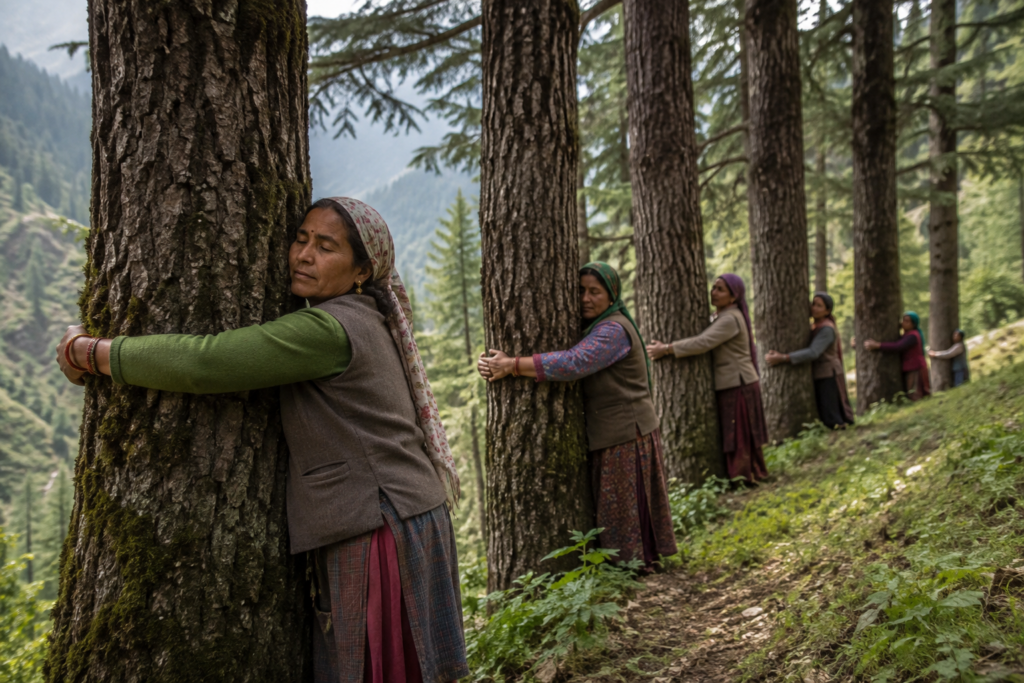
Think about Chipko. In the 1970s, village women in Uttarakhand hugged trees to stop felling. The world learned that people who live with nature often guard it best. Himalayan herders now ask for the same respect for their grass.
The timing matters. The United Nations has named 2026 the International Year of Rangelands and Pastoralists. In late 2026, India also released new guidelines to recognise conservation areas that sit outside national parks. This article explains why Other Effective Area-Based Conservation Measures, or OECMs, could give herders a fair place in conservation. It also explains where caution is still needed.
What Is Himalayan Grassland, and Why Does It Matter?
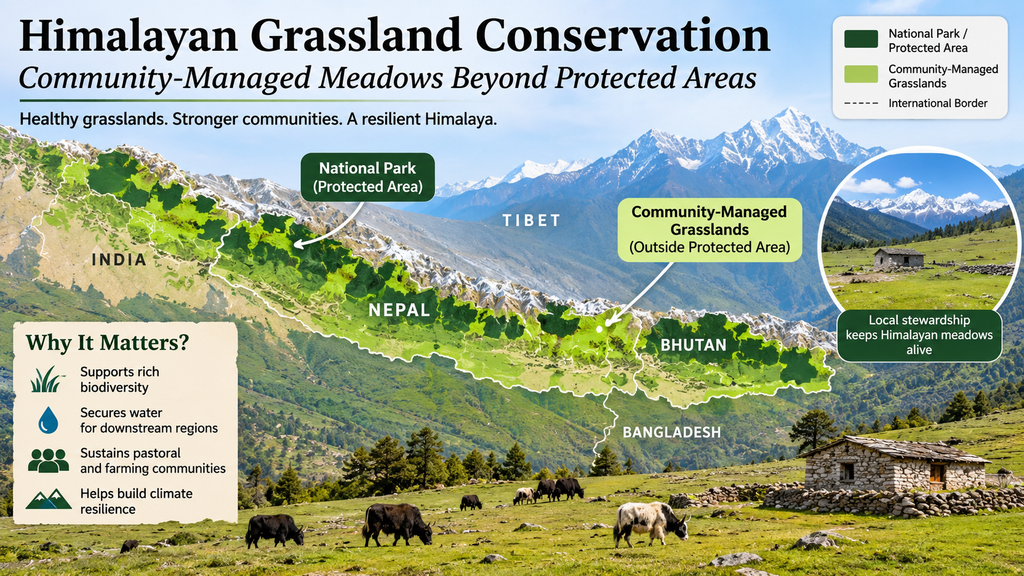
The Hindu Kush Himalaya stretches about 3,500 kilometres across eight countries. About 240 million people live in its mountains, according to ICIMOD. Its forests, grasslands, wetlands and alpine zones feed rivers, farms and cities far downstream. Grass is a big part of that picture.
ICIMOD describes the region’s rangelands as grasslands, shrublands, meadows, steppes, marshes and peatlands. They give a home to many plants and animals, especially medicinal plants. They help control water flow and store carbon in the soil. They also hold deep meaning for herding cultures.
Rangelands run from warm foothill savannahs to cold alpine meadows. In the north, they spread across the Tibetan Plateau and into the cold deserts of the Karakoram and Pamir. Farming alone cannot feed people in much of this land. The soil is thin, the rain is uneven and the winters are long.
That is why herding became the main way to live. ICIMOD says agro-pastoral families earn about 50 to 70 percent of their income from herding. In mixed crop and livestock systems, the share falls to 10 to 30 percent. When the grass is healthy, families eat. When the grass dies, families leave.
OECMs in Plain Words
An OECM is a place outside a national park or sanctuary that still protects nature well. The full name is Other Effective Area-Based Conservation Measure. The world’s governments agreed on this idea in 2018 at the Convention on Biological Diversity meeting, in Decision 14/8. The decision set a definition and clear criteria.
An OECM must have clear boundaries and a clear governing body. Its management must deliver lasting, positive results for biodiversity. Its management may also support local culture, spiritual values and livelihoods. The area does not need conservation as its first goal. Long-term nature protection can be a happy side effect of how people use the land.
An OECM must deliver real conservation results. Good intentions are not enough. The IUCN’s 2019 guidelines, which help countries apply the decision, say the same. They also say that when Indigenous peoples and local communities govern a site, recognition needs their free, prior and informed consent.
OECMs also help countries meet the global “30 by 30” goal. That goal, in the Kunming-Montreal Biodiversity Framework, aims to protect 30 percent of land and sea by 2030. Parks alone will not reach it. Community-managed land has to count, but only if it earns its place.
Reason 1: Herders Already Run a Working Grazing System
Pastoral mobility is not random wandering. ICIMOD’s 2026 blog describes it as seasonal, rules-based movement. Herders shift animals between pastures to let the grass recover and to find water. They also use movement to cope with climate risk.
Many herding groups follow strict calendars. Yaks move between alpine pastures in summer and lower pastures in winter. The blog says this rotation helps stop soil exhaustion and overgrazing. It also says local councils enforce rotation schedules and settle disputes between migratory herders and settled neighbours.
The same blog corrects a common myth. Many people think pastoral commons are open to everyone. They are not. Herding groups set rules on who can graze, where and when.
Bhutan offers a clear example. In the Haa Gyechukha model from western Bhutan, herders rank all summer and winter pastures together. That kind of shared planning looks a lot like modern landscape management. Herders built it long before any conservation plan existed.
Reason 2: Local Knowledge Shapes Biodiversity
ICIMOD says mountain herding helps shape and maintain landscapes and biodiversity, especially at high elevations. Herders know which slope greens first after snowmelt. They know which plants heal sick animals. They know where water hides and where predators pass.
Bhutan’s word for rangeland shows the idea. In Bhutan, rangeland is called tsamdro. It means grazing land for livestock and for wild grazing animals. The word already treats wildlife and herds as part of one system.
The Jigme Dorji National Park plan for 2021 to 2031 notes yak herders there hold traditional grazing rights. It also records sights of blue sheep grazing among yaks. This does not prove that all grazing helps nature. It does show that wildlife and herding can share space.
Community stewardship also reaches beyond grass. The Van Gujjar Tribal Yuva Sangathan in Uttarakhand says it planted 2,868 trees during its Sela Parv festival events, and 1,641 grew or survived, according to Land Conflict Watch. That count comes from the group itself. Independent checking would make it stronger, but it shows a community acting for nature on its own terms.
Reason 3: Community-Managed Landscapes Outside Parks Deserve a Place on the Map
Conservation maps often show parks in green and everything else in blank. Grazing grounds, alpine meadows and village commons fall into the blank. That blank space holds a lot of life.
India has started to fill it in. In 2022, the Ministry of Environment, Forest and Climate Change, the National Biodiversity Authority and UNDP published criteria for identifying OECMs. They set up 14 categories under three groups: land, water bodies and sea. In 2026, around the global biodiversity meeting in Yerevan, the Environment Minister released fresh guidelines for designating India’s OECMs.
The 2026 rules say a site must sit outside the formal protected area network. It needs defined boundaries and a recognised local or government body to govern it. The National Biodiversity Authority, with an inter-departmental committee, takes the final decision. Reviews happen at least once every five years, and the guidelines include capacity building and non-monetary recognition for good practice.
India also gave grasslands a new spotlight in August 2026. At the UN desertification meeting in Mongolia, the country launched its first guide to grasslands and other open natural ecosystems. The Environment Minister spoke about oran and gauchar grazing lands near Ajmer. He pointed out that people sometimes call such land “wasteland” simply because it has no trees.
Nepal shows the same pattern. A 2026 IUCN study near the Kanchenjunga Conservation Area found 18 potential OECM sites outside the park. They include community forests, rangelands, wetlands and forest corridors. The word “potential” matters. These sites are candidates, not formal OECMs yet.
Reason 4: Poor Conservation Design Can Hurt People and Grass Together
Conservation can fail when it treats herders as the problem. Fences, bans and sudden limits can cut families off from pastures they used for generations. Less access does not always mean healthier grass. Sometimes it means the opposite.
ICIMOD’s 2025 notes on the Shailung landscape in Dolakha and Ramechhap, in eastern Nepal, make this point. They say limits on herder movement can push livestock into smaller areas. That leads to overgrazing and damaged soil and vegetation. Mobility is part of the cure, not part of the disease.
Ladakh shows another side. An ICIMOD study of high-altitude rangelands records that wildlife protection there went ahead at the cost of grass for pastoralists’ herds. The same study says the political marginalisation of pastoral communities led to evictions and limits on their movement in some places. Those are serious findings from a regional research body.
In Nepal, a 2018 paper in the Journal of Forest and Livelihood argues that community forestry and protected areas have not recognised the traditional grazing of transhumant herders. The authors suggest a separate policy for high-altitude rangelands that respects customary rights. A 2021 study in Mountain Research and Development looked at Bajhang in western Nepal. It found herders changing routes and keeping fewer kinds of animals. It also reported that the institutions promised in the National Rangeland Policy did not work in the study area.
Bhutan’s story has its own twist. A study of eastern Bhutan notes that herders hold grazing rights but not management rights over rangelands. People who cannot manage land find it hard to restore it. Rights without responsibility leave a gap, and grass pays for it.
Reason 5: Recognition Needs Rights, Consent and Local Institutions
Recognition without rights can turn into control. That is why the IUCN stresses free, prior and informed consent before anyone reports a community-governed site as an OECM. Communities need to understand what the label means. They need to agree. They also need a way to say no.
India’s guidelines build on a three-level system from the Biological Diversity Act of 2002. The National Biodiversity Authority sits at the Centre. State Biodiversity Boards sit in the states. Biodiversity Management Committees sit in local bodies. One explainer on the new rules says state boards validate applications within 30 days. Readers should check the official text for exact steps.
A commentary reported by The Hindu suggests a two-step consent process, so that recognition stays inclusive and fair. That idea deserves attention. A herding family may live far from the committee that signs the paper. Consent must reach them in their own language and on their own schedule.
The Van Gujjars of Uttarakhand show what is at stake. Dialogue Earth and Land Conflict Watch report that Uttarakhand’s Van Gujjars do not hold Scheduled Tribe status, unlike Van Gujjars in Himachal Pradesh and Jammu and Kashmir. That makes it harder to claim rights under the Forest Rights Act of 2006. The community has formed its own youth group to press for those rights. Forest officials and community members hold different views on the community’s impact on forests, and a fair process needs both views on record.
Bhutan’s 2007 Land Act made rangelands state property, so herders hold grazing rights. Some herders felt worried about that change. After the King supported them, the National Land Commission built the Tsamdro Implementation Framework. The story shows that law can adapt when herders speak and leaders listen.
Reason 6: The Himalayan Perspective: Real Steps in India, Nepal and Bhutan
Three countries, three paths, one shared problem. Each has grass, herders and a law that is still catching up. Each also has signs of change.
India
India has the most recent policy move. Its 2026 OECM guidelines cover land, inland water and coast. They name sacred groves, biodiversity parks and community-managed areas as eligible types. They link to India’s national biodiversity plan for 2024 to 2030 and to the global 30 by 30 goal.
Nepal
About 22.6 percent of Nepal’s land, nearly 3.3 million hectares, counts as rangeland, according to an OnlineKhabar analysis. Several agencies share responsibility, and the same article says weak coordination slows action. Nepal’s Rangeland Policy of 2068 BS promotes community-based management. Meanwhile, ICIMOD leads work with the Red Panda Network, ATREE, the CBD Secretariat and IUCN on a potential cross-border OECM in the Panchthar-Ilam-Taplejung corridor. It links eastern Nepal with nearby Indian landscapes in the Kangchenjunga-Singalila region.
Bhutan
Bhutan’s rangeland is tsamdro, and about 39,900 herders in ten highland districts relied on it in the 2017 census. The Jigme Dorji National Park plan records both the herders’ customary rights and the conflicts over grazing space. An older WWF ecosystem profile from 2005 warned that yak herds had passed the carrying capacity of some alpine meadows, even with customary rights. Both facts belong in the same story.
One regional voice
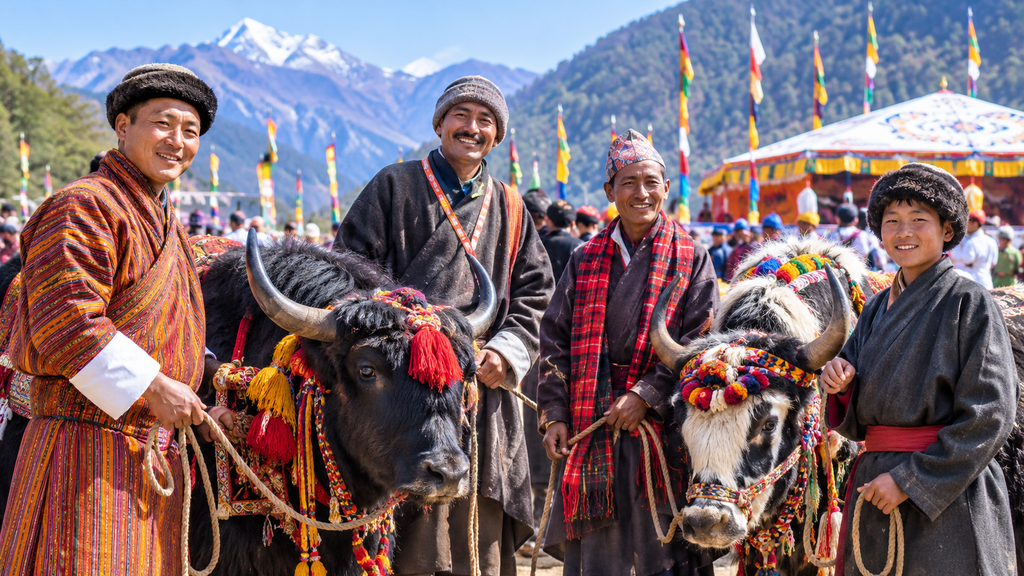
On 23 October, yak herders from Bhutan, India and Nepal launched the Himalayan Yak Herders’ Network at Bhutan’s 9th Royal Highland Festival, as ICIMOD reported. National federations formed in Bhutan in 2022, in Nepal in 2023 and in India in 2025. For the first time, herders can speak to three governments through one regional platform. Read more in Himalayan Geographic’s story, Himalayan Yak Herders Unite: 3 Nations, 1 Powerful Network.
Reason 7: Recognition Must Follow Results, Not Romance
Not every grazing practice helps nature. OECM status should reward proven outcomes, not just the presence of community management. That standard protects herders too, because weak sites could weaken trust in the whole system.
Some pressures are real. The Jigme Dorji plan records that herders clear and burn bushes to keep pastures open. It also notes grazing competition between yaks, horses and wild herbivores. ICIMOD lists climate change, land tenure problems, conflicting land use and invasive plants as threats to rangelands. A webinar series from ICIMOD also covers weed and shrub spread on rangelands.
So how can planners tell good grazing from harmful grazing? They can look for evidence. Healthy sites should show stable or improving plant cover, steady soil, clean springs and wildlife that returns or stays. Herd size should match what the pasture can carry. Rotation rules should exist and people should follow them.
Time also matters. India’s guidelines call for review at least every five years. That is a good habit. Where results slip, the response should be support first: better pasture plans, fodder banks, restoration work and fair access. Punishment should come last.
Comment From Nikhil Raj Sharma, Founder of Himalayan Geographic Research Foundation
Herders do not ask for special treatment. They ask to be seen. When a meadow has stayed green for generations, someone is looking after it. Conservation should start by asking who that person is. OECMs can give that person a name, a voice and a seat in planning. But recognition must follow results.
Good grazing should get support. Harmful pressure should get honest discussion and practical solutions, not blame. The new yak herders’ network shows what is possible when three countries listen to the same people. India, Nepal and Bhutan now have a chance to prove that rights and biodiversity can grow together. The mountains cannot speak for themselves. Their herders can, and policy makers should listen.
A Simple Checklist for Fair OECM Recognition
Use this list to judge any proposed Himalayan grassland OECM:
- The area sits outside a formal park or sanctuary and has clear boundaries.
- A named local body governs it, such as a herders’ council, a village committee or a user group.
- The community gives free, prior and informed consent in a language it understands.
- Customary grazing rights stay protected and nobody loses access without agreement.
- Experts and herders record a baseline for plants, soil, water and wildlife.
- Monitoring repeats at least every five years and herders help collect the data.
- Harmful pressures, such as overstocking or weed spread, get honest discussion and practical fixes.
- The community gets real benefits, such as training, fair market access or funding.
Videos and Resources to Explore
Watching beats reading when you want to feel a place. ICIMOD runs a YouTube channel with films on mountain rangelands, herders and landscapes: ICIMOD on YouTube. Rural India Online (PARI) also hosts documentary films on Himalayan pastoralists, including a film on the Van Gujjar community: On the road with India’s nomadic pastoralists. For the rules, read the IUCN guide, Recognising and reporting OECMs.
The Bottom Line
Himalayan grassland conservation cannot succeed by shutting out the people who have managed these meadows for generations. It also cannot succeed by calling every grazing practice good. The path in between is simple to say and hard to do. Recognise herders as partners, protect their rights, measure the results and fix problems together.
OECMs offer a tool for exactly that. India’s new guidelines, Nepal’s candidate sites and Bhutan’s tsamdro framework show that the idea has started to move from paper to pasture. The next few years will show whether the promise holds.
References and Sources
- ICIMOD, “Restoring ecosystems and landscapes in the Hindu Kush Himalaya”
- ICIMOD, “Pastoral mobility is not random” (19 March 2026)
- ICIMOD, Rangelands page
- ICIMOD’s Regional Rangeland Program
- ICIMOD press release on mountain biodiversity at the UN Biodiversity Conference
- ICIMOD, Himalayan Yak Herders’ Network launch
- ICIMOD, International Year of Rangelands and Pastoralists 2026
- ICIMOD, Shailung landscape journey (post on X, April 2025)
- Wu Ning et al. (eds.), High Altitude Rangelands and Their Interfaces in the Hindu Kush Himalayas, ICIMOD, 2013
- IUCN WCPA, Recognising and reporting OECMs (2019)
- IUCN, news story on the 2019 OECM guidelines
- IUCN, “New publications highlight opportunities to strengthen conservation in Kanchenjunga” (March 2026)
- UNDP India, Criteria and Guidelines for Identifying OECMs in India (2022)
- DD India, report on India’s 2026 OECM guidelines
- The Policy Edge, India releases OECM guidelines (29 October 2026)
- Shankar IAS Parliament, guidelines summary and OECM explainer
- Cavalier, explainer on India’s OECM guidelines
- WCS, COP17 outcome statement (31 October 2026)
- Tribune India, India’s first guide to grasslands (UNCCD COP17)
- Devdiscourse, India launches first guide to grasslands and open ecosystems
- ICIMOD, OECMs in the Eastern Himalaya (transboundary Panchthar-Ilam-Taplejung)
- Journal of Forest and Livelihood 16(1), “Pastoralism in Crisis” (2018)
- Pasakhala et al., “Against the Tide,” Mountain Research and Development (2021)
- OnlineKhabar, Nepal rangeland analysis
- Conservation Management Plan of Jigme Dorji National Park 2021–2031
- WWF, Ecosystem Profile: Eastern Himalayas Region (2005)
- “Transforming Degraded Rangelands and Pastoralists’ Livelihoods in Eastern Bhutan”
- Himalayan Geographic, “Himalayan Yak Herders Unite”
- Dialogue Earth, “Van Gujjars help conserve forests, but are deprived of rights”
- Land Conflict Watch, Van Gujjar Sela Parv
Disclaimer: The content and images published in this article are provided for general informational and educational purposes only. Some images may be generated or enhanced using artificial intelligence (AI) and are intended solely for illustrative use. The views, interpretations, and information expressed do not necessarily reflect the official position of Himalayan Geographic Research Foundation, nor do they constitute professional, legal, medical, or financial advice.
While efforts are made to ensure accuracy, no guarantees are given regarding completeness or reliability. Readers are encouraged to independently verify information and use their own judgment. By reading this article, you acknowledge that any reliance on the content is at your own risk, and Himalayan Geographic Research Foundation assumes no responsibility or liability for disagreements, interpretations, or outcomes arising from its use. If you do not agree with these terms, you are advised to discontinue reading.