
Himalayan yak herders from Bhutan, India and Nepal launched their first regional network in Laya. Read what it means for grazing rights, old knowledge and young herders.
Bhutan lost about 28 percent of its yaks between 2020 and 2024. That is more than one in every four animals, gone in just four years. The figure comes from a Kuensel report carried by Asia News Network. Himalayan yak herders have watched this happen on the high pastures, one hard winter after another. On 23 October 2026, they decided to stop facing the problem alone.
At Bhutan’s 9th Royal Highland Festival in Laya, herders from Bhutan, India and Nepal launched the Himalayan Yak Herders’ Network. ICIMOD, the mountain development centre in Kathmandu, calls it the first regional platform built only for yak herding communities in the Himalaya. This article explains what the network is, why it matters and what it could change. We look at grazing rights, traditional knowledge and the future of young herders.
What Happened in Laya?
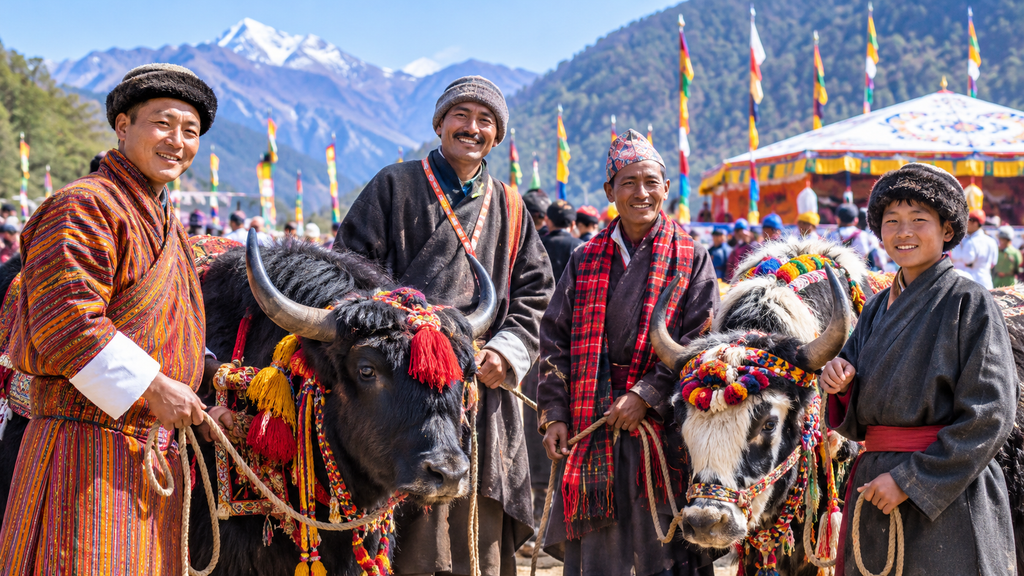
Laya sits close to 4,000 metres high in Gasa District, near Bhutan’s northern border with Tibet. Every October, herders, visitors and officials climb to this remote village for the Royal Highland Festival. His Majesty the King started the festival in 2016 to celebrate highland life and support highland families. The 2026 festival ran on 23 and 24 October, with the theme “Rangelands for Life: Empowering Herders.”
According to Bhutan’s Ministry of Energy and Natural Resources, His Majesty the King launched the network on 23 October. The Ministry says the launch fits the United Nations’ International Year of Rangelands and Pastoralists 2026. The first Regional Steering Committee meeting followed on 24 October in Laya. Bhutan will host the network’s secretariat, which is its permanent office.
Who Joined the Network?
Three national herder groups form the base of the network. Government officials, researchers and development partners also took part in the launch.
- Bhutan Yak Federation
- Yak and Chauri Farmers Federation Nepal
- Yak Federation of India
The ministry describes the network as herder-owned, herder-led and non-political. It may also welcome other yak-rearing countries in the future. That detail matters, because yaks live far beyond these three nations.
The Big Idea Came From the Arctic
This network did not appear overnight. ICIMOD says the idea began in 2016, when herders, researchers and officials from the three countries met under the Kangchenjunga Landscape Conservation and Development Initiative. Think of it as a very long group chat that finally became a real office. It took ten years.
In 2018, yak herders travelled to the Arctic Frontiers conference in Norway. There they met reindeer herders, who already work across borders through their own association. A yak herder from Bhutan, Yuden Pem, sat next to a reindeer herder from Norway, Mikal Juhan Ailo Utsi. Both groups spoke about climate change and the struggle to sell traditional products. The Himalayan herders went home with a model to copy.
The three countries then agreed to build strong national groups first. Bhutan formed its federation in 2022, Nepal in 2023 and India in 2025. In 2025, federation leaders and officials formally promised to create the regional network at a conference in Vietnam. The launch in Laya completed that long road.
The Numbers Behind the Struggle
Numbers show the size of the task. The figures below come from ICIMOD’s launch advisory and other sources listed in the references.
- Bhutan: 746 households rear 29,432 yaks (National Statistics Bureau, 2024). Yak herding provides 4 percent of the country’s livestock products.
- Nepal: Agricultural holdings keep about 53,195 yak, nak and chauri. A total of 9,899 holdings rear them (National Statistics Office, 2023).
- India: The 2019 livestock census counted about 58,000 yaks. The Yak Federation of India says its 526 member households keep about 32,000 yaks.
- Laya: A 2021 study counted 6,398 yaks, with about 1,108 people in 213 households.
- Himalayan rangelands: They cover over 60 percent of the Hindu Kush Himalaya. About 25 to 30 million people depend on them.
Notice that the Indian figures come from two different sources. The census covers all of India, while the federation counts only its own members. Do not compare them directly. Also, ICIMOD says yak numbers in all three countries have fallen sharply over recent decades.
Globally, the world has about 15 million yaks. About 90 percent live on the Qinghai-Tibetan Plateau, according to a 2016 Dialogue Earth report. The Himalayan herders in this network care for a small but precious share.
Seven Problems That Borders Cannot Stop
ICIMOD lists seven pressures that herding communities face. None of them stops at a border post.
- Falling yak numbers
- Shrinking and damaged rangelands
- Climate change
- Loss of yak genetic variety
- Attacks by wild animals
- Weak access to markets and services
- Young people leaving the highlands
Tashi Dorji, a senior livestock and rangeland specialist at ICIMOD, has spoken about these challenges. Tawchu Rabgay, Chief Livestock Officer at Bhutan’s Ministry of Agriculture and Livestock, said herders also face animal diseases. He expects the network to help herders from the three countries share knowledge and find joint answers. A disease that crosses a mountain pass does not ask for a visa. A shared network can warn everyone faster.
Who Owns the Grass?
Grazing rights decide whether a herder can stay on the land. In Bhutan, rangeland is called tsamdro. It means grazing land for livestock and wild grazing animals. Researchers say about 39,900 herders in ten highland districts depended on rangelands in the 2017 census.
The rules have changed over time. Bhutan’s 2007 Land Act made rangelands state property, so herders now hold grazing rights. The law removed tsamdro rights from non-resident elites and religious institutions, who received compensation. Some herders felt worried about this change. In 2017, highland communities asked His Majesty the King to confirm their tsamdro rights. After the King supported them, the National Land Commission built the Tsamdro Implementation Framework.
Technology now helps. The National Land Commission uses a TsamdroApp, which lets herders map shared boundaries together. A 2024 conference paper says the app helped settle long-running conflicts between herding communities. Local conflicts still exist, though.
A 2018 study of Brokpa herders in Merak and Sakteng found tension between government policy and old grazing customs. Another study of 145 yak-rearing households there found that 82 percent said winter pasture was not enough. Herders also named invasive plants, overgrazing and limits on controlled burning as problems.
So what can a regional network do? The sources do not yet give details on grazing rights. The BBS report says the network will promote better grazing land management and conserve yak breeds. Each country has its own land laws, so the network cannot write one rule for all. It can still let herders compare what works. A Bhutanese herder can learn from the Nepali or Indian experience, and officials can hear herders directly.
The network’s real power is the comparison. Herders in three countries test three different rule books every day. When they share results, governments get free evidence.
Traditional Knowledge
Yak herders carry knowledge that no school teaches. They know which pasture to use in summer and which in winter. They read weather in cloud shapes and animal moods. They also know how to breed, milk and care for yaks at heights where most animals struggle.
Bhutan’s old grazing systems show this skill. In the Haa Gyechukha model from western Bhutan, herders rank all summer and winter pastures together. They pair the best summer pasture with the worst winter one, so everyone shares both good and hard land. That is fairness built into a mountain schedule. Researchers describe this system in a 2023 paper on rangeland governance in Bhutan.
This knowledge faces a threat. Many traditional yak milk products are losing popularity, herders told the Arctic Frontiers session. Marketing is also hard. If young people leave, they take the skills with them. A network gives elders a way to record, teach and sell what they know.
“A herder’s memory is a library with no walls, and it burns when the young walk away.”
Can Young Herders Find a Future in the Highlands?
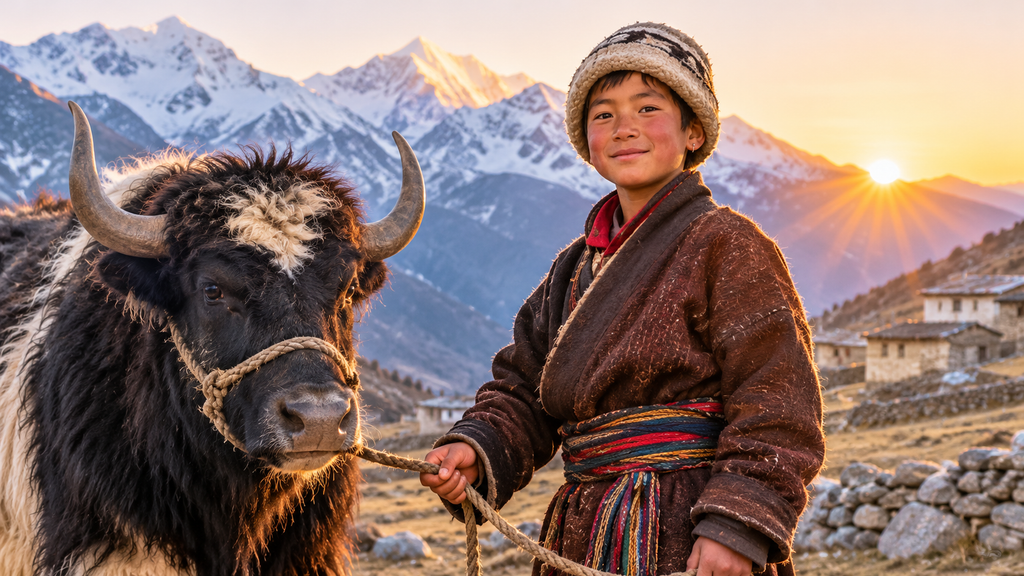
This question worries many families. ICIMOD lists youth migration as one of the seven main pressures. In 2018, a herder from Nepal and a herder from Bhutan told conservation workers that yak herding no longer pays well enough for younger people. That is a plain and honest answer. Nobody can ask a young person to stay for pride alone.
The Layap herders of Laya show one path. The 2021 study in the journal Pastoralism found that tourists were the biggest source of income during the festival. Livestock products earned the most, and homestays came second. The same study found that herders wanted more skills to make new yak products. It also recommended training in value-added products.
Other ideas exist. An ICIMOD article on the International Yak Conference said yak wool could become a desirable natural fabric if industrialised. That could create jobs. The network may also help young herders find buyers, learn new skills and meet peers in other countries. These are possibilities, and no one has promised them yet.
Here is what young herders may need most:
- A fair price for butter, cheese, meat and wool
- Training in processing, packaging and marketing
- Secure grazing rights they can plan around
- Phone, road and health services close to home
- A voice in the network’s decisions
The Festival Helps, But Fair Questions Remain
The Royal Highland Festival brings money and pride to Laya. The 2021 study surveyed 66 herders. They said the festival improved community life and links with outsiders. They also said the animals did not harm the grazing land during the event.
The herders also raised concerns. They said they lacked skills to diversify yak products. They worried about festival waste. Some wanted the festival to move to other highland areas, so more highlanders could benefit. The study urged officials to let Laya communities organise the festival themselves.
These points matter for the new network. A festival lasts two days, but herding lasts all year. The network must serve herders in the lean months too. That is the real test.
What Could Go Right, and What Could Go Wrong?
Let us look at both sides, based on the evidence so far.
What could go right:
- Herders speak with one voice to governments
- Disease and pasture news travel faster across borders
- Better prices through joint marketing
- Stronger protection for yak breeds
- Young herders find role models and training
What could go wrong:
- The network stays a talking shop with no budget
- Large federations ignore small, remote herders
- Each country moves at a different speed
- Donor projects end and the energy fades
Watch and Learn
Videos show the highlands better than words. These resources are real and free:
- Echoes of Change: Climate Stories from Jigme Dorji National Park, Bhutan (ICIMOD)
- ICIMOD’s YouTube channel, for yak and rangeland films
- Sherpas Amidst the Mist,” a documentary on yak herding in the Third Pole region
Comments from Nikhil Raj Sharma, Founder, Himalayan Geographic
“Himalayan herders have kept these mountains alive for generations, yet their voice rarely reaches policy tables. A regional network gives them a seat there, and that matters. I am glad to see herders own and lead it. The real work starts now. The network needs clear goals, honest data and steady support from governments and partners. Grazing rights, fair prices and training for young people should come first. I also hope the network records the knowledge of elder herders before it fades. “
At Himalayan Geographic, we believe mountain stories work best when mountain people tell them. We will follow this network closely. We invite our readers to share their own experiences with the Himalayan highlands. Their stories can show how much this way of life is worth protecting.
References
- Kuensel, “Himalayan Yak Network to launch at Royal Highland Festival,” 21 October 2026
- Asia News Network (same report)
- ICIMOD, “Himalayan yak herders launch first regional network at Bhutan’s Royal Highland Festival,” 19 October 2026
- Ministry of Energy and Natural Resources, Bhutan, “Himalayan Yak Herders Network Launched at 9th Royal Highland Festival”
- BBS, “Himalayan Yak Herders Network launched to address common challenges”
- Down To Earth, “Himalayan yak herders from Bhutan, India and Nepal unite amid climate and pasture pressures”
- Wangdi, Dorji and Wangchuk, “Setting the mountain ablaze? The Royal Highland Festival in Bhutan from the semi-nomads’ perspective,” Pastoralism, 2021
- Wangchuk, Wangdi and Dorji, “Governance of rangeland in Bhutan: Institutions and policy initiatives,” Pastoralism, 2023
- ICIMOD Blog, “Rangeland governance in Bhutan: a digital evolution”
- Norbu and Tshering, “Technological Innovation: Use of Digital App for Pasture Survey and Mapping” (FIG)
- Wangdi and Norbu, “Good fences are key to sustainable pasture management…,” Pastoralism, 2018
- Bhutan Journal of Agriculture Science, “Grazing resources for yaks in Merak and Sakteng: Issues and challenges”
- Dialogue Earth, “Consider the yak,” 2016
- Down To Earth, “Yak and reindeer herders meet on top of the world”
- Tibetan Plateau/Kangchenjunga news item on yak herders (2018)
- ICIMOD, report on the International Yak Conference
Disclaimer: The content and images published in this article are provided for general informational and educational purposes only. Some images may be generated or enhanced using artificial intelligence (AI) and are intended solely for illustrative use. The views, interpretations, and information expressed do not necessarily reflect the official position of Himalayan Geographic Research Foundation, nor do they constitute professional, legal, medical, or financial advice.
While efforts are made to ensure accuracy, no guarantees are given regarding completeness or reliability. Readers are encouraged to independently verify information and use their own judgment. By reading this article, you acknowledge that any reliance on the content is at your own risk, and Himalayan Geographic Research Foundation assumes no responsibility or liability for disagreements, interpretations, or outcomes arising from its use. If you do not agree with these terms, you are advised to discontinue reading.