
The Himalayan monsoon crisis is getting worse even as total rainfall drops. Find out why longer dry spells followed by sudden cloudbursts are causing deadlier floods, landslides and glacier disasters across India, Nepal and Bhutan and what mountain communities can do about it.
Here’s a number that should worry every mountain family: glacial lake outburst floods are now hitting the Himalayas nearly five times more often per decade than they did before 1950. And here’s the twist nobody expects; this is happening even as the region gets less rain overall.
That’s the strange, dangerous new normal of the Himalayan monsoon crisis. Rainfall totals are going down. But the damage is going up. If you live in Himachal, Uttarakhand, Kashmir, Nepal or Bhutan, or if you simply love trekking in these mountains, this is not a topic to skim past.
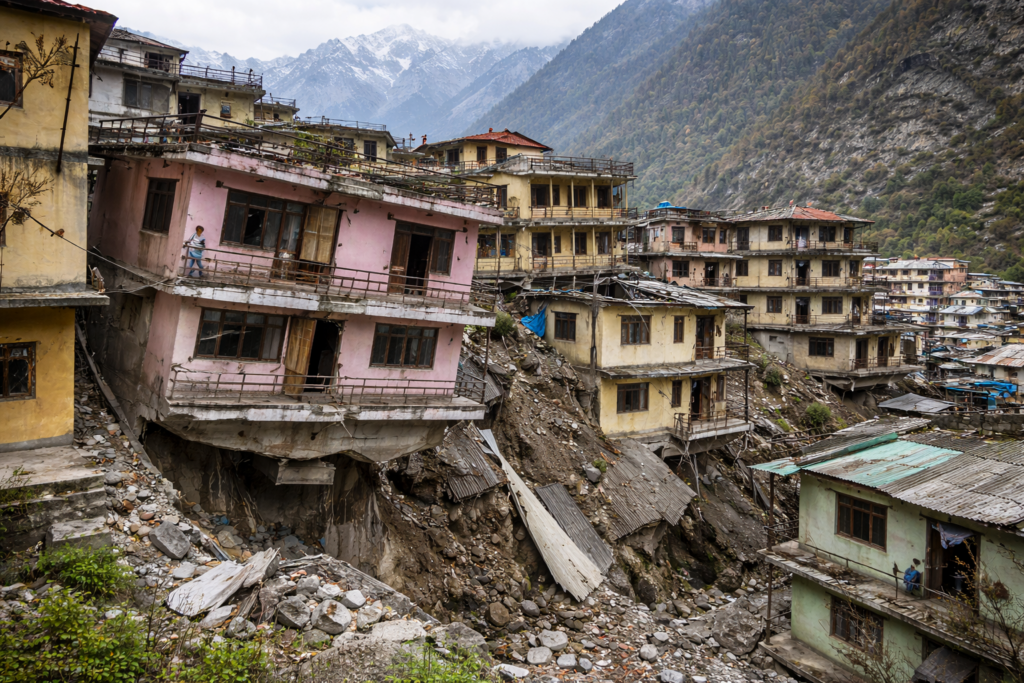
What Exactly Is the Himalayan Monsoon Crisis?
For decades, the monsoon in the Himalayan belt behaved in a fairly predictable way. Steady rain, spread across June to September, filled rivers gradually and fed crops without much drama.
That pattern is breaking down. Scientists at ICIMOD, the International Centre for Integrated Mountain Development, released their 2026 outlook warning that the Hindu Kush Himalaya region will likely see below-normal rainfall and above-normal temperatures this season, with long dry spells punctuated by sudden cloudbursts.
In simple words: it doesn’t rain for weeks, and then it dumps a month’s worth of water in an hour.
That single sentence explains almost everything happening in the mountains right now.
Why Less Rain Is Making Things More Dangerous, Not Less
This confuses a lot of people. Less rain should mean less flooding, right? Wrong; and it’s the most important point in this whole article.
A senior disaster risk expert at ICIMOD put it plainly: “The biggest misunderstanding is that less seasonal rainfall means lower flood risk.” A hydrologist from the same organisation added that “even in a weaker monsoon, short periods of intense rainfall remain a major concern.”
Here’s why that happens:
- Dry soil can’t absorb sudden rain. Ground that has baked for weeks turns hard. When a cloudburst hits, water runs off instantly instead of soaking in, and it rushes downhill carrying mud and rock with it.
- Low snow cover removes a natural buffer. ICIMOD’s 2026 outlook noted the region is entering the monsoon with lower-than-normal snow cover, which reduces its seasonal water buffer. Less snow means rivers have less steady meltwater and react more violently to sudden rain.
- Cloudbursts are getting more intense, not less. Meteorologists define a classic cloudburst as over 100mm of rain in an hour over a small area. But experts now note that even 30 to 50 millimetres of rain within an hour is enough to trigger a catastrophic flash flood in these steep valleys.
So the “total” rain figure looks good on a government chart. On the ground, in a narrow Himalayan valley, it can still mean disaster.
2025 Was a Preview; And It Was Brutal
If you think this is a future problem, look at what already happened last year.
Dharali, Uttarkashi (Uttarakhand); August 5, 2025. A cloudburst, possibly combined with a glacier collapse, sent a wall of water, mud and boulders through this small tourist town near Gangotri. Homes, shops, hotels and even an old temple were swept away, with several people confirmed dead and many more missing. There’s raw video of the aftermath here: Dharali Cloudburst Aftermath – YouTube
Chositi village, Kishtwar (Jammu & Kashmir); August 14, 2025. This one was worse. A cloudburst triggered a flash flood that hit pilgrims on the Machail Mata Yatra route. The final toll: 68 people dead, over 300 injured, and dozens missing.
Mandi and other districts, Himachal Pradesh; June to September 2025. Cloudburst after cloudburst battered the state through the monsoon. By September, officials confirmed at least 80 deaths in rain-related incidents in Himachal since June 20 alone, with hundreds of homes, shops and bridges destroyed.
Uttarakhand, overall 2025 season. State disaster data showed 85 lives lost, 128 injured and 94 people missing due to natural disasters since April that year.
Add these up and you get one of the deadliest monsoon seasons the western Himalayas have seen in years; during a season that, on paper, wasn’t even that wet.
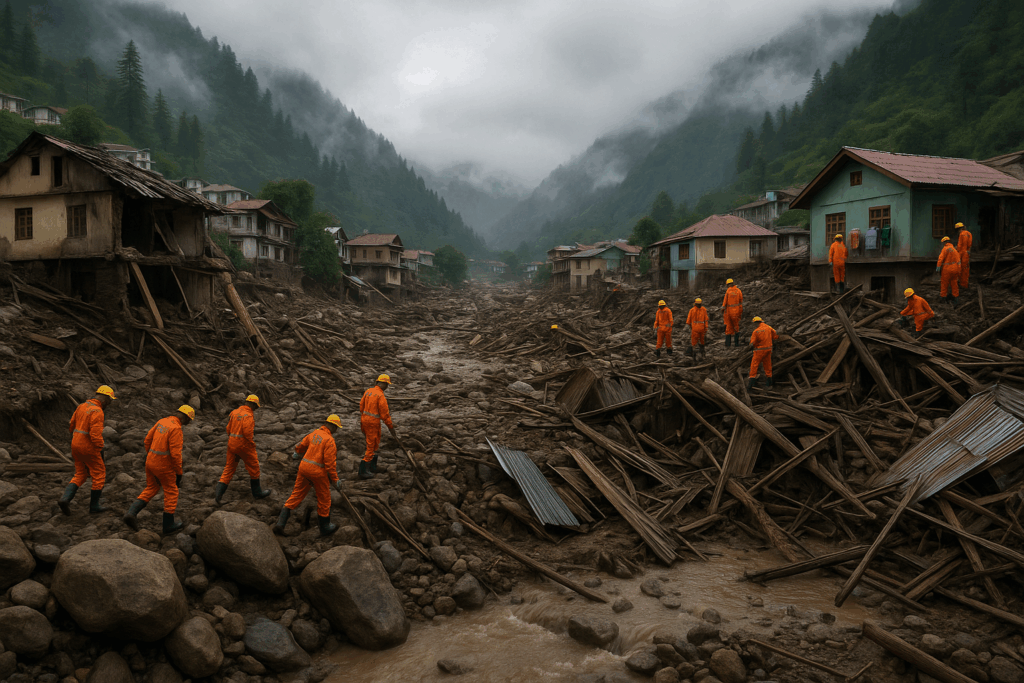
The Glacier Time Bomb: GLOFs
There’s a second danger layer sitting above all this; glacial lake outburst floods, or GLOFs.
As glaciers melt, they leave behind lakes held back by loose rock and ice. When that natural dam breaks, it releases a sudden, violent flood with almost no warning. Scientists estimate up to 75 percent of the Hindu Kush Himalaya’s glacier volume could disappear by the end of this century, which means more lakes forming, and more of them at risk of bursting.
Nepal alone has recorded 26 GLOF events since the 1970s, with 47 glacial lakes currently classified as potentially dangerous. A single GLOF event can cause economic losses exceeding 100 million US dollars. In May 2025, a sudden glacial lake burst in remote Tilgau village in Humla, Nepal; no rainfall was even recorded at the time, which shows the trigger was glacier instability, not rain.
This is the part people often miss about the Himalayan monsoon crisis; some of the deadliest floods aren’t purely “monsoon” floods at all. They’re glacier floods that just happen to strike during the rainy season.

Why Is This Happening? The Climate Change Link
A few forces are combining here:
- El Niño is weakening the monsoon. When the central Pacific Ocean warms up, it disturbs wind patterns that carry monsoon moisture into India. An intense El Niño can weaken the Indian monsoon and reduce total rainfall, which is exactly what forecasters flagged for the 2026 season.
- Global warming is heating the mountains faster. High-altitude regions warm faster than the global average, which speeds up glacier melt and destabilises slopes that were frozen solid for centuries.
- Unplanned construction is making it worse. Roads, hotels and hydropower projects built on unstable slopes and river floodplains turn a natural hazard into a human tragedy. The 2025 Kishtwar flood, for example, hit a security camp, a community kitchen and a bus stop full of people; all built close to the water’s path.
Who Is Most at Risk?
- Villages in narrow river valleys; water has nowhere to spread, so it hits with full force.
- Pilgrims and tourists; popular routes like Char Dham and Machail Mata Yatra pass directly through flood-prone corridors during peak monsoon.
- Hydropower and road projects; the Kishtwar flash flood damaged a major hydroelectric project, showing infrastructure isn’t safe just because it’s “engineered.”
- Daily wage workers and labourers living in temporary structures near rivers, as seen in the Dharamshala flash flood of June 2025.
What’s Being Done About It
It’s not all bad news. A few real steps are underway:
- C-FLOOD system. India’s Ministry of Jal Shakti launched the Unified Inundation Forecasting System in 2025 to give better advance warning for flash floods in Himalayan and other river basins.
- GLOF risk reduction in Nepal. A 36 million dollar Green Climate Fund project is now working to lower water levels in Nepal’s four most dangerous glacial lakes and install early warning systems.
- Regional monitoring. ICIMOD’s yearly HKH Monsoon Outlook now gives governments across eight countries a shared early-warning tool ahead of each monsoon.
These are good starts. But experts agree preparedness on the ground; evacuation plans, early warning sirens in remote valleys, and stricter construction rules; still lags far behind the pace of the changing climate.
What You Can Do If You Live In or Visit the Himalayas
- Check IMD or ICIMOD advisories before travelling during monsoon months, not just the weather app forecast.
- Avoid staying overnight right next to a river bed or dry stream channel, even if it looks safe in dry weather.
- If you hear a sudden loud rumbling sound at night during heavy rain, move to higher ground immediately; don’t wait to “check” first.
- Support and follow local disaster management authority alerts on social media during your travel dates.
Comment from Nikhil Raj Sharma, Founder, Himalayan Geographic
“People still think a weak monsoon means a safe monsoon. What we’re seeing on the ground in Himachal and Uttarakhand tells a different story; shorter, sharper bursts of rain on already-dry slopes are proving far more destructive than a full season of steady rainfall ever was.”
The Bottom Line
The Himalayan monsoon crisis isn’t really about “how much” rain falls anymore. It’s about “how” it falls; long dry gaps followed by sudden, violent bursts, on top of glaciers that are melting faster every year. That combination is what turned 2025 into one of the deadliest monsoon seasons in recent Himalayan history, and 2026’s forecast suggests the pattern isn’t going away.
Have you or your family experienced a flash flood or landslide in the hills? Share your experience in the comments below; your story could help someone else stay safe next monsoon.
References
- WION Decodes – “Is India’s monsoon changing? What Monsoon 2026 reveals about climate trends”
- Down To Earth – “Hotter, drier Hindu Kush Himalaya monsoon likely in 2026, ICIMOD warns of dual threat of droughts and flash floods”
- ICIMOD Press Release – “Erratic monsoon and rising temperatures heighten flash flood risk across the Hindu Kush Himalaya”
- KathmanduPati – “Drier monsoon, higher flood risks in the Himalayas”
- Down To Earth – “Monsoon 2026 has arrived, but India’s rain season begins under El Niño shadow”
- India Water Portal – “India’s monsoon forecast 2026 highlights need for smarter agriculture and water planning”
- Down To Earth – “Enhanced flash flood risks in Hindu Kush Himalaya due to erratic monsoon and high temperatures: ICIMOD”
- ICIMOD Press Release – “Hindu Kush Himalaya faces drier but more dangerous monsoon in 2026, scientists warn”
- Kathmandu Post – “An unusually rainy spring, a drier monsoon ahead: What’s happening to Nepal’s weather?”
- United Nations University – “Glacial Lake Outburst Floods: A Growing Climate Threat”
- Global Voices – “Glacial lake outburst floods (GLOFs) and the melting of the ‘Third Pole’“
- UNDP Climate Change Adaptation – “Protecting livelihoods and assets at risk from GLOFs… in Nepal”
- Wikipedia – “2025 Nepal floods”
- Wikipedia – “2025 Uttarakhand flash flood”
- CBS News – “4 dead, 50 missing after flash floods and landslide hit Indian village”
- Wikipedia – “2025 Kishtwar district flash flood”
- The Independent (via AOL) – “Dozens feared dead as flash floods and landslides rip through Himalayas in northern India”
- The Federal – “Cloudburst wreaks havoc in Uttarakhand; 3 killed in torrential rains in Himachal”
- Deccan Herald – “11 killed in landslides, cloudburst in Jammu and Kashmir’s Reasi, Ramban”
- Daily Excelsior – “Climate drivers of Himalayan flash floods”
- India Water Portal – “Understanding Cloudbursts in the Himalayas – Safety Guide & FAQs”
- YouTube – “New Video From Dharali Captures The Aftermath Of Uttarkashi Cloudburst”
Related reads
- How Glacial Lakes Form and Why They Burst
- Cloudburst Safety Guide for Himalayan Travellers
- Understanding India’s C-FLOOD Warning System
Want more ground-level reporting from the mountains? Subscribe to our newsletter for monthly Himalayan climate updates.
Disclaimer: The content and images published in this article are provided for general informational and educational purposes only. Some images may be generated or enhanced using artificial intelligence (AI) and are intended solely for illustrative use. The views, interpretations, and information expressed do not necessarily reflect the official position of Himalayan Geographic Research Foundation, nor do they constitute professional, legal, medical, or financial advice.
While efforts are made to ensure accuracy, no guarantees are given regarding completeness or reliability. Readers are encouraged to independently verify information and use their own judgment. By reading this article, you acknowledge that any reliance on the content is at your own risk, and Himalayan Geographic Research Foundation assumes no responsibility or liability for disagreements, interpretations, or outcomes arising from its use. If you do not agree with these terms, you are advised to discontinue reading.