
A Himalayan glacier collapse in Nepal killed over a thousand people in August 2026. Here are 7 alarming lessons on climate risk, failed warnings, and what must change now.
On the morning of August 26, 2026, a chunk of ice and rock many times bigger than the Empire State Building broke off a mountain in the Himalayas. Within hours, it had killed more than a thousand people in a chunk of ice and rock dozens of times larger than the Empire State Building that broke off a mountaintop and triggered catastrophic flooding across Nepal and Tibet. This Himalayan glacier collapse did not just destroy villages. It exposed a truth scientists have been shouting for years: our mountains are melting faster than our warning systems can keep up.
This is not a one-off tragedy. It is part of a pattern. And if we do not learn from it, the next disaster is already on its way down some quiet Himalayan valley, right now, as you read this.
What Exactly Happened in Nepal on August 26, 2026?
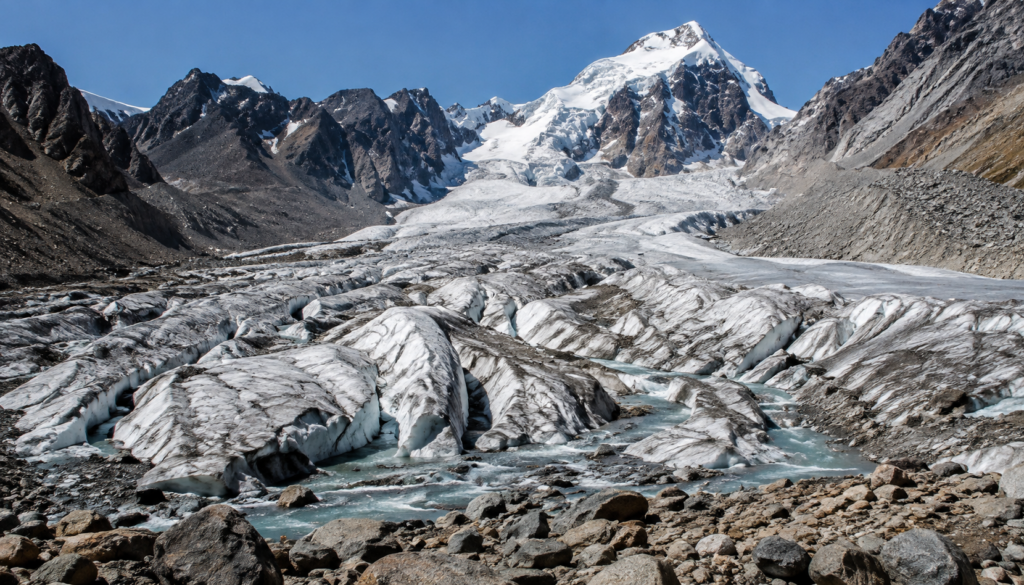
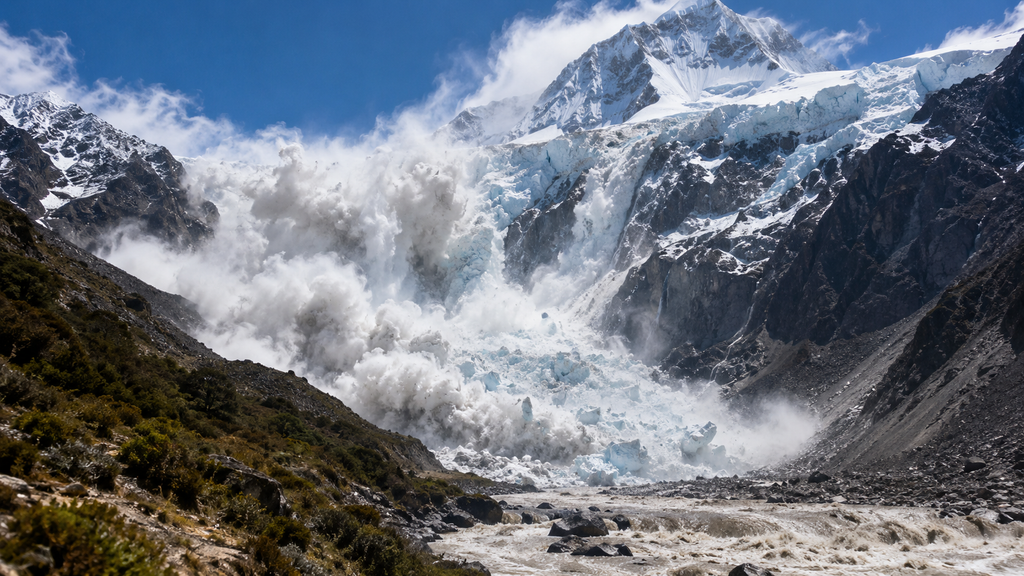
The disaster began high on Langtang Lirung, a peak on the Nepal-Tibet border. A bedrock slope under a hanging glacier gave way at about 5,200 metres. The mass fell roughly 1,200 metres, turning into a rock-ice avalanche that headed toward the Lhende Khola river. Friction from the fall melted the ice fast enough to turn the avalanche into a debris flow, sending a thick, fast surge downstream into rivers that were already swollen from monsoon rain.
Within a few hours, this single mountain event had grown into a cross-border catastrophe. Satellite images later confirmed the ice-rock avalanche hit the Lhende River in Tibet, about 20 kilometres from the Nepal-China border, and the debris briefly dammed the river before the natural dam broke and released a wall of water downstream.
Early reports blamed an earthquake. The US Geological Survey later corrected this, saying the seismic signal actually came from the landslide and avalanche itself, not from tectonic activity, with the event registering at magnitude 5.2. The flood tore through Nepal’s Rasuwa and Nuwakot districts, wiping out the Gyirong border crossing on the China side, and eventually reached India, 240 kilometres away where the bodies of some victims were carried across the border.
The confirmed numbers keep changing as search teams work through the debris, but the scale is already historic. As of early September 2026, at least 1,386 people were confirmed dead and 5,130 were still listed as missing in Nepal, with 43 deaths and 519 missing across the border in Tibet. Rescue and recovery work is still ongoing at the time of writing.
Quick Facts Box
- Trigger: Rock-and-ice avalanche from a hanging glacier on Langtang Lirung
- Date: August 26, 2026
- Rivers hit: Lhende Khola, Bhote Koshi, Trishuli
- Countries affected: Nepal, Tibet (China), with debris reaching India
- Distance debris travelled: Up to 240 km downstream into India
- This was the second major flood in 14 months on the same river tributary
Now let’s get into what this disaster teaches us, because the lessons matter far beyond Nepal’s borders.
7 Alarming Lessons from the Himalayan Glacier Collapse
Lesson 1: Himalayan Glaciers Are Melting Far Faster Than We Planned For
The Himalayas are sometimes called the “Third Pole” because they hold the largest amount of ice outside the North and South Poles. That ice is vanishing fast.
The Hindu Kush Himalaya region has already warmed by about 1.3°C since pre-industrial times, faster than the global average of 1.1°C, because mountains warm faster at higher altitude, a pattern scientists call elevation-dependent warming. Between 2010 and 2019, glaciers in this region lost ice 65% faster than in the previous decade, and scientists warn they could lose up to 80% of their ice by 2100 if emissions keep rising.
Scientists quoted by Reuters and the BBC said human-caused climate change likely played a key role in weakening the ice and rock that gave way on Langtang Lirung. A hanging glacier that survived a hundred winters can fail in one warm summer. That is the frightening part.
Lesson 2: One Glacier Collapse Can Become a Three-Country Disaster
Nobody in Kathmandu was watching a mountain slope near the Tibet border and thinking, “this will flood my city’s trade route.” But that is exactly what happened.
The Gyirong Port border crossing, which handled nearly a third of all trade between Nepal and China in 2024, took the direct force of the floodwaters and was destroyed, cutting the only overland route linking Kathmandu to Tibet. This shows how a remote, high-altitude event can knock out a country’s economy in minutes, not just its villages.
Mountain rivers do not respect borders. Water, mud, and grief flowed from Tibet into Nepal and then into India, turning one geological event into a regional emergency involving three governments.
Lesson 3: Official Early Warning Systems Are Not Built for This Kind of Flood
Here is an uncomfortable fact. Nepal does have a flood warning system. It failed.
Nepal’s official warning system relies on river sensors that trigger an alert once water crosses a set danger level, a design made for slow monsoon flooding, not a sudden glacier-triggered surge. The Department of Hydrology and Meteorology itself only learned about this flood after receiving a phone call from a local official.
This is not new. In the 1990s, Nepal built one of South Asia’s first glacier flood warning systems below Tsho Rolpa lake, using sensors wired to sirens at 19 locations. It worked for about four years before batteries and solar panels were stolen during the Maoist insurgency, and the whole network fell apart.
A warning system is only useful if someone keeps it running for decades, not years.
Lesson 4: A Teacher’s Phone Call Saved More Lives Than Any Sensor
Not every warning came from a machine. Some came from a neighbour’s phone call, and it made all the difference.
At 9:10 a.m. on August 26, headteacher Rajendra Dawadi got a frantic call warning him about a flood heading toward his school. He told around 900 students to run to higher ground. Ten minutes later, the flood buried the school compound, with only a piece of the roofline left showing.
Every single one of those students survived because a human being called another human being. That is the real early warning system in much of the Himalaya today, and it deserves as much investment as any satellite.
Lesson 5: This Was Not Nepal’s First Warning, and It Won’t Be the Last
The Himalaya has been sending signals for years. Nepal’s disaster sits in a long, painful list.
In February 2021, a rock-and-ice avalanche in Chamoli, Uttarakhand, killed 83 confirmed people and left 121 missing after it swept away hydropower projects. In October 2023, a glacial lake burst in Sikkim, killing more than 92 people and destroying 15 bridges along with a major hydropower dam.
Nepal alone has 47 glacial lakes officially classified as dangerous, out of a national total that ranges from roughly 2,070 to 3,000 lakes, and researchers estimate around 200 lakes across the wider Hindu Kush Himalaya could eventually burst. We are not looking at a freak accident. We are looking at a pattern that keeps repeating, just in a different valley each time.
Lesson 6: Roads, Dams, and Bridges Built in the Wrong Place Turn a Flood into a Catastrophe
Nature caused the flood. Human choices about where to build made it far deadlier.
The flood damaged 15 hydropower plants in Nepal, including the 216 MW Upper Trishuli-1 project, and destroyed riverside settlements along a stretch of the Bhotekoshi-Trishuli valley that had already been rebuilt once before, after the 2015 earthquake. More than 10,000 households along the Trishuli corridor needed emergency shelter after losing everything.
We keep building bridges, schools, and power plants on river floodplains below glaciers, because that is where flat, buildable land exists in the mountains. Every time, we are betting that the glacier above will hold. Sometimes it does not.
Lesson 7: The World Is Now Being Asked to Pay for a Crisis It Helped Cause
Nepal produces a tiny fraction of global carbon emissions, yet it is paying one of the highest human costs of climate change.
Nepal has filed a claim with a young international loss-and-damage fund, in what is becoming an early test of whether rich, high-emitting nations will actually pay poorer, glacier-dependent countries for climate disasters they did little to cause. Climate policy experts describe this as a stark example of climate injustice, where mountain communities in Nepal bear the disaster while the emissions driving it come mostly from elsewhere.
How this claim plays out could decide whether Nepal, and countries like it, can afford to build the early warning systems and safer infrastructure this disaster proved they desperately need.
What Is a Glacial Lake Outburst Flood (GLOF), in Simple Words?
A GLOF happens when a lake formed by melting glacier ice, held back by ice or a wall of rock and mud called a moraine, suddenly breaks open and releases a huge rush of water downhill. Think of it like a water balloon made of ice and mud that has been slowly filling for decades, sitting on a mountainside above a village. One shove, from an avalanche, an earthquake, or heavy rain, and it bursts all at once.
For a general explanation of how GLOFs form anywhere in the world, this video is also useful.
What Needs to Change Now
- Fund permanent, maintained early warning networks, not one-time projects that fail once the funding ends
- Expand community-based flood early warning systems that give local people real-time alerts, since these are managed by and for the communities themselves
- Use satellite monitoring more widely; an ISRO study using Landsat and Sentinel-2 data already found 676 glacial lakes expanding across Indian Himalayan basins, with 130 rated as dangerous
- Stop approving new construction directly on river floodplains below glaciated valleys
- Train more local volunteers, like Rajendra Dawadi, since a phone call network is often faster than a sensor network
- Push for faster, fairer climate finance so mountain nations are not left to rebuild alone every single time
Nikhil Raj Sharma, Founder of Himalayan Geographic, shares:
“We keep calling these events unprecedented, but our own communities have been warning us for two decades. The mountain does not send an email before it moves. It sends a rumble, and by then, someone needs to already be running.
“Every disaster in these hills teaches the same lesson. Technology can warn us, but only if someone keeps it switched on for the next fifty years, not just the next five.”
The Nepal-Tibet disaster is not a warning we lacked. It is a warning we ignored for two decades. At Himalayan Geographic, we have walked these valleys and listened to elders who saw the ice retreating year after year. They knew this day was coming long before any sensor did.
What we owe them now is not sympathy alone, but investment: early warning systems that outlive election cycles, and infrastructure built with respect for the mountain, not defiance of it. The Himalaya has always demanded humility from those who live in its shadow. It is time governments showed the same.
Final Thought
A Himalayan glacier collapse is not really about ice. It is about the people standing in the valley below, who trusted that the mountain would hold one more year. This disaster showed us that trust is running out faster than we expected.
Related Reads
- 2026 Nepal-Tibet Floods
- Nepal-Tibet floods: What happened, what caused them and who is missing?
- Early warning could have saved hundreds of lives in Nepal floods.
- During Nepal floods, decentralized, community-based warning saved lives.
- Floods, GLOFs and early warning systems.
- Nepal’s flood claim tests whether a nascent climate fund can deliver.
Resources:-
- NBC News — “Huge Himalayan glacier collapse unleashed catastrophic flooding“
- CBS News — “Nepal flood death toll surges as 65 Americans listed among missing“
- EarthSky — “Nepal flash flood nightmare: What caused it?“
- CARE — “Nepal flash floods 2026: CARE’s emergency response“
- TravelHimalayaNepal — “Nepal’s Glacial-Flood Warning Gap“
- CBS News — “Himalayan glaciers are melting faster than ever“
- ICIMOD/Nature npj Natural Hazards — “Glacial lakes and GLOFs in a warming Himalaya-Karakoram region“
- NepalNews — “Around 200 lakes across the Himalaya could burst“
- Wikipedia — “Glacial lake outburst flood” (plain definition)
- Wikipedia — “2021 Uttarakhand flood” (Chamoli disaster)
- Wikipedia — “2023 Sikkim flash floods” (South Lhonak GLOF)
- Anantam IAS — “GLOFs in India: Chorabari, Chamoli, South Lhonak“
- “Glacial Lake Outburst Floods (GLOFs) Threaten Millions: Science Behind the Nepal-China Catastrophe“
- “Glacial Lake Outburst Flood” (general explainer)
Disclaimer: The content and images published in this article are provided for general informational and educational purposes only. Some images may be generated or enhanced using artificial intelligence (AI) and are intended solely for illustrative use. The views, interpretations, and information expressed do not necessarily reflect the official position of Himalayan Geographic Research Foundation, nor do they constitute professional, legal, medical, or financial advice.
While efforts are made to ensure accuracy, no guarantees are given regarding completeness or reliability. Readers are encouraged to independently verify information and use their own judgment. By reading this article, you acknowledge that any reliance on the content is at your own risk, and Himalayan Geographic Research Foundation assumes no responsibility or liability for disagreements, interpretations, or outcomes arising from its use. If you do not agree with these terms, you are advised to discontinue reading.
