COP31 in Antalya has put Nepal and the Himalaya in the spotlight. Nepal reports 1,400+ deaths from one flood, yet its mountain agenda did not get a formal seat. Here is what mountain nations really need.
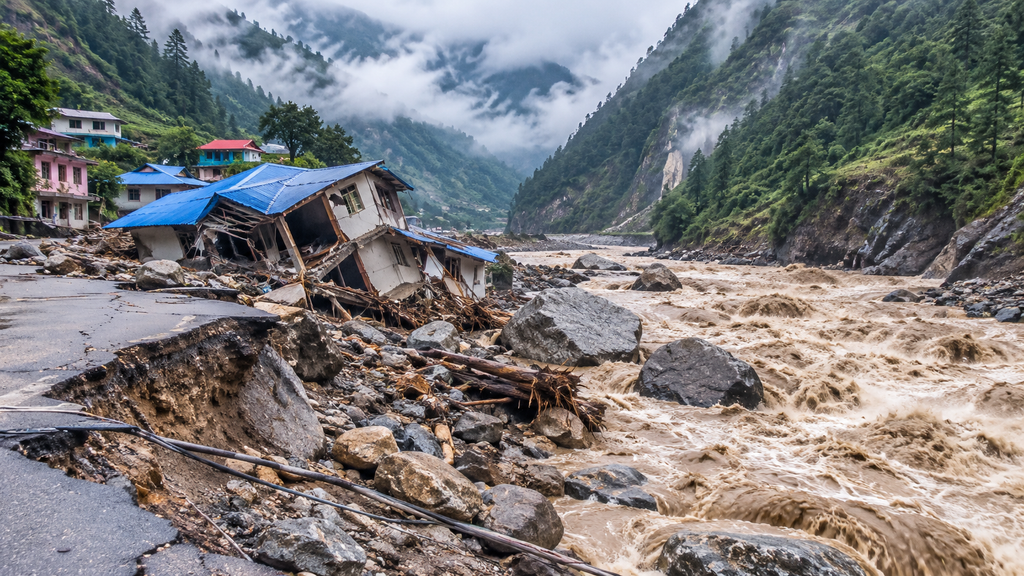
One day in August, a wall of water, rock and mud tore down the Bhote Koshi valley in Nepal. The government says more than 1,400 people died and more than 5,000 are still missing. Three months later, delegates met at COP31 in Antalya, Türkiye. Nepal asked for a formal mountain agenda there, and the request did not become a formal agenda item.
That gap is the story. Mountain people feel climate change first, and they often speak last. In this article, we look at what Nepal asked for at COP31, what it got, and what the Hindu Kush Himalaya (HKH) needs from the world beyond kind words.
What Happened on 26 August in Nepal?
On 26 August 2026, a flash flood hit the Bhote Koshi and Trishuli river systems in Nepal. Nepal’s government has called it a “Himalayan Tsunami” and links it to a glacial and rock collapse near the Nepal–China border. Foreign Minister Shisir Khanal told COP31 delegates that bridges and hydropower plants washed away within minutes.
Nepal’s official submission to COP31 puts property damage at about 2.7 billion US dollars. It puts the recovery need at about 4.7 billion US dollars, close to 10 percent of the country’s GDP. These are Nepal’s own estimates, as reported by Nepali media. Scientists will keep studying the exact causes of the event.
Think of it like a group chat where one person screams “fire” and everyone else mutes the thread. Nepal brought real evidence to Antalya. The question is whether the room listened.
What Did Nepal Ask For at COP31?
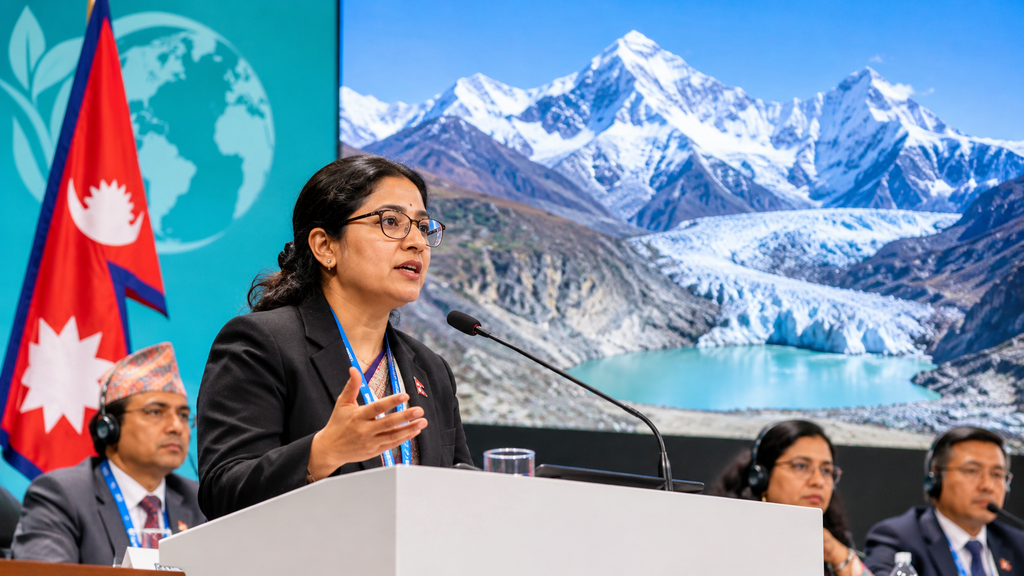
Nepal came with four main priorities: a stronger mountain agenda, loss and damage support, easy to access climate finance, and climate justice. Nepal’s share of global emissions is below 0.1 percent, according to estimates cited in its own case. Yet it faces floods, landslides, droughts and melting glaciers.
Here are the specific asks:
- A new agenda item called “1.5°C Warming in Mountains”, proposed together with Bhutan. It would ask scientists to study how warming, and any temporary overshoot of 1.5°C, affects mountains.
- A yearly high-level dialogue on mountains and climate change.
- A dedicated mountain work programme under the UN climate convention.
- Mountain specific indicators in the Global Goal on Adaptation and in the New Collective Quantified Goal on climate finance.
- Grants instead of loans for adaptation and loss and damage.
Nepal also built a coalition. It worked with Bhutan, Kyrgyzstan, Pakistan and Tajikistan, and it held a high-level mountain event on glaciers and shared responsibility. It sought support from the G77 and China, the Least Developed Countries, the Landlocked Developing Countries and the Mountain Group.
Why Did the Mountain Agenda Not Pass?
The proposals did not become formal agenda items. Foreign Minister Khanal said some countries backed the idea, while others were reluctant. He said major negotiating blocs did not support it, which made passage difficult.
Agenda setting at COP runs on consensus. A new standing item can bring new expectations about money and attention, and some groups may not want that. That is a political reading of how these talks work. It is not a claim about any one country’s motives.
The result was not zero, though. According to Nepal News, the COP31 presidency agreed to continue consultations and research dialogues on mountains. Further talks are expected at UN climate meetings in Bonn in 2027 and 2028. Nepal’s government says mountain issues could appear in the final outcome text. That is progress, but it is not the permanent seat Nepal wanted.
What does this tell us about power?
Science and suffering do not automatically become negotiating power. A small mountain country can bring strong data and still lose a procedural vote. That is why mountain nations work in groups. A voice that is shared is harder to ignore.
The Money Gap
Money is where the gap becomes clearest. On 22 October 2026, the Fund for Responding to Loss and Damage (FRLD) set aside 21.6 million US dollars for Nepal. That includes 20 million for Nepal and 1.6 million for oversight costs. It was the fund’s first response to a specific disaster.
That is a historic step, and it is also small. Reports put the amount at under 1 percent of Nepal’s estimated recovery need, which is about 4.7 billion US dollars. The fund has received pledges of more than 800 million US dollars from 27 countries, according to ThePrint. Campaigners say this cannot be a one-off and that the world needs a rapid-response system that works in days, not months.
The wider numbers are just as sharp:
- Nepal’s third Nationally Determined Contribution estimates adaptation needs at 18 to 20 billion US dollars between 2025 and 2035.
- Nepal’s National Adaptation Plan has been estimated to need about 47.4 billion US dollars through 2050, with nearly all of it from outside the country.
- One assessment cited in COP31-related discussions says only about 3 percent of global climate finance reaches mountain areas.
Who bears the cost, and who caused it? Loans make little sense for a village that has just lost its homes, fields and income. A loan adds debt to a community that is already down. That is why Nepal keeps asking for grants.
The Science
The numbers from the mountains match the alarm in the negotiating room. The International Centre for Integrated Mountain Development (ICIMOD) tracks snow across the HKH every year. Its 2026 Snow Update found snow persistence 27.8 percent below average. That is the fourth year in a row below normal, and it breaks the record low of 23.6 percent set in 2025.
Snow persistence means how long snow stays on the ground after it falls. When snow melts early, rivers can run low later in the year. ICIMOD warns that this raises the risk of drought and reduced run-off.
Here is why the whole world should care:
- About 240 million people live in the HKH mountains, and another 1.65 billion live downstream, according to ICIMOD’s HI-WISE report.
- That report says glaciers could lose up to 80 percent of their current volume by 2100 on current emissions paths.
- It also says glaciers shrank 65 percent faster in 2011–2020 than in the decade before.
- It flags about 200 glacier lakes as dangerous, which raises the risk of glacial lake outburst floods.
- In 2025, four of the eight HKH countries faced more than 10 major disasters, and about 1.2 million people were displaced or directly affected, says ICIMOD.
Mountain countries are not asking for charity. They guard the water tower that feeds rivers like the Indus, Ganga and Brahmaputra. Protecting the tower protects the plains too.
Do Mountain Communities Have a Real Voice?
This is the hardest question. Ministers and negotiators speak at COP, but the people who live with the change are farmers, herders, porters, teachers and hydropower workers. They see snow arrive late, water run short and landslides cut roads.
What we can say is this. Nepal’s minister Gita Chaudhary has asked for climate justice to move beyond slogans into concrete action. Nepal also plans more than 40 side events and runs its own pavilion. ICIMOD, based in Kathmandu, works as an intergovernmental knowledge centre for all eight HKH countries. These are real channels, but they are not the same as a community member holding a microphone in a formal negotiation.
What the Himalaya Needs Beyond Promises
General promises do not rebuild a bridge. Based on Nepal’s asks and ICIMOD’s science, here are seven things mountain nations need from global climate commitments:
- A permanent mountain space. A work programme and yearly dialogue, so mountains do not restart the fight every year.
- Grants, not loans. Adaptation and loss and damage money should not add to debt.
- Fast money after disasters. Support in days or weeks, not months, and in amounts that match the damage.
- Direct access for communities. Funds should reach districts and villages, with national ownership and transparency.
- Better science and early warning. Glacier monitoring, satellite data and shared regional data, so warnings reach people in time.
- Mountain indicators in global goals. If mountains are not counted in adaptation and finance goals, they stay invisible.
- Deep emissions cuts. ICIMOD’s research says every fraction of a degree matters for glaciers.
A note on responsibility
Nepal is not asking the world to ignore its own duties. Nepal’s own position is that it must build resilience, manage its watersheds and plan its infrastructure with disaster risk in mind. Climate justice works both ways. Rich countries must pay and cut emissions, and mountain governments must spend support well and openly.
Comment From Nikhil Raj Sharma, Founder of Himalayan Geographic Research Foundation
The Himalaya is a global water tower, not a local problem. When snow shrinks and glacial lakes grow, the effects travel far beyond one valley or one country. Nepal’s loss at Bhote Koshi shows how fast a mountain hazard can become a national crisis. COP31 gave Nepal a voice, but a voice is not a seat. Mountain countries need a permanent space in climate talks, grants instead of loans, and money that arrives fast.
At Himalayan Geographic, we believe science and community stories must travel together. The farmer who sees snow arrive late knows something no model can fully capture. Our goal is to bring that knowledge into the room. We invite our readers to share what they see in their own mountains. Every observation helps build the evidence that decision makers need.
Watch These Videos
Short videos make this topic easier to follow. These are real recordings from earlier COP sessions on the Hindu Kush Himalaya:
- ICIMOD ministerial dialogue on scaling up investment in mountain-specific climate priorities (COP26)
- “Elevating Adaptation Action: From the Alps to the Andes to the Hindu Kush Himalaya” (COP26)
What Happens Next?
COP31 ends on 20 November, so final decisions may still change. The Loss and Damage Fund’s board plans to meet in Nepal from 17 to 19 March 2027, according to Spotlight Nepal. Watch for three things. First, does the final COP31 text mention mountains? Second, does Nepal’s detailed request to the Loss and Damage Fund get approved? Third, do the Bonn talks in 2027 and 2028 build a real mountain track?
Conclusion
Nepal went to COP31 with a clear case, strong science and a painful recent loss. It came away with a promise of continued talks, but not the formal agenda item it sought. The Loss and Damage Fund did respond, which is a first, but the amount is a small fraction of what Nepal says it needs.
The Himalaya is not a side issue. Hundreds of millions of people live in these mountains, and well over a billion more depend on their rivers. If the world wants a fair climate deal, mountain voices should shape it from the start.
Sources and further reading:
- Kathmandu Post, “Nepal calls for mountain-focused climate action at COP31” (14 Nov 2026)
- Nepal News, “Why Nepal’s bid for a global Himalayan climate agenda failed at COP31” (13 Nov 2026)
- Peoples’ Review, “COP31: Nepal seeks justice for climate-related disasters” (9 Nov 2026)
- Radio Nepal, interview with Minister Chaudhary (16 Nov 2026)
- Down To Earth, “Loss and Damage Fund sets aside $21.6 million for Nepal floods”
- ThePrint, “Nepal to get $20 mn from Loss and Damage Fund”
- Down To Earth, ICIMOD HKH Snow Update 2026
- ICIMOD HI-WISE report summary (Mountain Research Initiative)
- ETV Bharat, ICIMOD 2025 disaster analysis
Disclaimer: The content and images published in this article are provided for general informational and educational purposes only. Some images may be generated or enhanced using artificial intelligence (AI) and are intended solely for illustrative use. The views, interpretations, and information expressed do not necessarily reflect the official position of Himalayan Geographic Research Foundation, nor do they constitute professional, legal, medical, or financial advice.
While efforts are made to ensure accuracy, no guarantees are given regarding completeness or reliability. Readers are encouraged to independently verify information and use their own judgment. By reading this article, you acknowledge that any reliance on the content is at your own risk, and Himalayan Geographic Research Foundation assumes no responsibility or liability for disagreements, interpretations, or outcomes arising from its use. If you do not agree with these terms, you are advised to discontinue reading.