
Environmental education is helping Himalayan communities fight climate change, water scarcity and biodiversity loss. Discover 7 powerful ways schools and villages are building a greener future.
On the night of October 3, 2023, a lake most people had never heard of nearly wiped out a town. South Lhonak Lake, high above Sikkim, sent a wall of water crashing down the Teesta valley after a chunk of frozen debris fell into it. A landslide dumped nearly 15 million cubic metres of frozen debris into the lake, creating a wave that breached the moraine and released about 50 million cubic metres of water, which then tore through roads, bridges and a major hydropower plant. Dozens of people died, and the Chungthang dam, about 65 kilometres downstream, was destroyed.
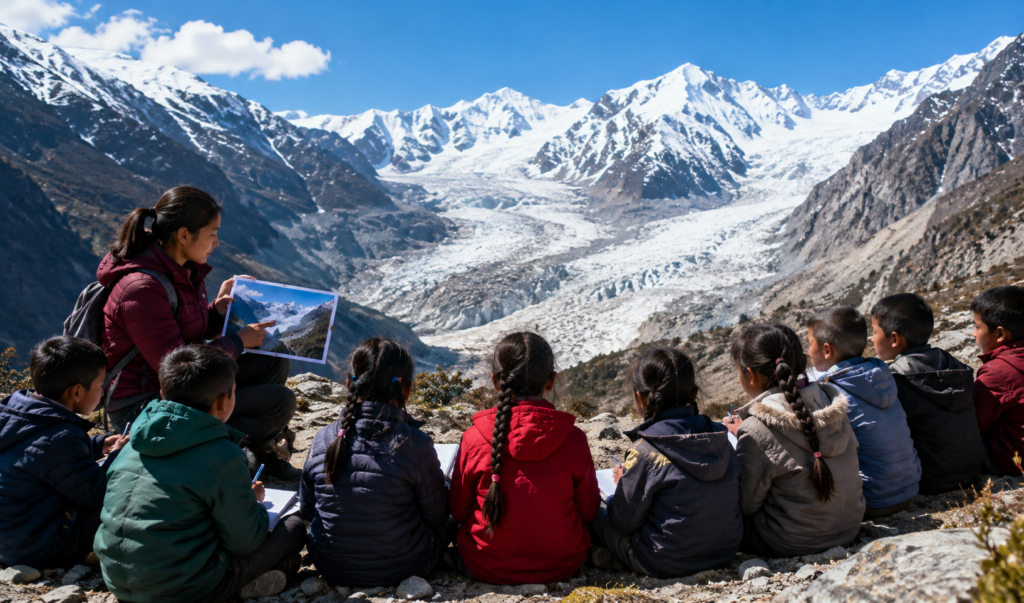
This is not a far-off climate story. It happened in our mountains, in our lifetime. And it is exactly why environmental education cannot stay stuck inside a textbook chapter anymore. Children living in the shadow of these glaciers need to understand them, not just memorise facts about them for an exam.
Why the Himalayas Can’t Wait Anymore
The numbers are hard to ignore. Glaciers across the Hindu Kush Himalaya lost about 12% of their total area and 9% of their ice reserves between 1990 and 2020, with the melting rate doubling since the year 2000. Since 1975, some parts of the region have lost up to 27 metres of ice thickness.
ICIMOD’s Director General put it simply. “These aren’t blind spots becoming surprises anymore; they are our new reality.”
That reality touches nearly two billion people. Even if the world manages to hold warming to 1.5°C, the most ambitious global target, the Hindu Kush Himalaya region would still lose about a third of its glaciers by 2100, glaciers that around 250 million mountain dwellers and 1.65 billion people downstream depend on for water. If emissions keep rising the way they are now, the region could lose two-thirds of its glacier ice by the end of this century.
This is the climate crisis playing out in our own backyard, not somewhere far away.
[Watch: DW News on why melting Himalayan glaciers matter for all of Asia]
What Environmental Education Actually Means for Mountain Kids
Environmental education is not one more subject squeezed between Maths and Hindi. It is learning that connects a child’s daily life, the spring near their house, the forest behind their school, the river their village drinks from, to the bigger picture of climate change.
India already has a legal foundation for this. A 1991 public interest litigation filed by lawyer M.C. Mehta led the Supreme Court to order that environmental education be made a compulsory subject at every level of formal education in the country. By July 2004, the Court had directed that a common syllabus, prepared by NCERT, be adopted by every state, with NCERT overseeing how well it was implemented.
So the law is already on the side of environmental education. What’s missing in many Himalayan schools is depth, context, and connection to the mountains right outside the classroom window.
Real environmental education for Himalayan students should cover:
- Glaciers and the cryosphere; how they form, why they are shrinking, and what that means for rivers downstream
- Forests; their role in holding soil, recharging springs, and housing wildlife found nowhere else on Earth
- Rivers and springs; where the village’s drinking water actually comes from
- Biodiversity; the snow leopards, red pandas, and rare birds that share their mountains
- Sustainable living; traditional Himalayan practices that already work, alongside new ideas that can help
The Five Big Challenges Facing the Himalayas Today
1. Melting Glaciers and Climate Change
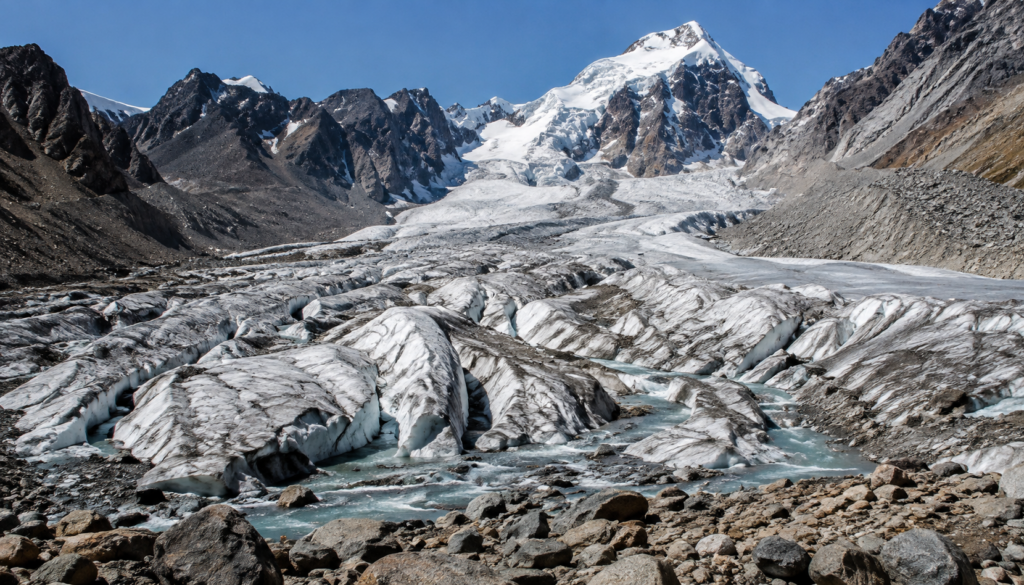
The glaciers are not melting slowly and quietly anymore. A 2023 assessment found that Hindu Kush Himalayan glaciers disappeared 65% faster between 2011 and 2020 than in the previous decade, and called the changes to the region’s ice, snow and permafrost “unprecedented and largely irreversible.”
For students, this isn’t an abstract fact from a textbook. It is the reason why the trekking trail their uncle used as a guide looks different every year, and why the river near their home floods at strange times now.
2. Water Scarcity
This might be the most overlooked crisis in the entire region. Nearly 50% of the springs across the Indian Himalayan Region have dried up or are drying, according to NITI Aayog, affecting thousands of villages that depend on spring water for drinking and farming. In Sikkim alone, where 94% of villages depend on springs, even a 50% drop in discharge in vulnerable areas translates directly into serious household water shortages.
In Himachal Pradesh, the picture is just as worrying. Local conservationists say more than 70% of springs in some areas have either died out completely or turned seasonal, leaving villages short of water for both drinking and irrigation.
A village doesn’t run out of water overnight. It runs out one dry spring at a time, and most of us never notice until it’s gone.
3. Biodiversity Loss
The Himalayas are one of the world’s great biodiversity hotspots, and climate change is quietly rearranging who lives where. Species such as the snow leopard, Himalayan musk deer, golden snub-nosed monkey and Himalayan grey langur are already shifting their ranges as habitats shrink, while populations of species like the giant panda, blue sheep, Tibetan antelope and wild yak have fallen by double-digit percentages in parts of the region.
Plants are moving too. A long-term study in Sikkim found that warming-driven range shifts had already been recorded in 87% of the 124 endemic alpine plant species studied. When a species can only move upward as the mountain warms, it eventually runs out of mountain.
4. Waste Management
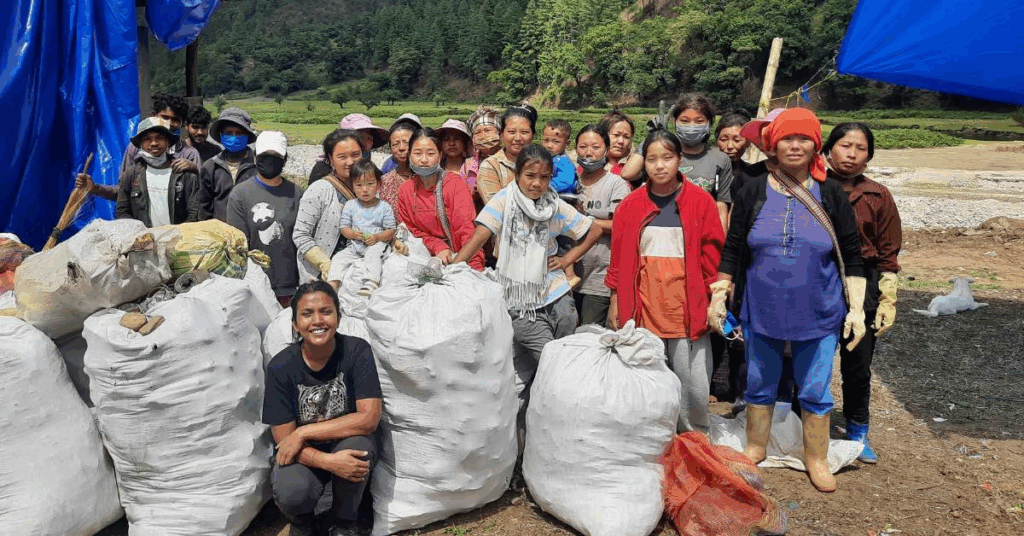
Tourism brings income to mountain communities, but it also brings mountains of trash. Everest Base Camp alone sees roughly 40,000 trekkers, guides and porters twice a year, generating more than 200 tonnes of waste annually. Everest accumulated over 50 tons of waste during the 2023 climbing season alone, earning it the grim nickname “the world’s highest garbage dump.”
The problem isn’t limited to Everest. In 2024, the Himalayan Cleanup campaign collected 121,739 pieces of waste across nine mountain states, and 88% of it was plastic, with nearly 80% coming from single-use food and beverage packaging.
There is good news too. Several organisations across the Indian Himalayan Region came together in April 2025 to form the Zero Waste Himalaya Alliance to tackle this exact problem. Kedarnath now runs a digital deposit-refund system for plastic bottles, and Bhutan’s Green Road Initiative has turned 830 tonnes of waste plastic into 157 kilometres of road, replacing imported bitumen.
5. Unsustainable Development
Roads, hotels, and hydropower projects are reshaping the mountains faster than most policies can keep up with. Every landslide-prone slope that gets built on, every wetland that gets filled in, adds to the pressure already coming from a warming climate. This is exactly where educated, aware local communities can push back and ask better questions before construction starts, not after disaster strikes.
Taking Environmental Education Beyond School Walls
Real change happens when environmental education stops being confined to school hours and reaches entire villages.
The National Green Corps runs Eco-Clubs in roughly 1,20,000 schools across India, under the motto “Catch them young,” getting students involved in biodiversity, water and energy conservation, and waste management from a young age.
Himachal Pradesh has gone a step further. The Centre for Environment Education helped develop 21 “green textbooks” for social science, environmental science and language subjects for classes 6 to 8, and trained more than 300 teachers and resource persons across 120 schools in the state.
Regional collaborations are picking up pace too. IUCN, working with TERI, ran Himalayan Changemakers workshops across five states including Jammu, Ladakh, Dehradun, Shimla and Sikkim, training more than 300 young participants as “Master Trainers” who then take environmental leadership back to their own schools and communities.
And it isn’t only about schoolchildren. Dr Anil Prakash Joshi, founder of HESCO in Dehradun, coined the idea of “Gross Environmental Product,” a measure of ecological health that Uttarakhand officially adopted in 2021, showing how one educator’s idea travelled all the way into state policy.
Ways environmental education is spreading beyond the classroom:
- Village-level spring revival and mapping projects run by trained youth
- Eco-Club plantation and composting drives that involve entire neighbourhoods
- Teacher training programmes that turn local schools into community resource hubs
- Youth-led waste segregation and cleanup campaigns during festival and tourist seasons
- Traditional knowledge-sharing sessions where elders teach sustainable farming and water use
How Educated Youth Become Conservation Leaders
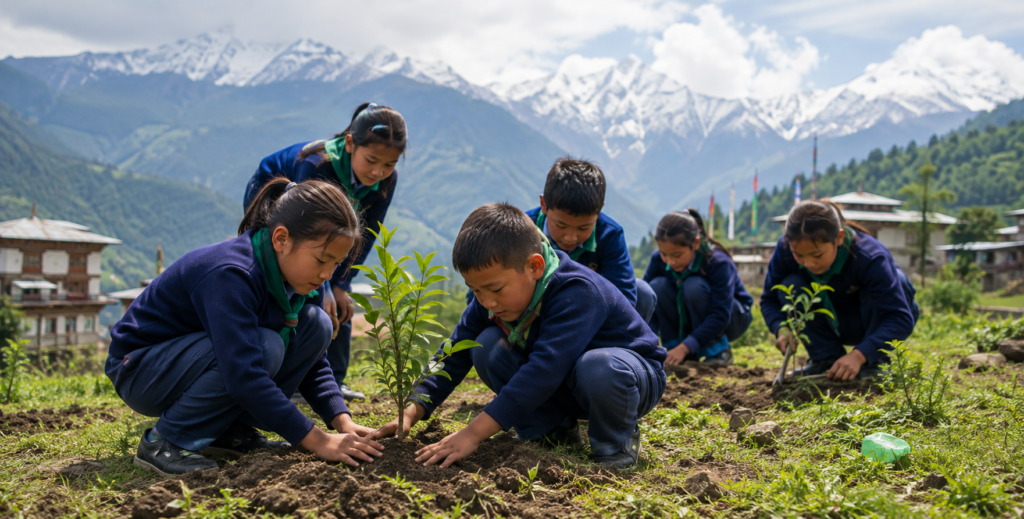
Give a teenager real knowledge about their own mountain, and something shifts. A student who understands why a spring is drying doesn’t just accept it, they start asking why, and often start doing something about it.
Resources Himalaya Foundation set up Environmental Graduates in Himalaya back in 2008, specifically to mentor young people into becoming scientists, advocates and researchers on Himalayan environmental issues. That is nearly two decades of proof that youth-focused environmental education produces real conservation professionals, not just aware citizens.
This matters because the Himalayas need more than concerned adults. They need trained researchers who can track glacier retreat, community organisers who can run spring-revival projects, and local journalists who can tell these stories accurately. Environmental education is the starting point for all three.
Comment From Nikhil Raj Sharma, Founder of Himalayan Geographic
“A textbook can tell a child that a glacier is melting. Only their own valley can teach them why it matters. That’s the difference environmental education makes when it moves beyond the classroom and into the village.”
“We keep looking for outside experts to save the Himalayas. The truth is, the next generation of conservationists is already sitting in our village schools. They just need someone to hand them the right knowledge early enough.”
“Protecting the Himalayas doesn’t start with policy. It starts with a child who knows the name of the spring near their house, and understands why it’s drying up.”
“Climate change, water scarcity, waste, biodiversity loss; these sound like separate problems until you realise they all show up first in a village classroom. That’s exactly where environmental education has to begin.”
Simple Ways You Can Start Today
You don’t need to run an NGO to make a difference. Here’s where to begin:
- If you’re a teacher: Take one class outside this month. Show students the nearest spring, stream, or patch of forest and ask what they notice has changed.
- If you’re a parent: Talk to your kids about where your village’s water actually comes from. Most children have never asked.
- If you’re a student: Join or start an Eco-Club at your school. It costs nothing and NGC support is already available in most districts.
- If you’re a trekker or tourist: Carry your waste back out. Programs like Everest’s “Carry Me Back” initiative make it easy to bring even a small bag of sorted trash to a proper disposal point.
- If you run a homestay or small business: Set up a plastic bottle deposit-refund system like Kedarnath’s, even a basic version helps.
[Watch: How glacier melt is already reshaping communities across Asia]
Quick FAQ
Is environmental education compulsory in Indian schools? Yes. Since a Supreme Court order in the early 2000s, environmental education has to be part of the curriculum in every state, with NCERT overseeing implementation nationwide.
Which Himalayan states are most affected by water scarcity? Sikkim is especially vulnerable, with 94% of its villages depending on springs for water, but Himachal Pradesh and Uttarakhand are seeing similar drying trends.
Can students really help with glacier or biodiversity research? Yes. Youth-training programmes like Himalayan Changemakers and Environmental Graduates in Himalaya exist specifically to turn interested students into trained contributors, not just spectators.
Protecting the Himalayas Begins With Understanding Them
The Himalayas gave us our rivers, our weather, and for many of us reading this, our homes. They are asking for very little in return, just that the next generation understands them well enough to protect them.
Environmental education is not a luxury subject for the Himalayas. It is survival knowledge, dressed up as a school lesson. Every eco-club, every green textbook, every teacher who takes a class outside instead of staying indoors is quietly building the generation that will keep these mountains alive.
Further Reading & Sources:
- Protecting the Himalayas: Clean and Responsible Tourism
- Tibetan Youth at a Crossroads
- Maps of Memory: The Forgotten Trade Routes of the Trans-Himalayas
- ICIMOD, HKH Glacier Outlook 2026
- ICIMOD, HI-WISE Report 2023
- Down To Earth, on NITI Aayog springs report
- Down To Earth, on HKH biodiversity
- Nature (Scientific Reports), South Lhonak GLOF study
- GEEP, Compulsory Environmental Education in India case study
- IUCN, Himalayan Changemakers story
Disclaimer: The content and images published in this article are provided for general informational and educational purposes only. Some images may be generated or enhanced using artificial intelligence (AI) and are intended solely for illustrative use. The views, interpretations, and information expressed do not necessarily reflect the official position of Himalayan Geographic Research Foundation, nor do they constitute professional, legal, medical, or financial advice.
While efforts are made to ensure accuracy, no guarantees are given regarding completeness or reliability. Readers are encouraged to independently verify information and use their own judgment. By reading this article, you acknowledge that any reliance on the content is at your own risk, and Himalayan Geographic Research Foundation assumes no responsibility or liability for disagreements, interpretations, or outcomes arising from its use. If you do not agree with these terms, you are advised to discontinue reading.