
How Himalayan village life transforms during winter. From ancient survival techniques to community bonds, explore the resilience of families living at 10,000+ feet above sea level.
When the first snowfall blankets the Himalayan villages in October, something remarkable happens. Roads close. Temperatures plummet to -20°C. Yet life doesn’t stop; it transforms into something far more profound than mere survival.
Did you know that families in villages like Chitkul and Tabo store enough food to last 6-8 months without a single trip to the market? While most of us panic-buy groceries before a weekend storm, these high-altitude communities have perfected the art of winter resilience over thousands of years.
This isn’t just a story about cold weather. It’s about human spirit, ancient wisdom, and communities that thrive where nature seems to say “impossible.”
The Reality of High-Altitude Winter Living
Himalayan village life during winter operates on a different clock entirely. When snow covers mountain passes and temperatures freeze water in copper pipes, families retreat into a carefully orchestrated rhythm that their ancestors perfected generations ago.
In villages perched between 8,000 to 14,000 feet, winter isn’t a three-month season. It’s a six-month commitment that begins in October and doesn’t release its grip until April.
The challenge? Everything from food to fuel becomes scarce when roads close.
Ancient Techniques Meet Modern Needs
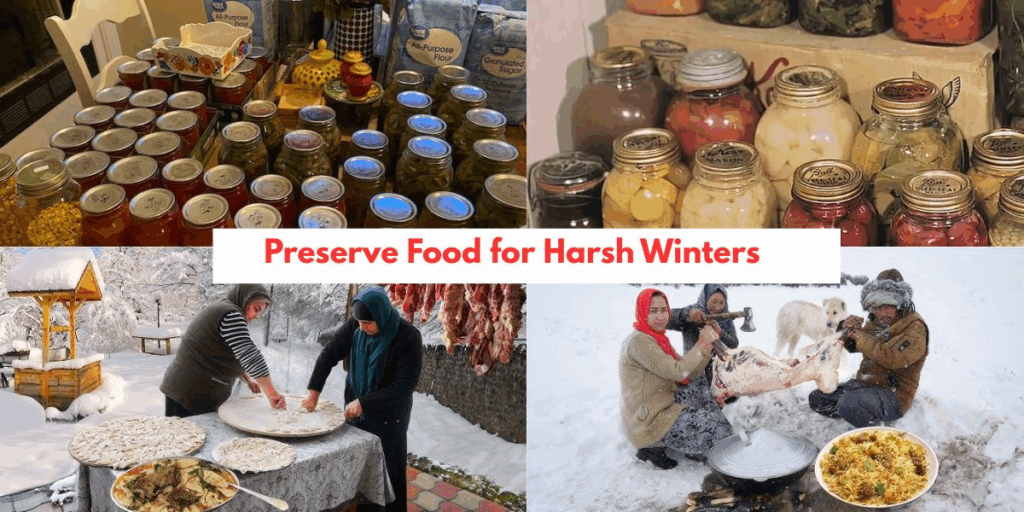
Walk into any traditional Himalayan home before winter, and you’ll find spaces transformed into food warehouses. But this isn’t random stockpiling; it’s systematic preservation honed over centuries.
Traditional Food Preservation Methods:
- Sun-drying vegetables on rooftops during September; potatoes, pumpkins, and leafy greens lose moisture but retain nutrients
- Fermenting milk into chhurpe (dried cheese) that lasts months without refrigeration
- Storing grains in wooden boxes lined with local herbs that naturally repel insects
- Pickling radishes and turnips in earthen pots buried partially underground where temperature stays constant
- Smoking meat over juniper and pine fires, creating preserved protein that feeds families until spring
Grandmother Tashi Dolma from Spiti Valley shares her wisdom: “My mother taught me that winter preparation begins in summer. Every sunny day in August, we dry something. Every cool evening in September, we pickle something. Winter survival isn’t about luck; it’s about respect for time and seasons.”
Recent studies show these traditional preservation methods retain 60-70% of original nutrients, often outperforming modern freezing techniques for certain vegetables.
When Every Flame Counts
Heating a home at 12,000 feet when outside temperatures hit -25°C isn’t just about comfort; it’s literally life or death. Families in villages like Kibber and Langza approach fuel management with military precision.
The Fuel Hierarchy
Most Himalayan households rely on a three-tier fuel system:
Primary Source: Dried yak or cow dung cakes (kanda). Families collect and dry these throughout summer, stacking thousands of circular patties that look like brown coins. One medium-sized family needs approximately 2,000-3,000 dung cakes for winter.
Secondary Source: Wood collected from dead trees and fallen branches during autumn. Sustainable harvesting means never cutting live trees; a practice enforced by village councils with surprising strictness.
Emergency Backup: Kerosene and LPG when available, though transporting these to remote villages before road closure costs 3-4 times the valley price.
Sonam Wangchuk, an innovative educator from Ladakh, notes: “The bukhari (traditional wood stove) in Himalayan homes isn’t just a heater. It’s the heart of winter life; where food cooks, clothes dry, and families gather. Modern heaters give warmth; bukharis give warmth and community.”
Check out this fascinating documentary on traditional Himalayan winter preparations: Life in the Himalayas – Winter Survival
When Animals Are Family
In Himalayan village life, livestock aren’t just assets; they’re partners in survival. The bond between families and their animals deepens during winter when both depend on each other completely.
Bringing Animals Indoors
Most Himalayan homes have a ground floor specifically designed as winter housing for animals. Yaks, dzos (yak-cattle hybrids), sheep, and goats spend winter months in these heated spaces below human living quarters.
Why this arrangement? The body heat from animals rises, naturally warming the living space above while reducing fuel needs. It’s ancient passive heating that modern architects now call “biomass thermal exchange.”
Daily Winter Livestock Routine:
- 6:00 AM: Breaking ice in water troughs, feeding stored hay and grain
- 8:00 AM: Mucking stalls and collecting fresh dung for fuel
- 10:00 AM: Brief outdoor exercise if weather permits (crucial for animal health)
- 4:00 PM: Evening feeding and health checks
- 6:00 PM: Securing animals for the night
Tenzin Norbu, a yak herder from Kibber village, explains: “In summer, my yaks roam free on mountain pastures. In winter, I know each animal’s personality, health quirks, and favorite sleeping spot. Winter makes you a better herder because you must pay attention to every detail.”
Community Rituals
Here’s what makes Himalayan village life truly special: when winter physically isolates communities, social bonds actually strengthen.
Winter Gathering Traditions
Gongma: Evening assemblies where entire villages gather in the largest home or community hall. Stories pass between generations, songs echo off wooden beams, and chang (local barley beer) flows freely.
Losar Preparations: The Tibetan New Year falling in February becomes a months-long project. Families trade preserved foods, share fuel resources, and collectively prepare for the biggest celebration of winter.
Spinning and Weaving Circles: Women gather daily to spin wool and weave fabric, their hands working while voices share news, jokes, and ancient wisdom. These circles are social media before social media existed.
Religious Ceremonies: Monastery festivals and prayer gatherings increase during winter. With less physical work possible, communities invest more time in spiritual practices.
Lhamo Tsering, a teacher in Tabo village, observes: “Summer brings tourists and work that scatters families. Winter brings us back to each other. My children learn more about our culture in one winter of evening stories than in three years of summer busyness.”
When School Itself Is an Act of Resilience
Imagine walking two miles through knee-deep snow in -15°C temperatures just to reach a classroom. That’s winter education in remote Himalayan villages.
The School Challenge
Most government schools in high-altitude regions officially close during peak winter (December-February). But families face a dilemma: do children stay in villages learning traditional skills, or relocate to boarding schools in warmer valleys?
The Stay-Home Option:
Children who remain in villages during winter receive education that no classroom can provide:
- Learning traditional crafts from grandparents
- Understanding seasonal astronomy and weather prediction
- Mastering food preservation and fuel management
- Participating in religious ceremonies and cultural practices
- Developing resilience and problem-solving in challenging conditions
The Boarding School Option:
Many families now send children to residential schools in towns like Kaza, Keylong, or even further to Shimla and Chandigarh. This ensures formal education continues but creates emotional challenges.
Dolkar Yangchen, whose two children study in a boarding school five hours away, shares: “Every October when I pack their bags, my heart breaks a little. But I also know they’re learning skills for a world that’s changing. When they return in April, they teach me English and computers. I teach them barley farming and weaving. Both educations matter.”
Watch this moving short film about Himalayan children’s education journey: Children of the Himalayas – Education Journey
Daily Life Rhythms
Winter transforms the very concept of time in Himalayan village life. Days structured around productivity in summer become days structured around conservation and community in winter.
A Typical Winter Day in Spiti Valley
Dawn (6:30-8:00 AM): The bukhari crackles to life, breaking night’s cold grip. Morning prayers echo from household altars. Breakfast is typically tsampa (roasted barley flour) mixed with butter tea; high calories and warming from the inside.
Morning (8:00 AM-12:00 PM): Men tend to livestock and make essential repairs to homes. Women prepare the day’s main meal, a process taking 3-4 hours when using traditional stoves. Children help with both while learning skills through participation.
Afternoon (12:00-3:00 PM): The warmest hours bring outdoor activity if weather permits. Snow clearing from roofs (crucial to prevent collapse), fetching water from community taps, visiting neighbors, or participating in community projects.
Evening (3:00-9:00 PM): Families and friends gather around bukharis. This is when village life truly shines; storytelling, card games, prayer sessions, and long conversations that strengthen social fabric. Dinner happens around 6:00 PM, followed by more socializing.
Night (9:00 PM onward): Early sleep is common, preserving both fuel and personal energy. In homes, entire families often sleep in the warmest room to maximize heat efficiency.
Voices from the Mountains
Tsering Palden, 67, from Langza Village:
“People ask me if winter is hard. I tell them; winter is honest. In cities, you can hide from yourself with distractions. In winter mountains, you face who you are. We face cold, darkness, and isolation. And we discover we’re stronger than we imagined. That’s not hardship; that’s education.”
Yangchen Dolma, 34, schoolteacher in Tabo:
“My students in October are scattered, energetic, sometimes unfocused. The same students in March are centered, patient, deeply connected to their families and culture. Winter teaches discipline that no classroom lesson can match.”
Nawang Dorje, 45, yak herder from Kibber:
“Tourists come in summer and say ‘paradise.’ They see green meadows and blue skies. But they miss the real beauty. Real beauty is February morning when my neighbor walks through snow to bring my sick wife medicine. Real beauty is March evening when the entire village shares one family’s last bag of flour until supplies arrive. Summer is pretty. Winter is profound.”
Modern Challenges to Traditional Life
While romantic portrayals of Himalayan village life abound, communities face real contemporary challenges that threaten traditional winter resilience.
Climate Change Impact
Unpredictable snowfall patterns disrupt centuries-old preparation rhythms. Villages that traditionally received heavy snow in November now might see nothing until January, throwing off livestock grazing and water planning.
Winter temperatures are paradoxically becoming more extreme; colder lows but also sudden warm spells that create dangerous ice conditions.
Youth Migration
Younger generations increasingly choose year-round urban employment over seasonal mountain life. This creates labor shortages during crucial preparation months and threatens cultural knowledge transfer.
Economic Pressures
Everything costs more in high-altitude winter isolation. A kerosene can costing ₹50 in valley towns reaches ₹200 in villages before road closure. LPG cylinder prices triple. Families must either pay premium prices or rely entirely on traditional fuels.
Infrastructure Gaps
While some villages now have solar panels and satellite internet, many still lack reliable electricity and communication during winter months. Medical emergencies become life-threatening when the nearest hospital is an impossible journey away.
Innovation Meets Tradition
Despite challenges, Himalayan communities are adapting creatively, blending ancestral wisdom with modern innovation.
Solar Passive Architecture
Organizations like SECMOL (Students’ Educational and Cultural Movement of Ladakh) are building homes that capture and store solar heat, reducing fuel needs by 60-70% while maintaining traditional aesthetics.
Community Cold Storage
Some villages are establishing shared cold storage facilities powered by solar panels, allowing better food preservation and even enabling small-scale vegetable sales when roads reopen.
Telemedicine Networks
Satellite internet has enabled basic telemedicine consultations, reducing (though not eliminating) dangerous emergency evacuations during winter.
Digital Documentation
Younger community members are recording elders’ knowledge about weather prediction, traditional medicine, and survival techniques; preserving cultural wisdom in new formats.
Nikhil Raj Sharma, founder of Himalayan Geographic, reflects: “What strikes me most after documenting Himalayan communities for years is their adaptive intelligence. These aren’t people stuck in the past resisting change. They’re sophisticated selectors; keeping what works, adapting what needs improvement, and creating hybrid solutions that honor both tradition and progress. Western sustainability experts could learn immensely from their practical wisdom.”
What We Learn from Winter Resilience
Himalayan village life during winter offers profound lessons for our increasingly uncertain world:
Community Over Individualism: When survival depends on cooperation, people naturally prioritize collective wellbeing over personal convenience.
Preparation Over Panic: Systematic preparation eliminates panic. Families who spend summer and autumn preparing face winter with calm confidence.
Simplicity Creates Abundance: With fewer possessions and distractions, families report feeling spiritually richer despite material simplicity.
Nature as Teacher: Rather than fighting nature, mountain communities study patterns and adapt rhythms to work with natural cycles.
Resilience Through Connection: The strongest predictor of winter wellbeing isn’t wealth or resources; it’s social connection and community support.
Responsible Winter Tourism
Interested in experiencing authentic Himalayan village life? Consider these ethical approaches:
Homestay Programs: Organizations like Ecosphere Spiti arrange winter homestays where visitors participate in daily life while contributing fairly to host families.
Cultural Immersion Programs: Multi-week programs teach traditional skills like wool spinning, butter tea making, and bread baking while supporting local economies.
Volunteer Opportunities: Some schools and health clinics welcome winter volunteers who can handle extreme conditions and truly contribute.
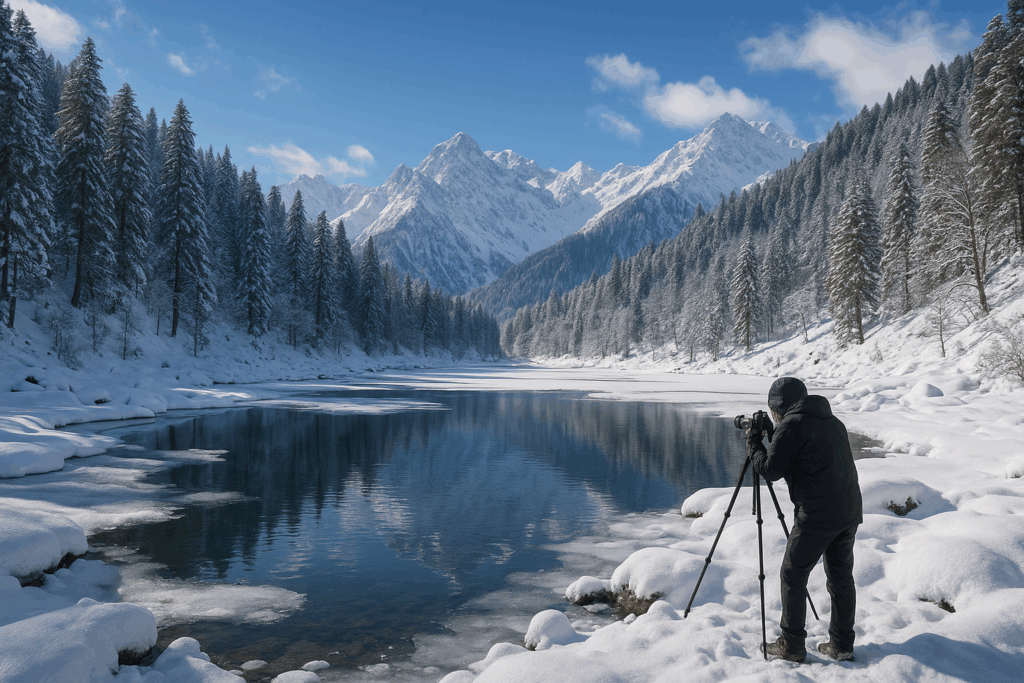
Documentation Projects: Photographers, writers, and researchers can collaborate with communities to document changing traditions.
Important Ethics: Never treat people as photo subjects without permission. Contribute financially to communities you visit. Respect that extreme winter conditions make some villages genuinely inaccessible; and that’s okay.
Winter Wisdom for Modern Times
As climate change, economic uncertainty, and social fragmentation challenge modern societies, the resilience demonstrated in Himalayan village life offers unexpected relevance.
These communities prove that humans can thrive; not just survive; in challenging conditions when we prioritize preparation, cooperation, and cultural continuity.
Winter in the Himalayas isn’t something to endure. It’s something to embrace, learn from, and ultimately celebrate as a season that reveals our deepest strengths.
The next time you complain about a cold morning commute, remember families waking at 6:00 AM in -20°C temperatures, breaking ice to water yaks, preparing food over wood fires, and still finding joy in evening gatherings around glowing bukharis.
That’s not hardship. That’s mastery of life itself.
Comments from Nikhil Raj Sharma, Founder, Himalayan Geographic:
“This piece captures something I’ve witnessed repeatedly during my winter expeditions; the quiet dignity with which mountain communities handle challenges that would break most modern systems. Last February, I stayed with a family in Langza whose entire winter food supply had been compromised by unusual moisture. Without complaint or drama, neighboring families simply shared their provisions until spring supplies arrived. No government program coordinated this; just ancient social contracts that value collective survival over individual accumulation. These stories matter because they challenge our assumptions about what ‘development’ means and who actually has it figured out.”
“What readers should understand is that winter resilience in Himalayan villages isn’t romantic primitivism; it’s sophisticated adaptation. These communities have engineered social systems, agricultural practices, and architectural solutions that address problems our modern world is only now recognizing. As someone who documents these regions, my role isn’t to freeze them in amber or push them toward westernization. It’s to help these voices reach audiences who might actually listen and learn.”
>> We strive to use only images that are either royalty-free, in the public domain, or shared with appropriate permissions. However, if you believe any image on this website has been used without proper credit or violates copyright, please contact us immediately. We will promptly review the content and, if necessary, update the attribution or remove the image without delay. We do not claim ownership of any third-party images unless explicitly stated.
