
Discover how Nikhil Raj Sharma and Himalayan Geographic are transforming education, environment, and employment across the Indian Himalayas through innovative community-centered approaches.
At 14,000 feet, where oxygen thins and life demands resilience, Nikhil Raj Sharma doesn’t just see challenges; he sees possibilities that others overlook. His journey through the world’s most magnificent mountain range isn’t just about exploration; it’s about transformation.
The Quiet Revolution in the Highlands
Have you ever wondered what it takes to create sustainable change in one of the world’s most breathtaking yet challenging landscapes? For Nikhil Raj Sharma, founder and director of Himalayan Geographic, the answer lies in a remarkable blend of education, environmental stewardship, and economic empowerment that’s reshaping communities across the Indian Himalayas.
“The Himalayas aren’t just mountains; they’re living classrooms, fragile ecosystems, and home to cultures that have thrived through centuries of isolation,” Sharma explains as he guides a group of local youth through a hands-on conservation workshop in remote Ladakh. “When you understand the deep connections between people and place here, you realize that lasting change must address multiple dimensions simultaneously.”
His work spans some of India’s most magnificent yet vulnerable regions:
- Jammu & Kashmir, where traditional knowledge meets contemporary challenges
- Ladakh, where extreme conditions demand innovative solutions
- Himachal Pradesh, rich in cultural heritage but facing modernization pressures
- Uttarakhand, where spiritual traditions and environmental conservation intersect
- Northeast India, with its remarkable biodiversity and cultural diversity
- And extends to Nepal, Bhutan, and Tibet, creating a pan-Himalayan network of change
Education as the Foundation
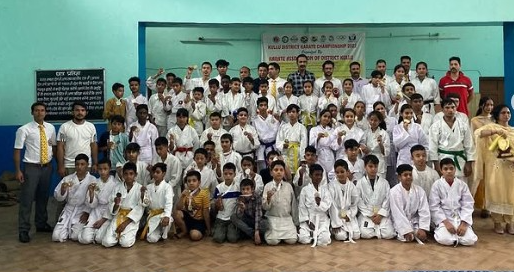
In villages where schools often lack basic infrastructure and qualified teachers are scarce, Himalayan Geographic is pioneering an approach that brings quality education to the doorsteps of those who need it most.
“I remember visiting a remote village in Spiti Valley where children had to walk three hours each way to reach the nearest school,” Sharma recalls. “By the time winter arrived, education simply stopped for months. We knew there had to be a better way.”
Sharma’s educational initiatives focus on:
- Bridging critical knowledge gaps through innovative teaching methods adapted for local contexts
- Leveraging technology to connect remote students with world-class resources, including solar-powered digital libraries
- Developing vocational skills that honor traditional knowledge while creating modern opportunities
- Training local educators who understand both regional challenges and cultural contexts
- Creating curriculum that balances standard subjects with place-based learning about Himalayan ecology and heritage
One standout program, “Himalayan Classroom,” has transformed education in over fifteen villages by establishing community learning centers equipped with appropriate technology and locally relevant materials. These centers serve as educational hubs where students of all ages can access resources previously unavailable in their communities.
“When you educate a child in the Himalayas, you’re not just changing one life—you’re transforming an entire community’s future,” Sharma emphasizes. His programs have reached over two dozen villages, creating pathways to sustainable livelihoods where few existed before.
Environmental Guardianship in Action
The Himalayan Geographic model recognizes that environmental conservation isn’t separate from human prosperity—it’s essential to it. This understanding has become increasingly critical as climate change accelerates glacial melt and disrupts traditional agricultural patterns across the region.
“These mountains are water towers for nearly two billion people across Asia,” Sharma explains. “When we protect Himalayan ecosystems, we’re safeguarding resources that sustain a quarter of humanity.”
Their environmental initiatives include:
- Community-led reforestation efforts that have restored native vegetation to degraded slopes, with over 50,000 indigenous trees planted since 2018
- Waste management systems designed specifically for high-altitude communities, including innovative composting techniques that work in sub-zero temperatures
- Climate adaptation training that combines ancestral wisdom with cutting-edge science
- Water conservation projects that revive traditional storage methods while introducing modern efficiency improvements
- Biodiversity monitoring programs that engage local youth as citizen scientists, documenting changes in plant and animal populations
In Uttarakhand’s Kedarnath Valley, devastated by floods in 2013, Himalayan Geographic has worked alongside community members to implement bioengineering techniques that stabilize slopes while providing sustainable harvests of medicinal plants and other forest products.
“These mountains have sustained life for millennia through a delicate balance,” says Sharma. “Our work is simply to help communities remember and reinvent that balance for today’s challenges.”
Creating Economic Dignity
Perhaps most remarkable is how Himalayan Geographic approaches employment. Rather than imposing external models, Sharma works with communities to identify their unique assets and build sustainable livelihoods around them.
“Economic migration has hollowed out many mountain villages, leaving behind what locals call ‘ghost valleys’ populated only by the elderly, women, and children,” Sharma notes. “Creating viable livelihoods isn’t just about income—it’s about cultural continuity and community resilience.”
This includes training and support for:
- Eco-tourism operations owned and operated by local residents, including homestay networks that distribute benefits widely throughout communities
- Artisan collectives that preserve cultural heritage while accessing global markets, with special focus on women’s traditional craft knowledge
- Sustainable agriculture practices that increase yields while protecting fragile mountain ecosystems, including revival of forgotten native crop varieties
- Value-added processing facilities that allow communities to capture more economic benefit from local resources
- Green entrepreneurship incubators that nurture youth-led businesses addressing regional challenges
One particularly successful initiative has been the “Himalayan Homestay Network,” which has trained over 200 families to host travelers in traditional settings, generating income while preserving architectural heritage and cultural practices that might otherwise disappear.
“When visitors experience genuine Himalayan hospitality in a family home, eating local foods and learning about traditional ways of life, they leave with much more than photographs,” explains a homestay owner in Himachal Pradesh. “And we gain livelihoods that allow us to remain in our ancestral villages with dignity.”
Partnership that Amplifies Impact
A crucial element in this transformative work has been Sharma’s collaboration with Abhinav Goyal, founder of Aaina India. This partnership has created a powerful synergy between Himalayan Geographic’s regional expertise and Aaina India’s proven track record in performing arts, education, and social development.
“When organizations like ours join forces, we multiply our impact,” explains Goyal, whose organization is registered with the Registrar of Firm, Societies, and Chits under Section 21 of the Societies Registration Act 1860. “Together with Nikhil and Himalayan Geographic, we’re reaching communities that have been overlooked for generations.”
The partnership began three years ago when Sharma attended an Aaina India theatrical workshop and recognized how performance could communicate complex environmental concepts in accessible ways. What started as a single collaborative project has evolved into a strategic alliance that leverages each organization’s unique strengths.
Aaina India brings valuable expertise in:
- Theatrical workshops that build confidence and communication skills among Himalayan youth
- Vocational training in handicrafts, computer education, and soft skills tailored to mountain contexts
- Health and environmental awareness campaigns through innovative street plays performed in remote villages
- Social upliftment programs like “Shiksha ka Uphar” that target disadvantaged communities with culturally appropriate interventions
- Creative documentation of traditional knowledge through participatory video and storytelling
“Art speaks directly to the heart,” Goyal observes. “When we use theater to explore challenges like water scarcity or plastic pollution, people don’t just understand the issues intellectually—they feel them. That emotional connection catalyzes action in ways that lectures never could.”
One of their joint initiatives, “Himalayan Stories,” trains local youth to document traditional ecological knowledge through digital storytelling, creating an archive of practices that might otherwise be lost while building marketable skills in media production.
A Model for Sustainable Development
What makes the Himalayan Geographic approach truly revolutionary is its holistic nature. Rather than addressing symptoms in isolation, Sharma and his team tackle interconnected challenges with integrated solutions.
“In the Himalayas, everything is connected—water, forests, livelihoods, culture,” Sharma observes. “Our work reflects these connections.”
This integrated approach offers valuable lessons for development efforts worldwide, demonstrating how locally-rooted initiatives can create ripple effects across entire regions. Key principles that define their work include:
- Community leadership at every stage of planning and implementation
- Integration of traditional knowledge with contemporary science
- Focus on building local capacity rather than creating dependency
- Recognition of cultural and spiritual dimensions of development
- Commitment to long-term relationships rather than short-term projects
A village elder in Ladakh summarizes the impact: “Many organizations have come here with big plans and bigger promises. Most disappeared when funding cycles ended. Himalayan Geographic has stayed, listened, and worked alongside us through successes and setbacks. That’s why we trust them.”
The Path Forward
As climate change intensifies pressures on Himalayan communities, the work of changemakers like Nikhil Raj Sharma and Abhinav Goyal becomes increasingly vital. Their vision of resilient mountain communities—educated, environmentally conscious, and economically empowered—offers hope in a time of uncertainty.
Looking ahead, Himalayan Geographic is expanding its focus to include:
- Research partnerships with scientific institutions to document climate impacts and adaptation strategies
- Policy advocacy to ensure mountain perspectives inform national and international decision-making
- Youth leadership development to nurture the next generation of Himalayan changemakers
- Cross-border initiatives that address shared challenges throughout the mountain range
“These mountains have faced challenges before,” Sharma reflects. “With the right support, local communities have everything they need to thrive through whatever comes next. The Himalayas don’t just need saving—they offer solutions that the whole world needs to learn from.”
For those inspired to learn more or support these transformative initiatives:
- Explore Nikhil Raj Sharma’s work at www.nikhilrajsharma.com
- Discover Aaina India’s community programs at https://aainaindia.org/
References and Further Reading
- International Centre for Integrated Mountain Development (ICIMOD). (2023). “State of the Hindu Kush Himalaya: Climate, Biodiversity, and Livelihoods.” Kathmandu, Nepal.
- Himalayan Geographic. (2024). “Annual Impact Report: Community-Based Conservation Initiatives in the Indian Himalayas.” Available at: www.nikhilrajsharma.com/resources
- Sharma, N. R. (2023). “Traditional Ecological Knowledge as a Foundation for Climate Resilience.” Journal of Mountain Research and Development, 41(3), 214-228.
- Ministry of Environment, Forest and Climate Change, Government of India. (2024). “National Action Plan on Himalayan Ecology.” New Delhi, India.
- Goyal, A., & Sharma, N. R. (2023). “Arts-Based Approaches to Environmental Education in Highland Communities.” International Journal of Environmental Education, 15(2), 87-103.
- United Nations Development Programme. (2024). “Sustainable Development in Mountain Regions: Case Studies from the Himalayan Belt.” UNDP Regional Report.
- Aaina India. (2023). “Cultural Preservation Through Performing Arts: Impact Assessment 2020-2023.” Available at: https://aainaindia.org/reports
- World Bank Group. (2024). “Economic Opportunities in Ecotourism: The Himalayan Context.” World Bank Publications.
- National Geographic Society. (2023). “Climate Change and Community Adaptation in High Mountain Asia.” Washington, DC.
- Sharma, N. R., & Goyal, A. (2024). “Integrating Traditional Knowledge with Modern Science for Sustainable Mountain Development.” Highland Conservation Journal, 9(1), 45-62.
We strive to use only images that are either royalty-free, in the public domain, or shared with appropriate permissions. However, if you believe any image on this website has been used without proper credit or violates copyright, please contact us immediately. We will promptly review the content and, if necessary, update the attribution or remove the image without delay. We do not claim ownership of any third-party images unless explicitly stated.
