
How geographical isolation and systemic neglect leave pregnant Himalayan women without basic maternal healthcare. Learn about grassroots solutions transforming lives in remote Uttarakhand villages through community-driven healthcare initiatives.
When I stood at the edge of a mountain village in Uttarkashi last winter, watching a pregnant woman struggle down a treacherous mountain path in labor, I knew something had to change. Her journey to the nearest clinic would take three hours; if the roads weren’t blocked by landslides. This wasn’t an isolated incident. It was the reality for thousands of women across the Himalayas.
The numbers tell a devastating story. Research shows women in Himalayan regions have 58% lower odds of receiving skilled birth attendance compared to those in plains areas. In some mountain villages, institutional delivery rates drop to just 35.7%, while nearly universal coverage exists in other parts of India.
The Mountain Between Women and Healthcare
When Geography Becomes Destiny
Living across Uttarakhand’s mountain districts; from Uttarkashi to Rudraprayag and Tehri Garhwal; opened my eyes to realities many never see. During the COVID-19 pandemic, when systems were failing everywhere, I witnessed how women’s health concerns were the first to be sidelined. Emergency after emergency revealed the same pattern: geography was determining who lived and who didn’t.
The terrain here doesn’t just challenge you; it isolates you. More than 80% of mountain villages have fewer than 500 residents. During monsoons, landslides block roads for weeks. A woman experiencing pregnancy complications might need to walk for hours just to reach a point where a vehicle can access. By then, it’s often too late.
Landslides frequently block roads during wet monsoon season, creating significant obstacles for villagers trying to reach health facilities, compounding the challenges pregnant women already face in these remote areas.
The Silent Emergency Nobody Talks About
Over half of women in these mountain villages are severely anemic and malnourished. Prolonged working hours; often 12 to 14 hours daily collecting firewood, fetching water, and managing livestock; leave them physically depleted. When pregnancy arrives, their bodies are already compromised. Weakness, muscle pain, back pain, and hypertension become the baseline, not the exception.
The healthcare infrastructure? Often non-existent or so understaffed it might as well be. Over half of women in mountain villages suffer from severe anemia and malnutrition, combined with limited healthcare services, resulting in alarming maternal and child mortality rates.
When Systems Fail, Women Pay the Price
The Pandemic That Exposed Everything
I’ll never forget March 2020. As COVID-19 swept through Uttarakhand, I started delivering cooked food to laborers and street vendors who had lost their income overnight. But it was the pregnant women who haunted me most. Clinics were closing. Health workers were being redeployed. Pregnant women were being told to “wait it out at home.”
The pandemic didn’t create these problems; it just made them impossible to ignore. Women’s health needs were systematically deprioritized. The message was clear: maternal care was expendable.
The Budget Tells the Truth
Maternal healthcare remains chronically underfunded in mountain regions. While programs exist on paper; Janani Suraksha Yojana, Pradhan Mantri Surakshit Matritva Abhiyan; their implementation in remote areas remains patchy at best. Primary Health Centers lack basic infrastructure: beds, clean labor rooms, regular electricity, even toilets.
Research confirms what we see on the ground: rural women in hilly regions are 66% less likely to receive skilled birth attendance than rural women in plains. The disparity isn’t accidental; it’s structural.
When Beliefs Become Barriers
Taboos That Cost Lives
Pregnancy in mountain communities carries weight beyond the physical. Cultural beliefs dictate that women shouldn’t complain, shouldn’t seek help unless absolutely desperate, shouldn’t prioritize their own health over family needs. “Pregnancy is natural,” they say. “Women have been doing this for centuries.”
But natural doesn’t mean safe. And centuries of tradition don’t justify preventable deaths.
During my work across Uttarakhand’s districts, I’ve encountered women who believe:
- Eating certain foods during pregnancy will “harm the baby”
- Visiting a doctor shows weakness or lack of faith
- Home births are always safer than hospitals
- Pain during pregnancy is punishment or testing from the divine
Women depend on husbands or elder family members for money or permission to leave home, lacking independence to make decisions about their own health. This power imbalance, shaped by patriarchal society, critically affects maternal healthcare utilization.
The Information Gap That Kills
Many women simply don’t know that danger signs exist. They don’t recognize severe bleeding, persistent headaches, or sudden swelling as emergencies. By the time they realize something is catastrophically wrong, precious hours have been lost.
Unawareness is the most commonly cited reason for not accessing antenatal care services in Uttarakhand, followed by financial constraints. Education matters enormously; but how do you educate women who can’t access schools, who work from dawn to dusk, who are isolated in villages where information moves slowly?
Women as Change Agents
Empowerment Through Knowledge
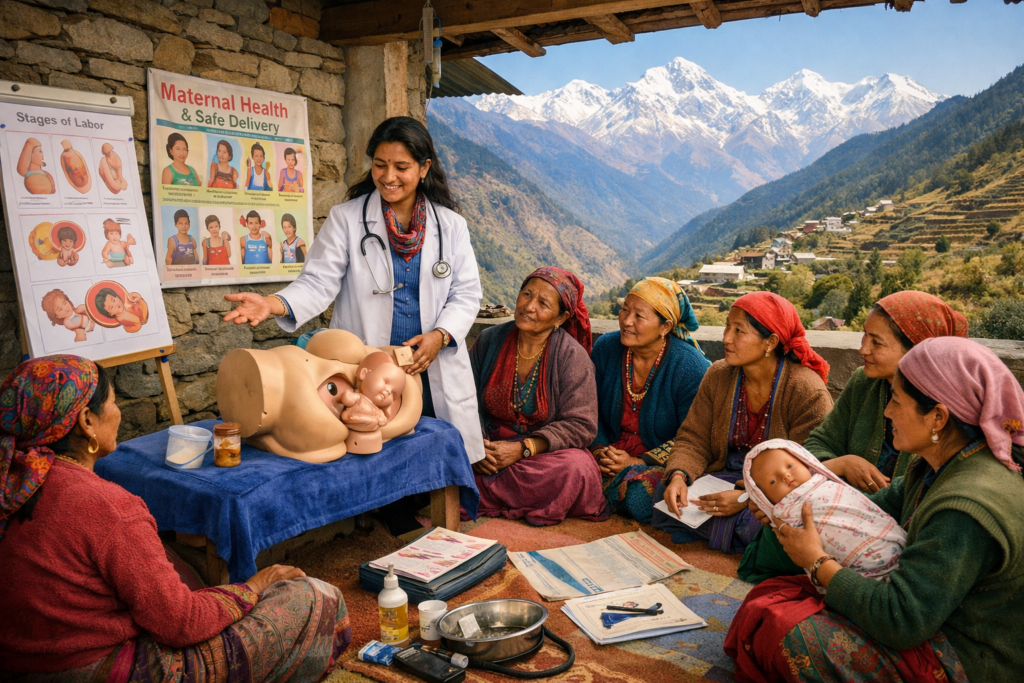
Here’s what I’ve learned: women aren’t the problem; they’re the solution. When we train local women as health educators, everything changes. They speak the language. They understand the culture. They’ve lived the struggles. They have credibility that outsiders; no matter how well-meaning; can never match.
The Pragya Foundation’s approach centers on this principle. We don’t impose solutions; we facilitate them. We work with women-led teams in rural communities because they understand the realities better than any expert from the plains ever could.
Watch this inspiring documentary about maternal health challenges in remote communities: No Woman, No Cry – Documentary
The ASHA Model That Works
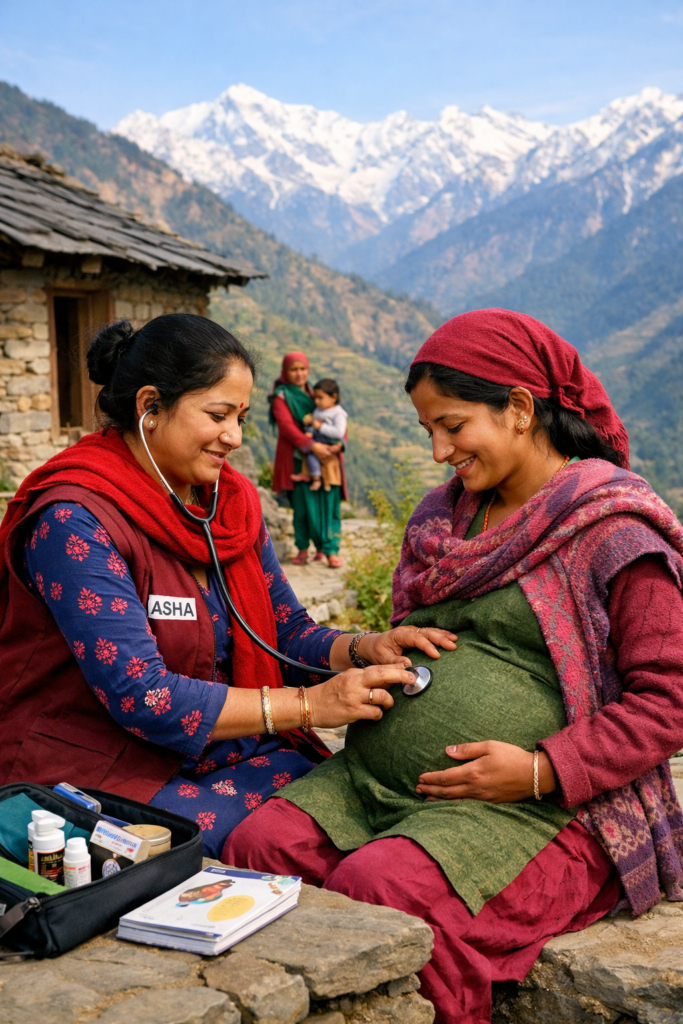
Accredited Social Health Activists (ASHAs) have proven transformative where they’re properly supported. These community health workers bridge the gap between health systems and households. They conduct home visits, provide basic prenatal care, recognize danger signs, and facilitate referrals.
In one Pauri Garhwal village, a dedicated medical officer transformed maternal health by working closely with ASHAs and ANMs. Before 2013, only one in ten women received complete antenatal care. By 2018? Every pregnant woman completed all six ANCs, even those choosing home births.
That’s the power of persistent, community-centered care.
Health, Dignity, and the Environment
More Than Medical Care
At Pragya Foundation, we understand that maternal health doesn’t exist in isolation. A woman living without access to clean water, forced to walk hours for firewood, breathing smoke from indoor cooking fires; she can’t be healthy during pregnancy no matter how many clinics exist.
Our menstrual waste management initiative; collecting and properly disposing of 6,238 kilograms of waste across Tehri district in one year; isn’t separate from maternal healthcare. It’s integral. Dignity, environmental sustainability, and health are interconnected.
Sustainable development means:
- Clean water access reduces pregnancy complications
- Reduced physical burden prevents maternal exhaustion
- Environmental protection ensures healthier communities
- Economic empowerment enables healthcare access
- Community participation ensures program sustainability
The Dignity Difference
Women deserve healthcare that respects them. Too often, they face abusive treatment from health workers, discrimination based on caste or poverty, dismissal of their concerns. Lack of respect from health workers and abusive, degrading behavior emerges as an important factor undermining women’s willingness to seek care.
We must create healthcare systems where women feel safe, heard, and valued; not judged or humiliated. This isn’t just about being nice; it’s about effectiveness. Women won’t return to facilities where they’ve been treated poorly.

Grassroots Solutions
Mobile Health Units
When women can’t reach clinics, clinics must reach women. Mobile health units equipped with basic diagnostic tools, staffed by trained health workers, can transform access in mountainous terrain.
These units provide:
- Routine antenatal checkups in villages
- Basic diagnostic services (hemoglobin testing, blood pressure monitoring)
- Distribution of iron-folic acid and calcium supplements
- Health education and counseling
- Identification and referral of high-risk pregnancies
Community Birthing Centers
Not every birth requires a district hospital. For normal deliveries, community birthing centers staffed by skilled birth attendants offer a middle ground between isolated home births and distant hospitals.
These centers must have:
- Clean, well-equipped delivery rooms
- 24/7 staffing with trained midwives or nurses
- Basic emergency supplies and equipment
- Clear referral protocols for complications
- Postpartum care facilities
Uttarakhand has made progress with 24×7 Primary Health Centers and training for Staff Nurses and ANMs in skilled attendance at birth. But coverage remains insufficient, particularly in the most remote areas.
Emergency Transport Networks
Even with local care, emergencies happen. Hemorrhage, eclampsia, obstructed labor; these conditions require immediate hospital intervention. Without transportation, women die preventable deaths.
We need:
- Dedicated ambulances for maternal emergencies
- Clear communication systems (even basic mobile coverage)
- Community-based emergency funds
- Trained drivers who understand urgency
- Partnerships with existing government 108 ambulance services
Some villages have started pooling resources to maintain a shared vehicle for emergencies. It’s not ideal, but it’s saving lives.
Training Local Health Workers
The most sustainable solution? Invest in people already living in these communities. Train them. Support them. Pay them fairly. Respect their work.
Training programs should cover:
- Recognition of pregnancy danger signs
- Basic antenatal and postnatal care
- Safe delivery practices
- Newborn care and breastfeeding support
- Referral decision-making
- Respectful, woman-centered communication
Research shows that extensive training for traditional birth attendants and local health workers in safe delivery and comprehensive growth monitoring significantly improves outcomes.
Policy Recommendations
1. Prioritize Mountain Healthcare in Budget Allocations
Mountain regions need differential funding models that account for geographical challenges. Per capita allocations don’t work when serving scattered populations across difficult terrain costs exponentially more.
Uttarakhand has implemented promising programs; Village Health Sanitation and Nutrition Days, Jacha Bacha Swasth Divas providing village-level antenatal care. These need expansion and consistent funding.
2. Incentivize Health Workers to Serve Remote Areas
Large vacancies for doctors and nurses in mountain regions stem from inadequate incentives. We must:
- Offer higher salaries for remote postings
- Provide quality housing and infrastructure
- Create career advancement opportunities
- Ensure regular training and professional development
- Build supportive working environments
One medical officer at a Pathisain village PHC transformed care through persistent effort. But we can’t rely on individual dedication alone; we need systemic support.
3. Improve Infrastructure Before Service Delivery
You can’t provide quality care in facilities lacking basic amenities. Before launching programs, ensure:
- Reliable electricity and backup power
- Clean water supply
- Functional equipment and regular maintenance
- Adequate drug and supply stocks
- Private, clean labor and delivery rooms
4. Integrate Technology Thoughtfully
Telemedicine can help, but only with reliable internet and electricity. Where possible:
- Provide teleconsultations for routine checkups
- Enable remote mentoring for health workers
- Use mobile apps for tracking and follow-up
- Maintain digital health records
But technology must supplement, not replace, human healthcare workers.
5. Address Social Determinants Holistically
Screen pregnant women for food insecurity, housing instability, transportation challenges, domestic violence. Partner with other departments; women and child development, rural development, education; to address root causes.
Learn more about maternal health initiatives in Nepal’s mountains: Think Equal: Women’s Health Documentary
The Road Ahead
Every woman who gains dignity through improved healthcare, every stream that remains clean because of waste management, every forest protected from preventable problems; these measure our true impact.
Maternal healthcare in the Himalayas won’t improve through one intervention or one organization. It requires:
Government commitment: Sustained funding, policy priority, infrastructure investment
Community participation: Women-led initiatives, local health workers, cultural engagement
Partnership approaches: NGOs, healthcare providers, and communities working together
Long-term vision: Solutions that persist beyond project timelines
Accountability mechanisms: Monitoring outcomes, learning from failures, adapting approaches
Your Role in This Revolution
You don’t need to live in the Himalayas to make a difference. You can:
- Advocate: Demand that governments prioritize maternal health in budget allocations
- Support: Donate to organizations doing grassroots healthcare work
- Amplify: Share stories and raise awareness about these challenges
- Volunteer: Offer skills; medical, technical, fundraising, communications
- Learn: Educate yourself about maternal health disparities
- Pressure: Hold elected representatives accountable for healthcare access
The Pragya Foundation is just beginning. Every woman who receives care she deserves, every community that gains health infrastructure, every life saved; these are the true measures of progress.
We’re not asking for charity. We’re demanding justice. Maternal healthcare isn’t a luxury; it’s a fundamental right. Geography shouldn’t determine whether a woman survives pregnancy.
The mountains have always required resilience from those who live here. Our work continues that tradition of finding creative solutions to complex challenges. But resilience alone isn’t enough anymore. We need systems that support women, not abandon them.
Additional Resources
Documentaries & Videos:
- Aftershock: Black Maternal Health Crisis Documentary
- The Business of Being Born
- Every Mother Counts Films
Related Articles:
- “Understanding Maternal Mortality in Developing Nations”
- “How Community Health Workers Transform Rural Healthcare”
- “Climate Change and Maternal Health in Mountain Regions”
- “Women’s Empowerment Through Environmental Sustainability”
Nikhil Raj Sharma, Founder, Himalayan Geographic:
“Pragya Dixit’s work represents the future of mountain healthcare; community-centered, sustainable, and deeply respectful of local realities. At Himalayan Geographic, we’ve documented countless stories of resilience in these mountains, but the maternal health crisis remains one of our most urgent challenges. What makes Pragya Foundation’s approach exceptional is its recognition that healthcare doesn’t exist in isolation. By integrating women’s empowerment, environmental sustainability, and dignity into healthcare delivery, they’re addressing root causes, not just symptoms.
The statistics Pragya Dixit cites; 58% lower odds of skilled birth attendance in mountain regions; should shock us into action. But beyond numbers, it’s the individual stories that matter: women walking hours in labor, communities pooling resources for emergency transport, health workers serving despite impossible conditions. This article doesn’t just diagnose problems; it offers tangible, replicable solutions. Mobile health units, community birthing centers, trained local health workers; these aren’t theoretical solutions.
They’re working models that deserve scaling. The Himalayas have always demanded innovation and persistence. Pragya Dixit’s integrated approach shows us that transformation is possible when we listen to communities, empower women as change agents, and commit to long-term, systemic solutions. As media professionals covering Himalayan issues, we must amplify these voices and hold systems accountable.”
Disclaimer: The content and images published in this article are provided for general informational and educational purposes only. Some images may be generated or enhanced using artificial intelligence (AI) and are intended solely for illustrative use. The views, interpretations, and information expressed do not necessarily reflect the official position of Himalayan Geographic Research Foundation, nor do they constitute professional, legal, medical, or financial advice.
While efforts are made to ensure accuracy, no guarantees are given regarding completeness or reliability. Readers are encouraged to independently verify information and use their own judgment. By reading this article, you acknowledge that any reliance on the content is at your own risk, and Himalayan Geographic Research Foundation assumes no responsibility or liability for disagreements, interpretations, or outcomes arising from its use. If you do not agree with these terms, you are advised to discontinue reading.
