
Discover how Pragya Foundation and its visionary founder Ms. Pragya Dixit are revolutionizing women’s health and environmental sustainability across Uttarakhand’s Himalayan communities through innovative menstrual waste management solutions and empowerment initiatives.
The Himalayan Changemaker: How One Woman’s Vision is Transforming Communities
In the shadow of the towering Himalayas, where ancient traditions meet modern challenges, a quiet revolution is unfolding. Through winding mountain roads and remote villages of Uttarakhand, a determined woman moves with purpose, carrying not just resources but hope. This is the story of Ms. Pragya Dixit and the foundation that bears her name; a tale of transformation that begins with something many would rather not discuss: menstrual waste.
The statistics are staggering: 6,238 kilograms of menstrual waste collected across Tehri district in just one year. Forty-nine vehicles modified specifically for this purpose. Fifty kilograms of waste collected daily; and growing. But behind these numbers lies a profound human story of dignity restored, environments preserved, and communities empowered.
A Vision Born from Experience
January 2024 marked the official establishment of Pragya Foundation as a trust, but its roots reach much deeper into the experiences of its founder. Ms. Pragya Dixit’s story is inseparable from the landscapes that shaped her understanding of rural challenges.
“Living across various districts of Uttarakhand opened my eyes to realities many never see,” explains Ms. Dixit, whose quiet determination belies the formidable challenges she has taken on. “During the COVID-19 pandemic, when systems were failing, I witnessed how women’s health concerns were the first to be sidelined.”
Having traversed the diverse terrain of Uttarakhand, from the higher reaches of Uttarkashi to the valleys of Tehri Garhwal and the spiritual centers of Rudraprayag, Ms. Dixit gained firsthand knowledge of the interconnected challenges facing mountain communities. Education and healthcare deficiencies compounded by geographic isolation. Environmental degradation threatening the region’s delicate ecosystems. And always, women bearing the heaviest burdens of these systemic failures.
Where others might have seen insurmountable obstacles, Ms. Dixit envisioned possibilities. The pandemic response became her proving ground; organizing resources, mobilizing community support, and ensuring that women’s specific health needs weren’t forgotten amid the crisis.
This experience crystallized her understanding: sustainable change required a structured approach and a dedicated platform. Thus, Pragya Foundation was born with a dual mission: empowering women while promoting environmental sustainability.
The Menstrual Waste Management Revolution

The foundation’s flagship initiative addresses a challenge rarely discussed but profoundly consequential: the management of menstrual waste. In the ecologically sensitive Himalayan region, improper disposal of sanitary products threatens water bodies, contributes to landfill contamination, and even increases forest fire risks.
“Traditional waste management systems weren’t designed with menstrual waste in mind,” notes an environmental scientist collaborating with the foundation. “In mountainous regions, where waste collection is already complicated by difficult terrain, specialized approaches are essential.”
Pragya Foundation’s innovation lies in its comprehensive approach. Rather than addressing symptoms, they’ve redesigned the entire waste management pipeline; beginning with collection.
The modification of 49 vehicles to include separate compartments for menstrual waste represents more than just logistical improvement. It signals the normalization of menstrual health as a public concern deserving of infrastructural support. These vehicles now traverse both urban centers and remote villages, making previously invisible waste visible; and properly manageable.
The impact extends beyond environmental protection. By creating designated systems for menstrual waste, the foundation has helped destigmatize menstruation itself. Women report feeling greater dignity in disposing of sanitary products when specific, hygienic channels exist for this purpose.
Women Leading Change
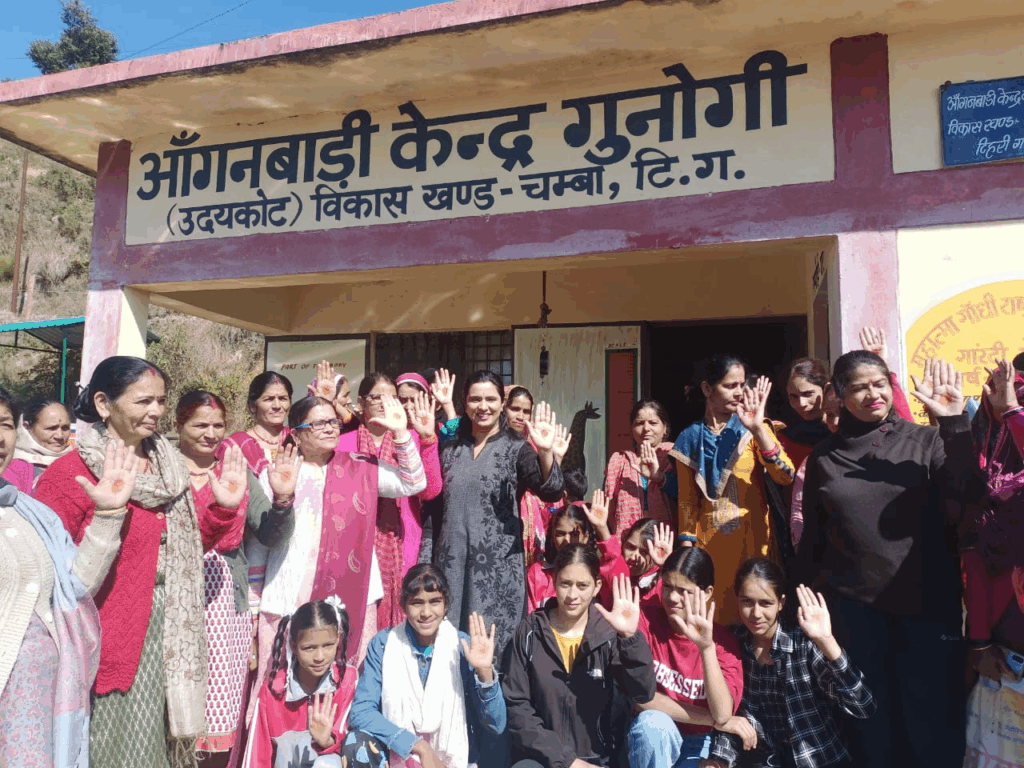
Perhaps the most remarkable aspect of Pragya Foundation’s work is its commitment to women-led implementation. The waste collection teams predominantly comprise local women, many previously unemployed or underemployed.
“This isn’t just about waste collection,” insists Ms. Dixit. “It’s about creating economic opportunities that simultaneously address environmental challenges and empower women financially.”
These teams serve dual roles as waste collectors and awareness ambassadors, engaging communities in conversations about proper sanitary pad usage and disposal. The result has been increased community participation and higher revenue generation from household waste collection charges; demonstrating that social and environmental responsibility can also be economically sustainable.
The foundation’s impact numbers tell a compelling story: over 30,000 women benefited from various projects in just one year of operation. Behind this figure are countless individual stories of women finding new confidence, economic independence, and health awareness through their engagement with the foundation’s initiatives.
A Circular Approach
Pragya Foundation’s vision extends beyond waste collection to encompass the entire lifecycle of menstrual products. Their ambitious plans include:
- Distribution of 100,000 biodegradable sanitary pads to replace non-biodegradable alternatives
- Comprehensive education programs on proper usage and disposal
- Establishment of production units for reusable cloth pads, operated by local self-help groups
- Continuous monitoring and improvement of waste collection processes
This circular approach addresses both immediate needs and long-term sustainability concerns. By transitioning communities toward biodegradable and reusable options while maintaining efficient collection systems for existing waste, the foundation creates a bridge between current realities and more sustainable futures.
“The goal isn’t just better waste management,” emphasizes Ms. Dixit. “It’s transforming how communities think about women’s health, environmental responsibility, and local economic development as interconnected concerns.”
Expanding Horizons
The foundation’s journey began in Uttarkashi with modest sanitary pad distribution efforts. Today, their work spans three districts; Uttarkashi, Rudraprayag, and Tehri Garhwal; with plans for further expansion.
Each district presents unique challenges. Uttarkashi’s remote communities require specialized logistics for regular waste collection. Rudraprayag’s religious significance demands waste management approaches that respect sacred sites while protecting natural resources. Tehri Garhwal’s mix of urban and rural settlements necessitates flexible implementation strategies.
What remains consistent across these diverse contexts is the foundation’s commitment to scientific disposal methods that adhere to environmental guidelines while honoring local cultural contexts.
“We aren’t imposing solutions,” clarifies Ms. Dixit. “We’re adapting proven scientific approaches to local realities through continuous community engagement.”
This philosophy of adaptive implementation has allowed the foundation to achieve remarkable success despite limited resources and challenging terrain. By embracing local knowledge while introducing innovative approaches, they’ve created interventions that communities readily adopt and sustain.
Measuring Success Beyond Numbers
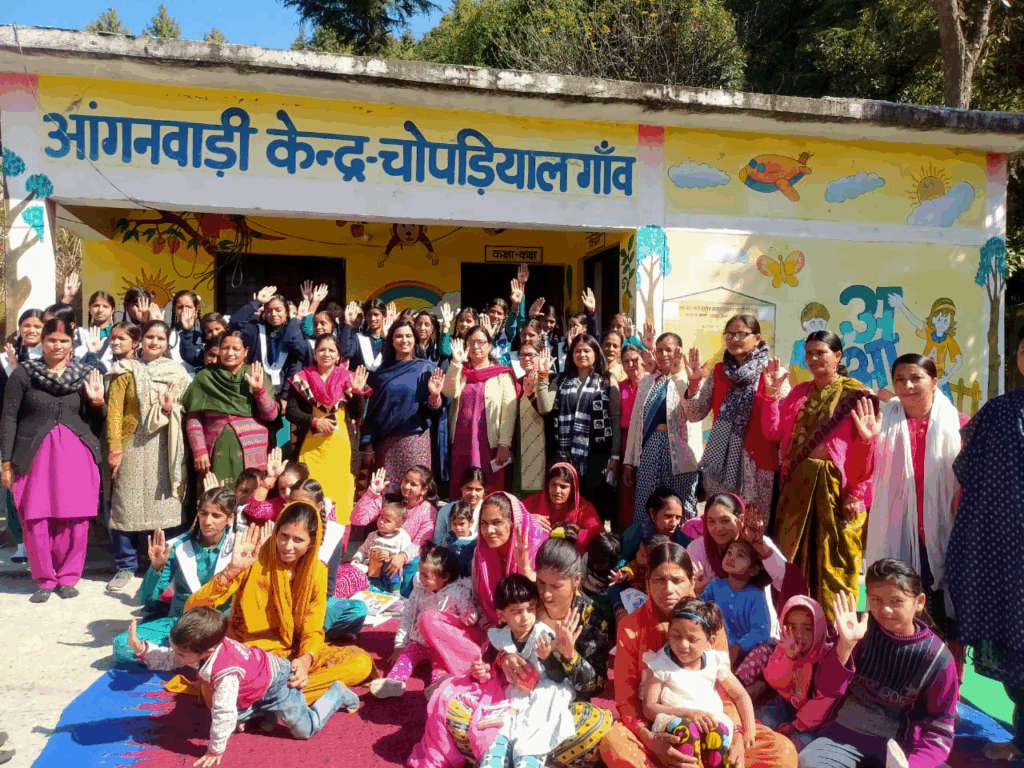
While the foundation proudly shares its quantitative achievements; kilograms collected, vehicles modified, women reached; Ms. Dixit emphasizes that true impact often manifests in ways that defy simple measurement.
“We see success in the changing conversations,” she reflects. “When schoolgirls confidently discuss menstrual hygiene. When community councils allocate resources to waste management without our prompting. When women apply for positions on our collection teams without hesitation.”
These cultural shifts represent the foundation’s most profound achievements; transformations in community consciousness that promise to outlast any single program or initiative.
Environmental protection represents another dimension of success. The foundation’s work has demonstrably protected numerous water bodies from contamination and reduced forest fire risks from improper waste burning. In a region where environmental health directly impacts human wellbeing, these ecological benefits translate to community resilience.
Challenges and Opportunities
Despite impressive early successes, Pragya Foundation faces significant challenges in scaling its work. The mountainous terrain of Uttarakhand makes consistent service delivery logistically complex and resource-intensive. Cultural taboos surrounding menstruation persist despite progress. And sustainable funding remains an ongoing concern for an organization committed to both social and environmental returns on investment.
Yet Ms. Dixit approaches these challenges with characteristic determination. “The Himalayas have always required resilience from those who live here,” she observes. “Our work simply continues that tradition of finding creative solutions to complex challenges.”
The foundation’s forward strategy includes:
- Strengthening partnerships with government waste management initiatives
- Expanding their internship program to engage youth as environmental ambassadors
- Developing local production capacity for sustainable menstrual products
- Building research collaborations to document and disseminate effective practices
These strategies reflect a mature understanding that lasting change requires multi-sectoral engagement and knowledge exchange; not just direct service provision.
A Model for Mountain Regions Worldwide
What began as a localized response to immediate needs has evolved into a potential model for similar regions worldwide. The foundation’s integrated approach to women’s empowerment and environmental sustainability offers valuable lessons for communities facing comparable challenges.
Research from organizations like the International Centre for Integrated Mountain Development (ICIMOD) confirms that mountain regions globally share common vulnerabilities; limited infrastructure, environmental sensitivity, and traditional social structures that often marginalize women’s concerns [1]. Pragya Foundation’s work demonstrates that these very challenges can become opportunities for integrated solutions.
“Mountain communities have always had to be resourceful,” notes Ms. Dixit. “Our approach simply channels that resourcefulness toward addressing interconnected challenges through women’s leadership.”
As climate change intensifies pressures on mountain ecosystems and communities, models like Pragya Foundation’s become increasingly relevant. Their work illustrates how locally-led initiatives can simultaneously address social needs, environmental protection, and economic development; the triple bottom line of truly sustainable development.
The Ripple Effect of One Woman’s Vision
The story of Pragya Foundation reminds us that transformative change often begins with someone willing to address the challenges others overlook. From menstrual waste management to comprehensive women’s empowerment, Ms. Pragya Dixit has created ripples of positive change that continue to expand across Uttarakhand’s mountain communities.
“We’re just beginning,” Ms. Dixit says with quiet confidence. “Every woman who gains dignity through our work, every stream that remains clean because of improved waste management, every forest protected from avoidable fires; these are the true measures of our impact.”
As the foundation moves forward with ambitious plans to distribute biodegradable products, establish production units, and expand their geographic reach, they carry with them the wisdom gathered from mountain communities and the determination to create sustainable solutions that honor both people and place.
In the shadow of the Himalayas, a new narrative is emerging; one where women lead environmental solutions, where communities take ownership of their collective health, and where ancient landscapes are protected for future generations. This is the legacy that Pragya Foundation and its visionary founder are building; one village, one woman, one innovation at a time.
About the Founder
In the shadow of the sacred Himalayas, where the winds whisper ancient secrets and the rivers hum timeless chants, walks a woman who doesn’t just create art; she is art. Pragya Dixit isn’t merely a name; she is a phenomenon born of silence, solitude, and soul. Her story begins in the untamed wildness of Uttarakhand, cradled by the hills where every sunrise is a celestial performance. It was here that Pragya first dipped her fingers into tribal colours as a child, unknowingly laying the first brushstroke of a destiny far greater than any canvas could hold. Fast forward to the pandemic; a time that shrank the world but expanded hers. Where many saw confinement, Pragya discovered freedom. In the stillness, her artistry evolved from innocent play to elemental power. Her canvas became a battleground of emotions, her medium; the five cosmic elements: earth, water, fire, air, and space. Through her, they didn’t just exist; they danced, they spoke, they healed. But here’s the twist: she never intended to just be an artist. Pragya is a crusader in couture. A finalist in a national beauty pageant, she challenged every stereotype without ever raising her voice. An introvert with the quiet strength of the mountains, she speaks through her silences, her strokes, her steps on the ramp; and each message lands like thunder. What truly elevates her? Her vision. Her art isn’t confined to galleries. It breathes in villages, in menstrual health campaigns, in her dream project that will soon bring sustainable sanitary solutions to the rural women of the Himalayas. For her, change isn’t a cause; it’s a canvas. Every exhibition she mounts; whether in India or at the upcoming Dubai World Art Festival; is not just a display of skill. It’s an offering. A cultural signature of Uttarakhand, inked with reverence, rebellion, and radiant truth. Pragya Dixit is not just an artist. She is a living mandala; each circle of her journey woven with purpose, painted with pain, and edged with poetry.
References
- International Centre for Integrated Mountain Development (ICIMOD). (2023). “Women’s Empowerment and Sustainable Mountain Development.”
- Kaur, R., Kaur, K., & Kaur, R. (2022). “Menstrual Waste Management: Practices and Challenges in Rural India.” Journal of Environmental Management, 305, 114351. https://doi.org/10.1016/j.jenvman.2021.114351
- Mountain Research and Development Journal. (2023). “Special Issue: Gender and Sustainable Development in Mountain Regions.” Vol. 43, No. 1.
- Ministry of Jal Shakti, Government of India. (2022). “Guidelines for Menstrual Waste Management.” Swachh Bharat Mission – Gramin.
- United Nations Environment Programme. (2023). “Waste Management in Mountain Ecosystems: Challenges and Solutions.” UNEP Environmental Report Series.
- Women’s Empowerment Through Self-Help Groups in the Indian Himalayan Region and Northeast India: A Multi-Dimensional Analysis
