
How Himalayan destinations are being loved to death as over tourism threatens Manali, Shimla, Nainital, and Pokhara. Learn the environmental impact and how responsible tourism can help preserve these mountain paradises for future generations.
Paradise Lost? The Hidden Cost of Himalayan Tourism
When I first laid eyes on the snow-capped peaks of the Himalayas from a small teahouse in Pokhara, I understood why these mountains have captivated human hearts for centuries. The air was crisp, the silence profound, and the landscape seemed eternal. That was fifteen years ago. When I returned last spring, I barely recognized the place.
Did you know that Shimla, once the summer capital of British India, now needs to truck in water during tourist season just to meet basic demands? Or that the sacred Phewa Lake in Pokhara is shrinking by nearly 3 feet each year due to unregulated development?
The majestic Himalayas have captured our collective imagination for centuries. These towering peaks and pristine valleys offer an escape from our chaotic urban lives; a chance to reconnect with nature in its most spectacular form. But this romance has turned into a dangerous affair. As social media transforms hidden gems into must-visit hotspots overnight, these fragile mountain ecosystems are buckling under the weight of our love.
The Himalayas are quite literally being loved to death.
What happens when our desire to experience natural beauty undermines the very thing we came to see? When Instagram-perfect moments lead to imperfect environmental realities? Four beloved Himalayan destinations; Manali, Shimla, Nainital, and Pokhara; now stand at this precarious crossroads. While tourism brings vital economic opportunities to these regions, the unchecked influx of visitors is creating an unsustainable strain that threatens their very existence.
Understanding Over tourism: When Himalayan Destinations Are Being Loved to Death
Over tourism occurs when visitors overwhelm a destination, exceeding its capacity to handle the numbers without damaging the environment or degrading the visitor experience. In the Himalayas, the signs are unmistakable:
- Endless traffic jams in areas designed for a fraction of current vehicle numbers
- Mountainsides of garbage where pristine forests once stood
- Water bodies contaminated by sewage and plastic waste
- Local residents priced out of their own communities
- Traditional cultures reduced to performative tourist attractions
The Himalayan region is particularly vulnerable to these pressures. Its steep terrain limits development options, while its sensitive alpine ecosystems recover slowly; if at all; from environmental damage. Most concerning is the region’s climate sensitivity; the Himalayas are warming at rates significantly higher than the global average, creating a perfect storm when combined with development pressures.
As climate activist Sonam Wangchuk puts it: “What happens in the Himalayas doesn’t stay in the Himalayas. When these mountains cry, the whole of Asia will feel their tears.”
“The Himalayas have sustained our region’s cultures, ecosystems, and spirituality for millennia, but within a single generation, we’re witnessing unprecedented degradation,” says Nikhil Raj Sharma, founder of Himalayan Geographic. “What we’re facing isn’t just an environmental crisis; it’s an existential one. These mountains don’t simply need our protection; they need our profound respect and a complete rethinking of how we interact with them. The solutions must emerge from both modern science and ancient wisdom if the Himalayas are to survive being loved to death by the very people who claim to cherish them.”
Destination Spotlight: Four Mountains Crying for Help
Manali: From Peaceful Retreat to Traffic Nightmare

I remember how Jagdish, an elderly apple farmer near Manali, once described the changes he’s witnessed. “When I was young,” he told me, “we measured time by the seasons. Now we measure it by traffic jams.”
Once a tranquil gateway to the stunning Kullu Valley, Manali has transformed into a congested tourist hub where visitors often spend more time in traffic jams than enjoying nature. On peak summer weekends, over 5,000 vehicles enter this small mountain town daily; a place whose roads and infrastructure were designed for perhaps a tenth of that number.
“I’ve lived here for 60 years,” says local shopkeeper Ramesh Thakur. “We used to drink directly from the Beas River. Now I wouldn’t even let my dog swim in it.”
The once-pristine Solang Valley and Rohtang Pass, famous for their winter snow sports, now resemble crowded urban parks on weekends. Trash litters the snow, and diesel fumes from thousands of tourist vehicles have begun to affect snow quality and duration. Studies show that black carbon deposits from vehicle emissions accelerate snowmelt by up to 20%.
While authorities have implemented permit systems for Rohtang Pass and designated eco-sensitive zones, enforcement remains spotty, and corruption undermines these well-intentioned measures.
Shimla: A Colonial Hill Station Crumbling Under Pressure
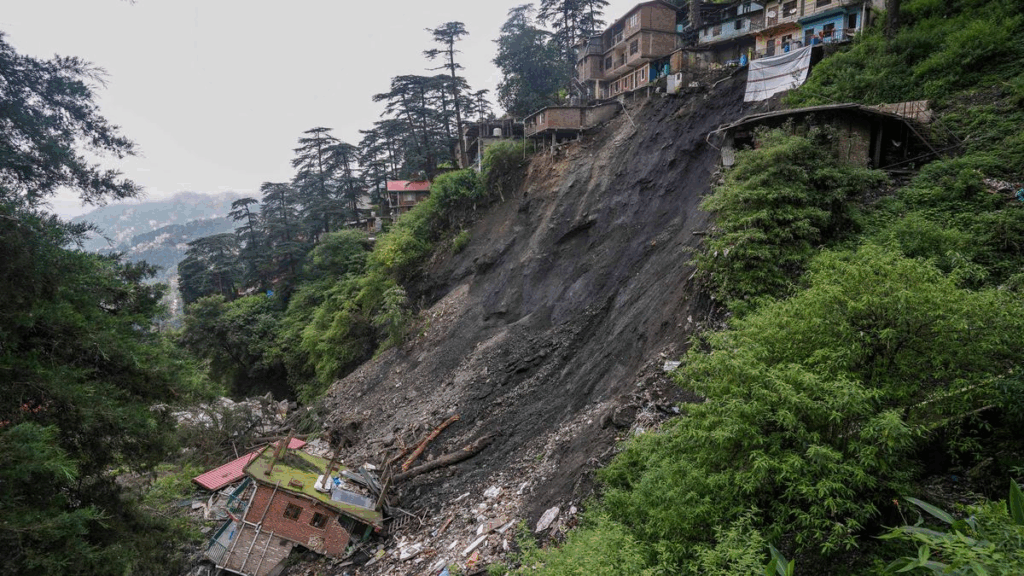
The former summer capital of British India, Shimla was designed for a population of 25,000. Today, it struggles to accommodate over 200,000 residents plus nearly 3.5 million annual tourists. Its charming colonial architecture and forested slopes are increasingly obscured by haphazard concrete construction.
The most shocking manifestation of Shimla’s over tourism came in 2018, when the city completely ran out of water. For nearly two weeks in peak tourist season, water was rationed so severely that residents received municipal supply just once every five days. Tankers brought water from sources over 50 kilometers away while luxury hotels continued to offer guests full amenities.
“Tourists come for a weekend and use water like there’s no tomorrow,” laments environmental activist Kulbhushan Upmanyu. “They don’t realize that every drop they waste means a local family goes without.”
Beyond water scarcity, Shimla’s historic Mall Road groans under tourist footfall, and the century-old sewage system regularly fails, sending untreated waste into the surrounding forest slopes. The picturesque toy train, once a leisurely journey through pine forests, now passes through garbage dumps and overcrowded settlements.
Nainital: A Lake City Losing Its Soul
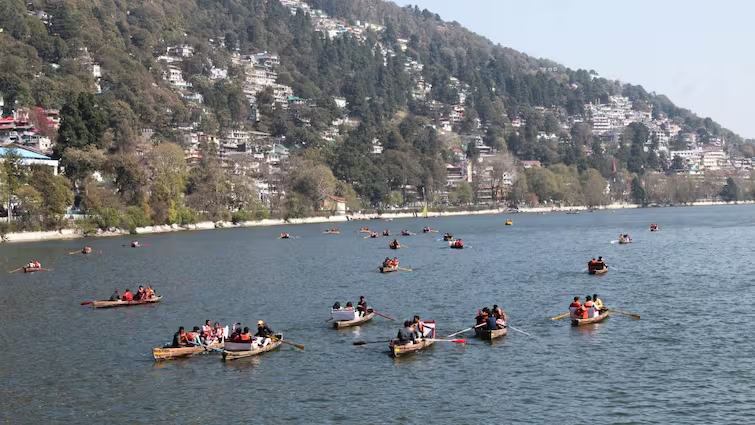
Centered around its namesake lake, Nainital exemplifies the worst effects of unplanned tourism growth. The town receives about 600,000 visitors annually; more than 10 times its permanent population; with most concentrated in the four summer months.
The lake itself, considered sacred in Hindu tradition, faces existential threats. Its water level drops annually as groundwater is extracted for hotels and restaurants, while sewage seepage has introduced dangerous levels of coliform bacteria. A 2023 environmental assessment found microplastic particles in lake samples, mostly from discarded food packaging and bottles.
Mall Road, which skirts the lake, becomes so crowded during peak season that movement slows to a shuffle. Boating, once a peaceful activity, now involves queuing for hours for a 15-minute ride on an overcrowded vessel. Parking has become so scarce that visitors often leave their vehicles miles away and walk into town.
“People come to see the lake, but if things continue this way, there may not be a lake left to see,” warns Dr. Ajay Rawat, a local environmental historian.
The surrounding forests face encroachment from illegal constructions, disrupting wildlife corridors and increasing human-animal conflicts. Leopard sightings in residential areas have increased by 300% in the past decade as their natural habitat shrinks.
Pokhara: Nepal’s Instagram Darling Facing Reality Check

Nestled beside the magnificent Annapurna range with the serene Phewa Lake at its heart, Pokhara has emerged as Nepal’s adventure tourism capital. The city exemplifies how social media can transform tourism patterns; paragliding videos and lakeside sunset photos have made it a must-visit destination for the Instagram generation.
But Pokhara’s infrastructure has not kept pace with its popularity. The city generates approximately 25 tons of solid waste daily during peak season, with less than half properly managed. The remainder ends up in unregulated dumps or, worse, in the lake and surrounding forests.
Phewa Lake, which draws visitors with its perfect reflection of the Annapurna’s, has lost nearly 80% of its original area in the past century. Sedimentation, encroachment, and pollution continue to shrink it further.
“Ten years ago, you could see the mountains reflected perfectly in the lake,” says Maya Gurung, who runs a small teahouse. “Now, many mornings, all you see is algae bloom and garbage floating on the surface.”
The famous Annapurna Circuit trek, which begins near Pokhara, now suffers from trail erosion, overcrowding at tea houses, and what locals call “toilet paper flowers” ;discarded waste from trekkers who don’t follow Leave No Trace principles.
The Far-Reaching Consequences of Mountain Over tourism
The impacts of over tourism in these Himalayan destinations extend far beyond immediate environmental damage:
Environmental Degradation: Deforestation for hotels and roads increases landslide risk. Water pollution affects not just drinking sources but entire river systems that millions downstream depend on. Wildlife displacement leads to decreased biodiversity and ecosystem imbalance.
Cultural Erosion: As tourism becomes the dominant economic force, traditional practices and livelihoods fade. Young people abandon agricultural knowledge for service industry jobs. Local festivals become commercialized performances rather than authentic community celebrations.
Economic Vulnerability: While tourism brings jobs, over-dependence creates economic vulnerability. The COVID-19 pandemic demonstrated this painfully when tourist-dependent mountain communities faced economic collapse with no alternative income sources.
Disaster Risk: Perhaps most alarming is how over tourism amplifies natural disaster risks. Unplanned construction on unstable slopes, deforestation, and climate change create perfect conditions for catastrophic landslides and flash floods. The 2013 Uttarakhand floods that killed thousands were exacerbated by overdevelopment in ecologically sensitive zones.
Responsible Tourism: Learning to Love Without Destroying
Is it possible to enjoy these Himalayan wonders without contributing to their destruction? Absolutely; but it requires commitment from all stakeholders: tourists, businesses, and governments alike.
For Travelers:
- Visit during off-peak seasons (autumn and winter can be magical)
- Stay in locally-owned, eco-certified accommodations
- Spend more time in fewer places rather than rushing through a checklist
- Carry reusable bottles, cutlery, and shopping bags
- Learn basic local phrases and respect cultural norms
- Consider homestays to directly benefit local families
For Businesses:
- Adopt renewable energy and water conservation measures
- Source food locally to reduce carbon footprint and support local agriculture
- Train staff in sustainable practices and cultural sensitivity
- Reinvest profits in conservation and community development
For Governments:
- Implement and enforce visitor caps during peak seasons
- Develop tourism master plans with environmental scientists and local communities
- Create financial incentives for sustainable tourism operations
- Invest tourism revenue in infrastructure improvements and conservation
Some promising initiatives are already underway. The Himalayan Cleanup campaign has removed thousands of tons of waste from trekking routes. In Ladakh, the “I Love Ladakh” movement promotes responsible tourism through visitor pledges and education. The Indian Himalayan states of Sikkim and Uttarakhand have begun experimenting with tourist number restrictions in sensitive areas.
Preserving Paradise: Our Collective Responsibility
The Himalayas don’t belong to any single country or generation; they represent one of Earth’s greatest natural treasures. When we treat these mountains as consumable experiences rather than irreplaceable wonders, we risk losing them forever.
I spoke with Dawa, an elderly Sherpa guide who has witnessed the transformation of the Khumbu region over six decades. With tears in his eyes, he shared how the glaciers of his childhood have retreated miles upvalley, and how plastic waste now appears even at the highest camps of Everest. “The mountains gave us life,” he said, “but we are now taking theirs.”
Responsible tourism in the Himalayas isn’t just about following rules; it’s about transforming our relationship with travel. It means valuing authentic experiences over perfect social media moments, focusing on quality interactions rather than quantity of destinations, and leaving places better than we found them.
“The mountains are calling, and I must go,” wrote John Muir over a century ago. Today, we might add: “…but I must go responsibly, treading lightly and loving gently.”
Have you visited any of these Himalayan destinations? What sustainable tourism practices have you adopted in your travels? Share your experiences in the comments below!
We strive to use only images that are either royalty-free, in the public domain, or shared with appropriate permissions. However, if you believe any image on this website has been used without proper credit or violates copyright, please contact us immediately. We will promptly review the content and, if necessary, update the attribution or remove the image without delay. We do not claim ownership of any third-party images unless explicitly stated.
