
How Himalayan animals like snow leopards, red pandas, and tahr adapt their movement and survival strategies before winter snowfall hits the world’s highest mountains.
The first snowflakes haven’t fallen yet, but something extraordinary is already happening across the Himalayas. While you’re scrolling through Instagram, planning your winter wardrobe, thousands of animals are making life-or-death decisions in the world’s highest mountains. Snow leopards are shifting their hunting grounds, red pandas are stockpiling food, and birds are flying to elevations that would make your head spin.
Here’s a fact that might surprise you: Himalayan tahr can detect weather changes up to two weeks before snowfall hits. They don’t check weather apps or satellite data; they read the mountain like an ancient text written in wind patterns and temperature shifts.
This isn’t just another nature documentary script. This is happening right now, in the mountains that tower above us, and understanding these patterns could be the key to saving species that have survived for millions of years.
Why Movement Matters
Think of the Himalayas as a massive apartment building with different climate zones on each floor. As winter approaches, animals don’t just sit tight and hope for the best. They move; strategically, instinctively, and with a precision that scientists are only beginning to understand.
Climate change is scrambling the traditional patterns these animals have followed for millennia. The survival strategies that worked for thousands of generations are suddenly being tested in unprecedented ways.
Snow Leopards
Snow leopards are the ultimate mountain ghosts. Before the first serious snowfall, these apex predators start following their prey to lower elevations. It’s like watching a chess grandmaster think ten moves ahead.
Here’s how they do it:
- They track prey animals’ seasonal movements with almost mathematical precision
- They establish temporary territories at altitudes between 3,000 to 4,500 meters during early winter
- They maintain multiple den sites across different elevations, like having backup apartments ready
Recent research from the Snow Leopard Trust shows something remarkable: snow leopards are now appearing in areas 500 meters lower than historical records indicated. They’re adapting, but the question is; how fast can they keep up?
Watch this incredible footage of snow leopard movement patterns: Snow Leopard: Ghost of the Mountains
Mother snow leopards teach cubs migration routes through repeated journeys. Cubs memorize landmarks, scent markers, and terrain features. It’s an education system that makes our GPS look primitive.

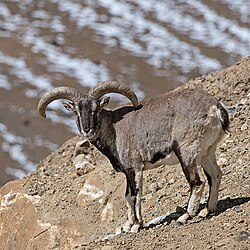
Himalayan Tahr
If you want to predict a harsh winter in the Himalayas, watch the tahr. These stocky, thick-coated ungulates are nature’s weather forecasters, and they’re rarely wrong.
Before heavy snowfall, tahr herds perform what locals call the “downward dance”; a gradual descent to treeline forests and cliff faces below 3,500 meters. They’re not panicking. They’re executing a survival plan encoded in their DNA.
Their pre-winter strategy includes:
- Moving to south-facing slopes where snow melts faster
- Selecting areas with rocky overhangs for shelter
- Positioning near sparse forests where predator detection is easier
- Gathering in larger groups for warmth and collective vigilance
Here’s the problem: human settlements are expanding into their traditional winter habitats. Imagine having to spend winter in your neighbor’s garage because someone built a mall in your living room. That’s what’s happening to the tahr.
The Food Storage Crisis
Unlike bears who hibernate, tahr must eat throughout winter. They survive on dried grasses, lichens, and whatever vegetation pokes through the snow. But climate unpredictability means food sources are becoming unreliable.
Conservation biologist Dr. Rinchen Lama from Nepal’s Department of National Parks notes: “We’re seeing tahr populations making earlier migrations, sometimes by three to four weeks compared to patterns from 20 years ago.”
Red Pandas
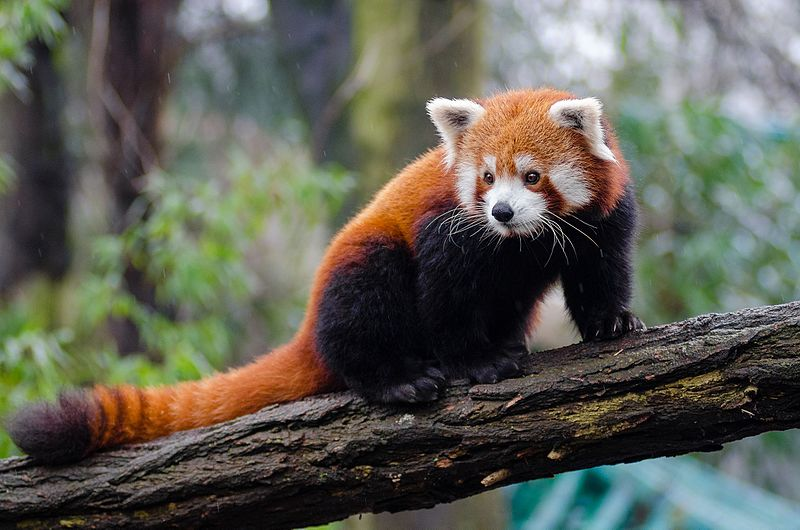
Red pandas face a unique challenge. Their diet is 95% bamboo, and bamboo doesn’t migrate. So red pandas don’t travel vast distances; they make careful, calculated moves within their home ranges to find the best feeding spots before winter locks them in.
Their autumn preparation ritual:
- They increase feeding time by 30-40% to build fat reserves
- They select den sites in hollow trees or rock crevices at optimal altitudes
- They map out bamboo patches that will remain accessible under snow
- They become more solitary to reduce food competition
Think of it like this: while snow leopards and tahr are road-tripping to new locations, red pandas are reorganizing their apartment for a long lockdown.
Check out this beautiful documentation of red pandas preparing for winter: Red Pandas: Survival in the Himalayas
Red panda habitat has shrunk by 40% in the past 50 years. Their winter survival zones are becoming isolated islands in a sea of development.
When Birds Rewrite the Altitude Rules
Forget flying south for winter. Himalayan birds have a different playbook; they move up and down mountains like living elevators, and their timing is precise.
Three distinct movement patterns emerge:
Altitudinal migrants move to lower elevations but stay within the mountain ecosystem. Species like the Himalayan monal pheasant descend from alpine meadows to forested slopes.
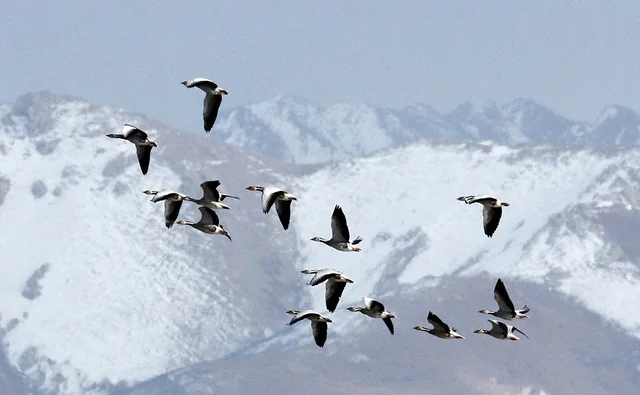
Complete migrants leave the high Himalayas entirely, heading to Indian plains or Southeast Asian forests. Bar-headed geese are famous for this, flying over Mount Everest during migration.
Elevational nomads move unpredictably based on food availability and weather, like the red-billed chough that follows snowmelt patterns to find exposed insects.
The Timing Paradox
Here’s where it gets interesting: birds are starting their altitude shifts earlier, but not all species are adapting at the same rate. Some respond to temperature cues, others to day length, and others to food availability.
This creates a mismatch. Imagine showing up to a restaurant three weeks before it opens; that’s what happens when birds arrive at lower elevations before their food sources are available.
Food Scarcity
In the pre-winter Himalayas, food is everything. It’s currency, strategy, and survival rolled into one desperate calculation.
The cascading food crisis works like this:
Grass and vegetation die back → Herbivores compete for limited resources → Predators follow prey to new areas → Competition intensifies at lower elevations → Human-wildlife conflict increases
Bharal (blue sheep) populations face the most direct impact. They rely on alpine grasses that become inaccessible under deep snow. When food runs out, they raid agricultural lands, bringing them into conflict with farmers.
Competition Gets Fierce
Different species that normally occupy separate niches suddenly find themselves competing for the same resources. It’s like having your entire neighborhood suddenly move into your house; tensions rise quickly.
Snow leopards and Himalayan wolves sometimes overlap in winter ranges, creating predator-on-predator pressure that didn’t exist during summer months.
Conservation Efforts
While animals adapt instinctively, humans are racing to support them with science, technology, and community involvement.
Current conservation initiatives include:
Wildlife corridors: Organizations like WWF-Nepal are establishing protected pathways connecting summer and winter habitats. These corridors allow safe migration without human interference.
Community-based monitoring: Local herders and farmers are trained to document animal movements using smartphone apps. This citizen science provides real-time data that researchers could never collect alone.
Predator-proof livestock enclosures: Reducing human-wildlife conflict by protecting domestic animals means fewer retaliatory killings of snow leopards and wolves.
Supplemental feeding programs: In extreme winters, conservationists provide food drops for herbivores in critical zones, though this remains controversial.
Explore conservation work in the region: Protecting Snow Leopards – BBC Documentary
Technology Meets Tradition
GPS collars on snow leopards and tahr provide movement data, but local knowledge remains invaluable. Mountain communities have observed these patterns for generations.
Sonam Wangchuk, a herder from Ladakh, shares: “My grandfather taught me to watch where the ibex go in late autumn. They always know when the big snows come. Now scientists with their cameras are proving what we always knew.”
The Climate Change Wild Card
Everything discussed so far assumes predictable seasonal patterns. But climate change is rewriting the rulebook.
Unpredictable impacts include:
- Unseasonal snowfall catching animals mid-migration
- Earlier spring melts followed by late winter storms
- Shifting vegetation zones that don’t match animal movement patterns
- Extreme weather events that overwhelm traditional adaptation strategies
A 2024 study published in “Mountain Research and Development” found that Himalayan animals are experiencing “phenological mismatch”; their internal timing no longer matches environmental conditions.
It’s like showing up to school on time only to find out they changed the schedule and didn’t tell you.
Success Stories That Give Hope
Despite challenges, there are victories:
- Snow leopard populations in some protected areas have stabilized
- Community-led conservation in Annapurna has reduced human-wildlife conflict by 60%
- Red panda breeding programs are creating genetic diversity buffers
- International cooperation on migratory bird protection is showing results
What Happens Next?
The animals moving through the Himalayas right now are responding to signals we’re only beginning to measure. Each migration represents millions of years of evolutionary wisdom being tested against unprecedented change.
The ultimate question is: Can conservation efforts adapt as quickly as the climate is changing?
Nikhil Raj Sharma, Founder of Himalayan Geographic, reflects: “What strikes me most about Himalayan wildlife is their resilience. These animals have survived ice ages and geological upheavals. But they’ve never faced habitat loss and climate change simultaneously. Our generation has the responsibility; and perhaps the last real opportunity; to ensure their ancient migration routes remain open. When we lose these patterns, we lose more than species. We lose knowledge systems that predate human civilization.”
“Every winter, I’m reminded that these mountains aren’t just landscapes; they’re living libraries. The movement of a snow leopard, the descent of a tahr herd, the altitude shift of birds; each is a verse in an epic poem written over millions of years. We must become better readers of this text before the pages are torn out forever.”
Your Role in This Story
This isn’t just about animals in faraway mountains. The Himalayas regulate water supplies for over 1.3 billion people. They influence monsoon patterns. They’re climate regulators for the entire Asian continent.
What can you do?
Support organizations working on Himalayan conservation. Share information about these species on social media. If you visit the region, choose eco-tourism operators who prioritize wildlife protection. Reduce your carbon footprint; climate change hits mountain ecosystems first and hardest.
Have you witnessed wildlife movement patterns in the Himalayas or other mountain regions? What surprised you most about animal behavior before winter? Share your observations in the comments below. Your stories might contain clues that help researchers understand these patterns better.
“We strive to use only images that are either royalty-free, in the public domain, or shared with appropriate permissions. However, if you believe any image on this website has been used without proper credit or violates copyright, please contact us immediately. We will promptly review the content and, if necessary, update the attribution or remove the image without delay. We do not claim ownership of any third-party images unless explicitly stated.”
