
Gyalpo Lhosar 2026 is transforming Nepal’s Himalayan communities; discover 7 remarkable traditions, the cultural renaissance underway, and how community-led tourism is changing lives from the ground up.
Did you know that Gyalpo Lhosar; the “King’s New Year” of the Sherpa people; has been celebrated for over 1,700 years, yet it is only now taking centre stage in the global conversation about sustainable travel? This February 18, 2026, while most of the world was scrolling through old New Year’s Eve photos, millions of people across Nepal, Tibet, Bhutan, and northern India lit butter lamps, raised fresh prayer flags, and shouted “Tashi Delek!” into the Himalayan wind. It is a festival older than many civilisations; and it is very much alive.
“When we celebrate Lhosar, we are not just marking a date on a calendar. We are reaffirming who we are,” says Nikhil Raj Sharma, founder of Himalayan Geographic. “These mountains have carried this culture for centuries. Our job is to make sure the world sees it, respects it, and helps protect it.”
What is happening in Nepal’s high mountain communities right now is more than just a festival. It is a full-blown cultural renaissance; and it is rewriting how the world thinks about Himalayan travel.
What Is Gyalpo Lhosar? The King’s New Year Explained
Gyalpo Lhosar (also spelled Gyalpo Losar) literally means “King’s New Year” in Tibetan. “Gyalpo” means king, “Lho” means year, and “Sar” means new. It is the most important New Year celebration for the Sherpa, Hyolmo, and Bhotiya communities of Nepal, deeply rooted in Tibetan Buddhist tradition.
The festival follows the Tibetan lunar calendar. In 2026, it falls on February 18; marking the start of the year 2148 in the Tibetan system, and welcoming the Year of the Fire Horse. That alone makes this year’s celebrations especially significant and energetic.
According to ancient legend, Losar was first celebrated when an elderly woman named Belma introduced moon-based timekeeping to her community. People went to the local spring to make offerings to the Nagas; water spirits; and burn incense for the spirits of the natural world. That ancient sense of gratitude and connection to nature is still beating at the heart of every Lhosar celebration today.
Want to see the celebration in action? Watch this beautiful documentary overview on YouTube
7 Unforgettable Gyalpo Lhosar Traditions You Need to Know
1. Guthuk — The Dumpling Soup That Reads Your Fortune
Two days before the main festival, Sherpa families gather to make Guthuk. This is a special soup made from nine different ingredients; rice, wheat, sweet potatoes, yak cheese, green peppers, radishes, and more. Hidden inside each dumpling is an object: a piece of coal (bad luck), salt (wisdom), or wood (stubbornness). Whatever you find in your dumpling says something funny; and sometimes painfully accurate; about your character. It is Nepal’s version of a fortune cookie, but far more delicious and a lot more dramatic.
2. Khapse — The Deep-Fried Pastry of Celebration
Before Guthuk, families start making Khapse; deep-fried dough pastries shaped into twists, knots, and elaborate sculptures. They are crunchy, golden, and utterly addictive. Khapse signals the start of the holiday season and is shared with guests throughout the 15-day festival.
3. Cleaning the Home — The Original “New Year, New Me”
In the days before Lhosar, every Sherpa home is scrubbed from floor to ceiling. This is not just tidying up. It is a spiritual act of clearing out bad energy and old problems to make space for new blessings. Think of it as the world’s most meaningful spring clean; and it happens in the middle of winter.
4. Raising the Dhoja — Fresh Prayer Flags for a Fresh Start
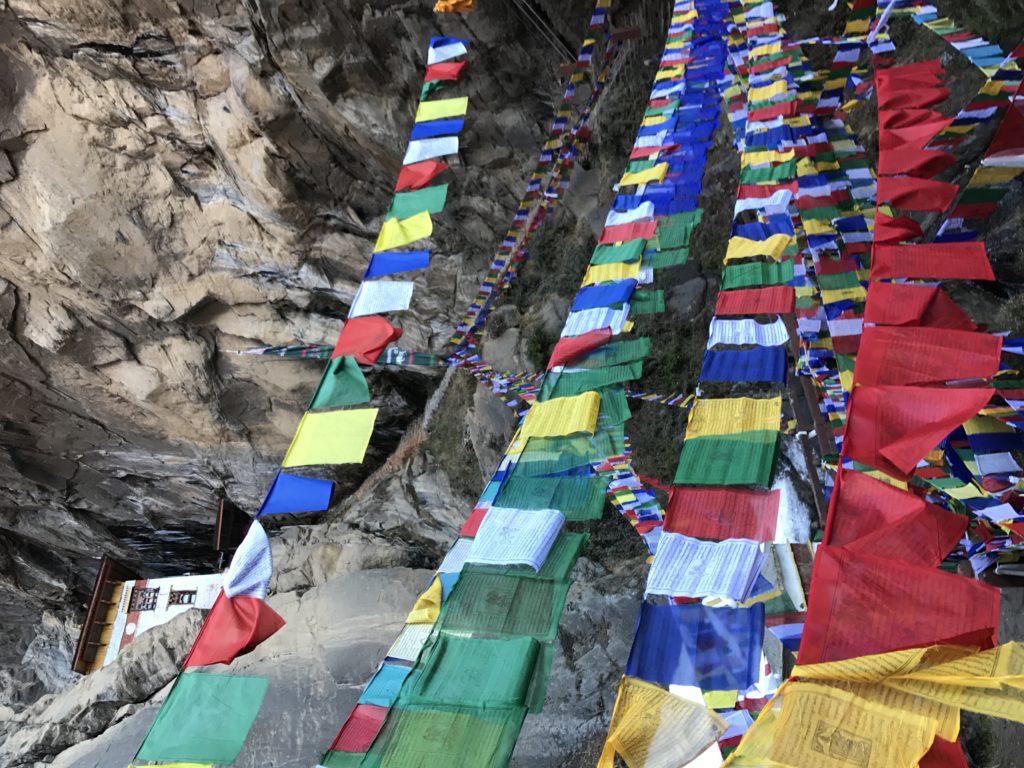
On the morning of Lhosar, families change the Dhoja; the prayer flags; in and around their homes. The old flags, faded and worn by a year of wind, are replaced with bright new ones. Each flag sends prayers and blessings into the air with every flutter. Standing beneath a fresh string of prayer flags at sunrise, with snow peaks gleaming in the background, is one of the most quietly powerful moments a person can witness in Nepal.
5. Changkol — The New Year Toast
On the first day, families share Changkol, a warm beverage made from Chaang (a traditional Himalayan beer). It is drunk as a toast to the new year, shared first with elders and then with the whole family. Yes, it is a little like champagne on New Year’s Eve; except with more spiritual meaning and better scenery.
6. Cham Dances — When Monks Become Warriors
At monasteries across Nepal’s Himalayan regions, monks perform the spectacular Cham dance; an ancient masked dance representing the battle between good and evil. The costumes are extraordinary: towering headdresses, painted masks, and swirling robes of silk and brocade. Fire torches are passed through crowds. Mantras fill the air. It is part theatre, part prayer, and completely unforgettable.
7. “Tashi Delek” — The Two Words That Open Every Door
The greeting of Lhosar is “Tashi Delek”; meaning “good luck and auspiciousness.” If you are lucky enough to be in Nepal during Gyalpo Lhosar, these two words will open doors, warm hearts, and earn you genuine smiles from Sherpa, Tamang, Hyolmo, and Bhotiya communities alike. Learn them. Use them. You will not regret it.
From 12 Districts to 22
Here is a surprising fact: Gyalpo Lhosar was once celebrated in just 12 districts of Nepal. Today, it is celebrated in 22 districts; a direct result of the Sherpa community migrating to cities and bringing their culture with them. Far from being diluted, this movement has strengthened Lhosar’s reach and relevance.
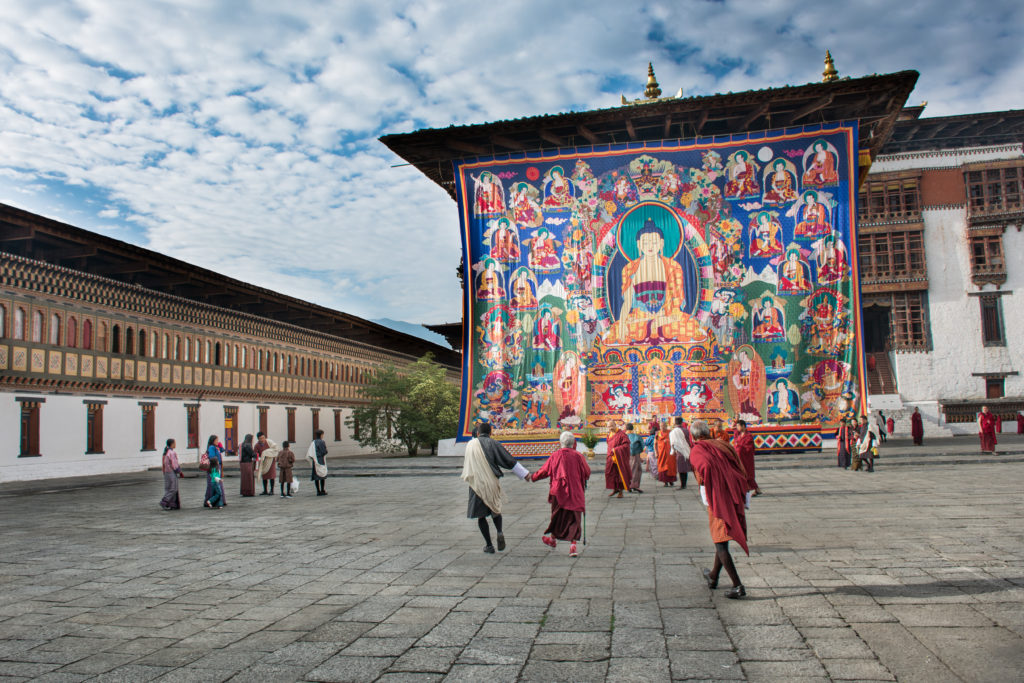
In Kathmandu, the celebrations at Boudhanath Stupa are particularly extraordinary. Thousands of butter lamps are lit. Pilgrims walk the sacred kora (circumambulation path) in their finest traditional clothing. The sound of chanting monks, horns, and drums echoes off the ancient dome. If there is a more spiritually alive place on earth on Lhosar morning, we have not found it.
The Cultural Renaissance; Why 2026 Is a Turning Point
Gyalpo Lhosar 2026 has been marked by something the community has rarely seen before: a deliberate, organised, and joyful reclaiming of cultural identity. Young Sherpa people who grew up in cities are coming back to their villages. Schools in mountain communities are teaching traditional songs and dances again. Social media is flooded with Lhosar greetings in Sherpa, Tamang, and Tibetan.
This is not nostalgia. This is a generation deciding that their heritage is worth more than convenience. And the world is starting to pay attention.
The festival now draws researchers, filmmakers, documentary makers, and cultural scholars from around the globe. Events at Boudhanath, Swayambhunath, and in the Everest and Annapurna regions have been live-streamed to international audiences. Lhosar is not just a local celebration anymore; it is a global cultural moment.
Community-Led Tourism
While the cultural revival is exciting on its own, the most transformative story of 2026 is what is happening at the intersection of Himalayan culture and sustainable tourism. And it all starts with a remarkable organisation called the Community Homestay Network (CHN).
What Is the Community Homestay Network?
Founded in 2017 and named one of TIME Magazine’s World’s Greatest Places in 2025, CHN is a Nepal-based social enterprise and booking platform that connects travellers with authentic community experiences across 51 communities in Nepal. They operate 41 homestays and 10 artisan-led experiences. Their mission is simple and powerful: make tourism a force for good; especially for women, youth, and marginalised communities.
Their model is locally owned and operated. Communities do not just host tourists; they shape the experiences, manage the services, and receive the economic benefits directly. No middlemen. No exploitation. Just people sharing their lives and culture with the world; on their own terms.
The 2026 FAM Trips
In February 2026, CHN announced two dedicated FAM (familiarisation) trips for travel agents and tour operators; a strategic move to bring trade partners face to face with Nepal’s community tourism model.
The two trips are:
- Stories from Our Himalayas (May 10–19, 2026): A 10-day journey that begins in Kathmandu, travels to Narchyang in the Annapurna foothills, continues into the dramatic landscapes of Mustang; including Jomsom, Thini, and the ancient Bon monastery in Lubra; and ends with a Gurung homestay cooking workshop in Hemjakot before relaxing in Pokhara.
- Valley of Festivals (August 25 – September 1, 2026): An 8-day cultural immersion beginning with a grounding sound bath in Kathmandu, early morning visits to Swayambhunath during Gunlā (the sacred Newar Buddhist pilgrimage month), hands-on momo-cooking and Paubha painting in Patan, Kirtipur, and Bhaktapur, and participation in the vibrant Janai Purnima and Gai Jatra festivals.
Shiva Dhakal, founder of CHN, says it best: 2026 marks a strategic push to reshape perceptions of Nepal beyond trekking and mountaineering. “Travelling with us means seeing a completely different side of the country; one that supports and empowers local people, particularly women, in lesser-known regions.”
The Women Who Are Leading This Revolution
Perhaps the most inspiring story within Nepal’s community tourism movement is the role of women. At CHN, women run the majority of homestays. They are not just hosts; they are entrepreneurs, managers, and community leaders.
Before CHN, many of these women had little financial independence and almost no voice in their communities. Today, they run their own businesses, send their children to better schools, and have become role models in their villages. Young people who once left for cities are coming back; because they see real opportunity at home.
“When a woman has her own income, she has her own voice,” says Poonam Gupta Shrestha, Chief Operating Officer of CHN, who began her journey as a young translator for her mother’s homestay in Panauti. “And when she has a voice, her whole community rises with her.”
This is not charity. This is community-driven economic transformation; and it is working.

A Traveller’s Guide to Experiencing Gyalpo Lhosar
If you want to experience Gyalpo Lhosar yourself, here is what you need to know:
Best Places to Celebrate
- Boudhanath Stupa, Kathmandu: The heart of Lhosar celebrations in the city. Arrive early and dress respectfully.
- Swayambhunath (Monkey Temple), Kathmandu: Beautiful and spiritually charged during the festival.
- Sherpa-dominated regions of the Everest and Annapurna areas: For a more intimate, village-level experience.
- Namche Bazaar, Khumbu: The cultural capital of the Sherpa world, especially vibrant during Lhosar.
What to Bring, What to Say, What to Do
- Learn “Tashi Delek”; say it to everyone you meet during the festival.
- Ask permission before photographing people, monks, or religious ceremonies.
- Participate in a community meal if you are invited; it is one of the greatest honours.
- Do not litter. Himalayan communities take enormous pride in their environment.
- Wear warm, modest clothing; February nights in the mountains are cold.
What to Eat During Lhosar
- Guthuk: The nine-ingredient lucky soup. Accept the dumpling challenge.
- Khapse: Deep-fried pastry. Eat as many as feels right.
- Changkol: The warm Chaang-based New Year drink. Sip respectfully.
- Torma cakes: Ritual offerings made from barley flour, shaped into sculptures and decorated with butter.
What Himalayan Culture Teaches the World
There is something Gyalpo Lhosar does that most modern New Year celebrations have forgotten. It connects the celebration of time to the celebration of nature; to water, fire, earth, air, and the spirits of the mountains. There is no countdown to midnight purely for the thrill of the number change. There is gratitude, ritual, cleansing, community, and prayer.
“In a world that moves too fast, Gyalpo Lhosar asks us to slow down,” reflects Nikhil Raj Sharma of Himalayan Geographic. “To clean our homes and our hearts. To honour those who came before us. To share food and fire with the people we love. That is not an old tradition; that is a masterclass in how to live.”
And increasingly, people from across the globe are arriving at Nepal’s mountain doorstep to learn exactly that.
The fact that CHN was named a World’s Greatest Place by TIME Magazine in 2025 tells you everything about the direction this movement is heading. Responsible, community-led, culturally rich travel is not the future of tourism. It is the present. And Nepal is leading the way.
How You Can Be Part of the Story
You do not have to wait until next Lhosar to connect with this movement. Here is how you can get involved right now:
- Explore community homestay experiences in Nepal
- Read more about Nepal’s Himalayan culture
- Watch a stunning visual journey into Gyalpo Lhosar traditions on YouTube
RELATED ARTICLES YOU MIGHT LOVE:
- “Sonam Lhosar: How Nepal’s Tamang Community Celebrates the New Year”
- “10 Life-Changing Experiences in Nepal Beyond Everest Base Camp”
- “How Community Homestays in Nepal Are Empowering 7,900 Lives”
- “Sacred Himalayan Monasteries: A Visual Journey Through Nepal’s Spiritual Heart”
- “Nepal Trekking vs Cultural Travel: Which One Is Right for You?”
COMMENTS FROM NIKHIL RAJ SHARMA, FOUNDER, HIMALAYAN GEOGRAPHIC:
“Gyalpo Lhosar is one of those rare celebrations that has the power to stop you mid-life and remind you of what truly matters. When I stand at Boudhanath during Lhosar morning, surrounded by butter lamps and the sound of ancient horns, I feel the weight of a civilisation that has endured everything; and chosen joy. That is the spirit of the Himalayas, and it is why we created Himalayan Geographic: to share it with the world.”
“What gives me hope in 2026 is that young Sherpa, Tamang, and Hyolmo people are not abandoning their culture for the modern world. They are bringing their culture INTO the modern world; through social media, through tourism, through art and music. That is not compromise. That is evolution. And it is extraordinary to witness.”
“Community-led tourism is not just good ethics. It is good economics, good culture, and good human sense. When a family in Narchyang hosts a traveller from London or Tokyo, both people go home changed. That is the most powerful force for global understanding we have. And Nepal is doing it better than anyone.”
Disclaimer: The content and images published in this article are provided for general informational and educational purposes only. Some images may be generated or enhanced using artificial intelligence (AI) and are intended solely for illustrative use. The views, interpretations, and information expressed do not necessarily reflect the official position of Himalayan Geographic Research Foundation, nor do they constitute professional, legal, medical, or financial advice.
While efforts are made to ensure accuracy, no guarantees are given regarding completeness or reliability. Readers are encouraged to independently verify information and use their own judgment. By reading this article, you acknowledge that any reliance on the content is at your own risk, and Himalayan Geographic Research Foundation assumes no responsibility or liability for disagreements, interpretations, or outcomes arising from its use. If you do not agree with these terms, you are advised to discontinue reading.
