
Why cloudbursts in the Himalayas are becoming deadlier each year. Explore rising casualties in Uttarakhand, Himachal, and Nepal, early warning gaps, and community survival strategies that could save thousands of lives.
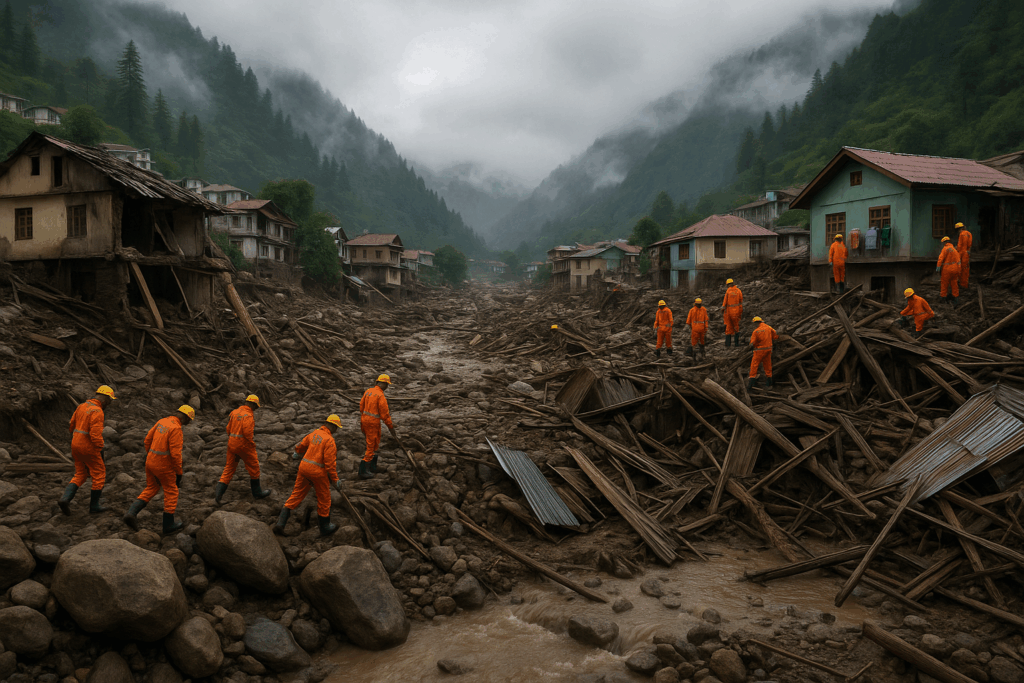
Imagine waking up to what sounds like a freight train roaring through your mountain village. But there are no railway lines for miles. What you’re hearing is nature’s most violent tantrum ; a cloudburst that can dump the equivalent of a month’s rainfall in just 30 minutes, turning peaceful Himalayan streams into raging torrents of destruction.
The statistics from 2025 alone paint a terrifying picture. Over 70 people have already lost their lives to cloudbursts and flash floods across the Himalayas, with more than 60 still missing from recent disasters in Uttarakhand and Himachal Pradesh. These aren’t just numbers ; they represent families torn apart, communities wiped off maps, and a region under siege from its own skies.
What Makes Himalayan Cloudbursts So Deadly?
Think of a cloudburst as nature’s version of opening a dam in the sky. Unlike regular monsoon rains that build gradually, cloudbursts happen with zero warning. One moment you’re enjoying a peaceful mountain morning, the next you’re fighting for your life against walls of water carrying boulders, trees, and debris.
The Himalayas create perfect conditions for these atmospheric bombs. When moisture-laden monsoon winds hit the towering peaks, they’re forced upward rapidly. This creates massive cumulonimbus clouds that can hold enormous amounts of water ; until they can’t anymore.
The Perfect Storm Recipe
Altitude Advantage for Disaster: The higher you go, the more violent these storms become. Mountains force air masses upward so quickly that water droplets don’t have time to fall naturally. Instead, they accumulate until the cloud literally bursts.
Steep Terrain Amplifies Destruction: What would be manageable flooding on flat land becomes a liquid avalanche on Himalayan slopes. Water gains momentum as it races downhill, picking up rocks, trees, and anything else in its path.
Narrow Valleys Create Funnels: Himalayan valleys act like giant water slides, concentrating massive volumes of water into narrow channels. This is why small mountain streams can transform into deadly torrents within minutes.
Stories That Break Hearts
The 2013 Kedarnath disaster remains etched in collective memory ; a cloudburst that killed over 5,000 people, including countless pilgrims who had traveled thousands of miles to seek blessings, only to face nature’s wrath.
But tragedy continues to strike regularly. In 2024 alone, Himachal Pradesh recorded 23 human casualties from cloudburst disasters during the monsoon season, with Mandi and Shimla bearing the heaviest losses.
The most recent tragedy unfolded in August 2025. Dharali village in Uttarakhand was struck by a destructive cloudburst that caused landslides and severe flash floods, killing at least four people and leaving over 60 missing. Rescue operations near the holy Gangotri Dham involved the Indian Army, NDRF, and SDRF working against time and terrain.
Economic Devastation
The financial toll is staggering. Cloudbursts in Himachal Pradesh during 2023 destroyed over ₹1,000 crore worth of horticultural produce. For mountain communities that depend on agriculture and tourism, these disasters don’t just take lives ; they destroy livelihoods for generations.
Nepal: The Forgotten Victim
While India’s Himalayan states grab headlines, Nepal faces equally devastating challenges. The 2024 monsoon season was particularly brutal for Nepal, with 236 people killed, 173 injured, and 19 missing by October. The estimated damage included NPR 4.35 billion to energy infrastructure, NPR 2.5 billion to roads and bridges, and over NPR 6 billion to agriculture.
The 2024 monsoon recorded the highest casualties in 15 years, with 943 landslides reported, causing 343 deaths, 48 missing cases, and 276 injuries. These aren’t just statistics ; they represent families whose entire worlds collapsed in minutes.
Why Our Warning Systems Are Failing
Here’s the uncomfortable truth: we’re fighting 21st-century disasters with 20th-century technology. Most Himalayan communities still rely on visual cues and word-of-mouth warnings that arrive too late.
The Technology Gap
Radar Limitations: Weather radars struggle with mountainous terrain. Signals get blocked by peaks, creating blind spots exactly where cloudbursts are most likely to form.
Communication Breakdowns: Even when warnings are issued, they often don’t reach remote communities. Mobile networks fail during extreme weather, and many villages lack reliable internet connectivity.
Time Constraints: Cloudbursts develop and strike within hours. By the time meteorologists detect dangerous conditions, there’s barely enough time to evacuate entire communities.
Our Self-Inflicted Wounds
We’re not just victims of nature ; we’re accomplices in our own destruction. Decades of poor planning have turned manageable natural events into human disasters.
Construction in Danger Zones
River Bed Encroachment: Hotels, houses, and shops built on flood plains and dried river beds become death traps during cloudbursts. What seems like prime real estate during dry seasons becomes ground zero during disasters.
Deforestation Acceleration: Trees act as natural sponges, absorbing rainfall and preventing soil erosion. Deforestation across mountainous parts of South Asia has intensified the devastating impact of sudden and intense bursts of extreme rainfall, turning manageable storms into deadly mudflows and huge landslides.
Road Construction Without Planning: Cutting roads through unstable slopes without proper drainage creates artificial triggers for landslides during heavy rainfall.
The New Wild Card
Here’s what keeps climate scientists awake at night: warming temperatures are making cloudbursts more unpredictable and potentially more powerful. Warmer air holds more moisture, which means clouds can accumulate more water before bursting.
The Feedback Loop
As glaciers retreat and snow patterns change, the Himalayas are experiencing altered weather patterns. Traditional seasonal predictions are becoming unreliable, making it harder for communities to prepare.
Community Survival Strategies That Actually Work
Despite systemic failures, some communities have developed ingenious ways to survive and thrive in cloudburst-prone areas. These grassroots innovations often work better than top-down solutions.
Early Warning Networks
Community Radio Systems: Some villages have established local radio networks where residents take turns monitoring weather conditions and alerting others about suspicious cloud formations.
WhatsApp Alert Groups: Modern technology meets traditional community bonds. Village WhatsApp groups share real-time weather observations, creating crowd-sourced early warning systems.
Traditional Knowledge Systems
Reading Natural Signs: Experienced mountain dwellers can predict dangerous weather by observing animal behavior, wind patterns, and cloud formations. This knowledge, passed down through generations, often proves more accurate than official forecasts.
Seasonal Migration Patterns: Some communities practice temporary relocation during peak cloudburst seasons, moving to safer locations until the danger passes.
Infrastructure Adaptations
Elevated Storage: Communities store essential supplies in elevated locations that remain accessible even during floods.
Alternative Escape Routes: Villages maintain multiple evacuation paths, ensuring that landslides blocking one route don’t trap residents completely.
Technology Solutions on the Horizon
Innovation is fighting back against nature’s fury. New technologies promise to revolutionize how we predict, prepare for, and respond to cloudbursts.
Satellite-Based Monitoring
Advanced satellites can now detect moisture accumulation and atmospheric conditions that precede cloudbursts. This data, combined with AI algorithms, could provide warnings hours before traditional methods.
Mobile Alert Systems
Cell tower-based warning systems can send automatic alerts to all phones in threatened areas, even when internet connections fail.
Community-Operated Weather Stations
Simple, low-cost weather monitoring equipment allows communities to become part of the early warning network, providing real-time data to meteorological departments.
Government Response
Authorities across the Himalayas are finally waking up to the cloudburst crisis. Recent initiatives show promise, but implementation remains challenging.
Policy Changes
New building codes restrict construction in flood-prone areas, though enforcement remains inconsistent. Some states are offering incentives for communities to relocate from high-risk zones.
Investment in Infrastructure
Governments are upgrading drainage systems and building retention walls, but the scale of the challenge dwarfs current efforts.
Personal Preparedness
If you live in or visit cloudburst-prone areas, your survival might depend on preparation and quick thinking.
Before the Storm
Know Your Risks: Understand whether your location is in a flood plain or below unstable slopes. Prepare Emergency Kits: Keep supplies accessible that can sustain your family for at least 72 hours. Plan Escape Routes: Identify multiple paths to higher ground and practice using them.
During a Cloudburst
Move to Higher Ground Immediately: Don’t wait for official warnings. If you see suspicious weather, start moving to safety. Avoid Rivers and Streams: Even small waterbodies can become deadly torrents within minutes. Stay Connected: Keep communication devices charged and waterproof.
After the Disaster
Avoid Damaged Areas: Weakened structures and unstable slopes remain dangerous long after the storm passes. Boil Water: Contaminated water sources pose serious health risks. Document Damage: Proper documentation helps with insurance claims and disaster relief.
The Road Ahead: Hope Amidst Chaos
A 2025 study reviewing cloudburst events from 1970 to 2024 found Uttarakhand most affected, with frequent incidents also recorded in Himachal Pradesh and Jammu and Kashmir. This data helps us understand patterns and develop targeted solutions.
The future isn’t entirely bleak. Communities are becoming more aware, technology is improving, and traditional knowledge is being combined with modern science to create hybrid solutions that work.
Success Stories
Some villages have achieved zero casualties during recent cloudbursts by implementing comprehensive preparedness programs. These success stories provide blueprints that other communities can adapt.
Unbreakable in the Face of Disaster
Perhaps the most inspiring aspect of the cloudburst crisis is how communities respond. Time and again, we see neighbors risking their lives to save others, communities rebuilding stronger than before, and human ingenuity finding ways to coexist with nature’s fury.
The Himalayas have always been a land of extremes ; extreme beauty, extreme challenges, and extreme resilience. As climate change makes cloudbursts more frequent and intense, this resilience becomes our greatest asset.
Quote to Remember: “In the mountains, we don’t fight nature ; we learn to dance with it, even when the music gets loud. ; Local community leader from Dharali village.
A Call to Action
The cloudburst crisis in the Himalayas isn’t just a regional problem ; it’s a preview of challenges that mountainous regions worldwide will face as climate change intensifies. The solutions developed here could save lives across the globe.
We need integrated approaches that combine:
- Advanced technology for early warning
- Traditional knowledge for ground-level insights
- Community participation for effective response
- Government support for infrastructure and policy
- Individual preparedness for personal safety
Nikhil Raj Sharma, Founder, Himalayan Geographic:
“The increasing frequency and intensity of cloudbursts across the Himalayas represents one of our greatest contemporary challenges. Through Himalayan Geographic, we’ve documented countless stories of both tragedy and resilience. What strikes me most is how traditional mountain wisdom, when combined with modern technology, offers our best hope for reducing casualties. We must listen to both our elders and our scientists ; they’re telling us the same story from different perspectives.”
“The human cost of these disasters extends far beyond the immediate casualties. Families lose not just loved ones, but their ancestral homes, their livelihoods, and their connection to the land. Yet, I’ve also witnessed incredible stories of communities coming together, rebuilding stronger, and developing innovative solutions that could benefit mountain regions worldwide. This is the story we must continue telling ; not just the disasters, but the remarkable human capacity to adapt and overcome.”
Related Articles You Might Find Helpful:
- “Traditional Weather Prediction Methods of Himalayan Communities“
- “Building Resilient Mountain Communities: Lessons from Disaster Survivors“
“We strive to use only images that are either royalty-free, in the public domain, or shared with appropriate permissions. However, if you believe any image on this website has been used without proper credit or violates copyright, please contact us immediately. We will promptly review the content and, if necessary, update the attribution or remove the image without delay. We do not claim ownership of any third-party images unless explicitly stated.”
