
How the Aravalli and Himalayan mountains control India’s rainfall, rivers, and survival. From your morning water to the air you breathe, these ancient ranges shape everything; yet one is dying.
What if I told you that two mountain ranges control whether Delhi chokes on dust or breathes clean air? That they decide if Rajasthan stays green or turns into a desert? That your morning glass of water, your food, and even the temperature of your city depend on mountains formed billions of years apart?
The Himalayas; young, towering, and still growing; get all the glory. But the Aravallis, Earth’s oldest fold mountains at approximately 1.8 billion years old, silently protect 600 million lives from heat, dust, and water scarcity. Here’s the untold story of how these geological opposites work together to keep India alive.
The 1.8-Billion-Year Age Gap That Changes Everything
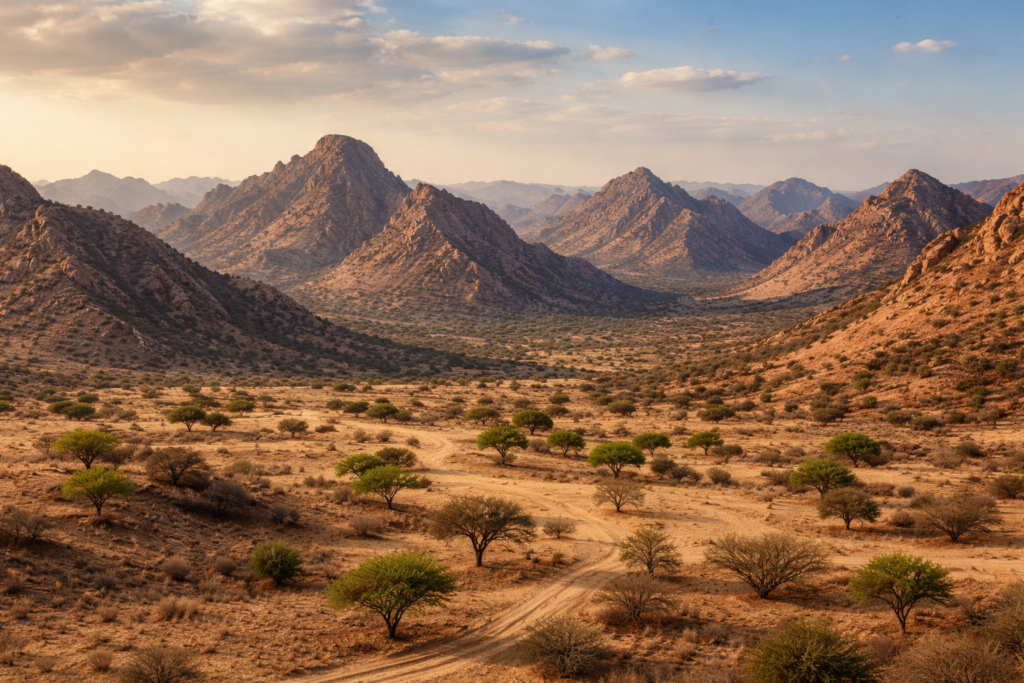
Imagine mountains so ancient they witnessed Earth’s first oxygen-producing life forms. The Aravallis formed around 1.8 billion years ago during the Proterozoic Era, when two massive landmasses; the Aravalli Craton and the Bundelkhand Craton; collided with unimaginable force. Back then, Rajasthan was underwater, covered by vast oceans.
The Himalayas? They’re practically teenagers in geological terms. Beginning formation just 40 to 50 million years ago, these young rebels are still rising, gaining height every year from the ongoing collision between the Indian and Eurasian tectonic plates.
This age difference reveals itself dramatically. The Aravallis were once towering giants but have eroded over millions of years of weathering, while the Himalayas remain young and constantly rising. What does this mean for you? Everything.
How Old Mountains Save Delhi While Young Ones Feed India
The Aravalli Effect
Areas near the Aravallis can be 2–3°C cooler in summer. Sounds minor? During deadly heatwaves, those three degrees mean survival. These weathered hills slow hot desert winds from the Thar, creating a cooling effect that saves lives across Delhi, Haryana, and western Uttar Pradesh.
But the magic doesn’t stop there. The Aravallis redirect monsoon wind flow, helping rainfall spread more evenly across Delhi, Haryana, and western UP. Without them, monsoon winds would sweep past unhindered, leaving millions without rain.
Here’s the shocking part: rainwater seeping through fractured Aravalli rocks recharges aquifers at rates exceeding two million liters per hectare annually. This natural filtration system provides drinking water to water-starved cities like Gurugram, Faridabad, and Delhi; cities that would face apocalyptic water shortages without these ancient hills.
India’s Water Tower
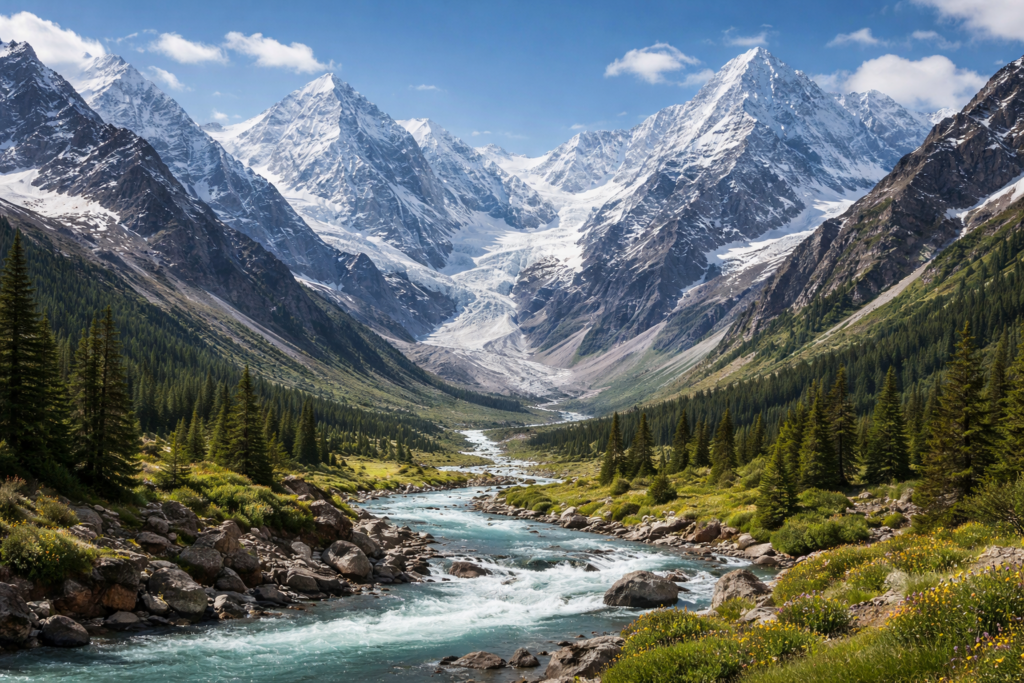
The Himalayas are the major source of the three main river systems in South Asia: the Indus, the Ganga, and the Brahmaputra. About 1.5 billion people depend on this huge “water tower”. Think about that number. One in every five humans on Earth relies on Himalayan water.
The Himalayas prevent frigid Arctic winds from blowing south into the subcontinent, keeping South Asia much warmer than corresponding temperate regions on other continents. Without this barrier, northern India would experience Siberian-style winters that would devastate agriculture.
Even more critical: the Himalayas form a barrier for monsoon winds, preventing them from traveling northwards and causing heavy rainfall in the Terai region. This controlled release of moisture feeds the Indo-Gangetic plains; India’s breadbasket.
Two Strategies, One Mission
India receives an average of 118 cm of rainfall annually, but the distribution is wildly uneven. The Himalayas and Western Ghats block moisture-filled monsoon winds, forcing them to rise, cool, and release rain on windward sides.
The results are staggering. Mawsynram in Meghalaya receives 11,872 millimeters of rain each year; making it one of the wettest places on Earth. This happens because moist air from the Bay of Bengal hits the Himalayas and dumps its load.
Meanwhile, the Aravallis play a different but equally crucial role. The rainfall caused by the Aravalli Hills enriches biodiversity in the region, supporting livelihoods and promoting agriculture in constituent states. Without the Aravallis’ climate regulation, western Rajasthan, Haryana, and the Delhi-NCR region would face irregular rainfall patterns and devastating droughts.
Why Himalayan Valleys Feed Millions While Aravalli Regions Struggle
The region’s fertile alluvial soils, fed by the Ganges and Indus rivers, have traditionally thrived due to predictable rainfall patterns and stable seasonal cycles. This is the Indo-Gangetic Plain; one of the most productive agricultural regions on the planet.
The soil here is young, rich, and constantly replenished by Himalayan rivers carrying nutrient-laden sediments from high mountains. Rice, wheat, sugarcane, and pulses thrive in this environment, feeding over 600 million people.
The Aravalli region tells a different story. The ancient, weathered rocks produce coarser soil with lower nutrient content. By limiting soil erosion, the hills help farms retain moisture and nutrients, improving crop resilience during dry spells or heavy downpours. It’s not about rich soil here; it’s about preventing what little fertility exists from washing away.
From Forest Tribes to Delhi’s Lunch
Himalayas
From high-altitude yak herders in Ladakh to terrace farmers in Uttarakhand, the Himalayas support diverse mountain communities. Medicinal plants, timber, hydropower, and tourism provide income for millions. The mountains’ biodiversity creates economic opportunities; from collecting rare herbs worth their weight in gold to guiding trekkers through pristine valleys.
Agricultural seasons are precisely timed. The kharif season (monsoon-sown crops harvested in autumn) and rabi season (winter crops sown in autumn and harvested in spring) depend entirely on predictable Himalayan weather patterns and glacier-fed river flows.
But climate change threatens everything. Major Himalayan rivers like the Indus, Ganges, and Brahmaputra will see their flows reduced as glaciers recede over coming decades due to global warming. This would create a severe irrigation crisis, threatening food security for a billion people.
Aravallis
The hills support rural livelihoods through grazing land, farming, forest produce, and eco-tourism. Tribal communities like the Bhil and Garasia have lived in harmony with these hills for centuries, relying on minor forest produce, grazing lands, and water sources.
The Aravalli range is a treasure trove of minerals like copper, rock phosphate, lead-zinc-silver deposits, marble, and kyanite. The famous Makrana marble used in the Taj Mahal came from these ancient hills.
But here’s where the story turns dark. From Gujarat to Delhi, the Aravallis shelter leopards, jackals, reptiles, and 300+ bird species while linking forests and grasslands across northwest India. Yet illegal mining, encroachment, and urbanization are destroying this ecological treasure at an alarming rate.
When Mountains Disappear
What Happens If the Aravallis Die?
Recent legal changes have sparked controversy. A Supreme Court ruling adopts a narrow new definition of Aravalli hills based on a 100-meter elevation threshold, potentially excluding over 90% of the range from protection and enabling large-scale mining.
The consequences would be catastrophic:
Water Crisis: If the Aravallis cease to exist, monsoon winds will blow over the area unhindered, reducing local rainfall. The absence of forests will reduce humidity, preventing cloud formation. Groundwater levels, already fallen to 1,000-2,000 feet in many areas, would plummet further.
Desertification: The Aravallis act as a natural barrier, slowing wind velocity and preventing the Thar desert from spreading eastward toward Haryana, eastern Rajasthan, western Uttar Pradesh, and the Indo-Gangetic plains. Without them, sand dunes could reach Delhi.
Pollution Apocalypse: The Aravallis currently filter Delhi-NCR’s air, trapping dust and pollutants. Their destruction would send PM2.5 and PM10 levels skyrocketing. Dust pollution would dramatically increase, leading to breathing problems and heatwave intensification.
The Himalayan Warning
Climate change poses an existential threat to the Himalayas. Rising temperatures over the Himalayas have been confirmed, along with a decreasing trend in monsoon rainfall. Glaciers are retreating rapidly, threatening the 1.5 billion people who depend on Himalayan water.
The region receives heavy rainfall, causing soil erosion, nutrient loss through leaching, and frequent landslides. As climate patterns become more erratic, these disasters intensify, threatening mountain communities and downstream cities alike.
Can We Save the Aravallis?
In March 2023, India launched an ambitious project: the Aravalli Green Wall Project, a 1,400 km long and 5 km wide green belt running from Porbandar, Gujarat, to Panipat, Haryana.
Inspired by Africa’s Great Green Wall, this initiative aims to:
- Plant native tree species across degraded Aravalli landscapes
- Rejuvenate 75 water bodies in the initial phase
- Involve local communities in afforestation, agroforestry, and water conservation
- Create employment and income generation opportunities
- Restore 26 million hectares of degraded land
The project will enhance biodiversity, improve soil fertility, increase water availability, and boost climate resilience while promoting sustainable livelihoods.
But the clock is ticking. Every hill razed for mining, every forest cleared for real estate, brings us closer to a point of no return.
Your Daily Life Depends on Mountains You’ve Never Seen
Next time you turn on your tap, remember: that water might have traveled from Himalayan glaciers or filtered through billion-year-old Aravalli rocks. When you breathe relatively cleaner air in Delhi despite the pollution, thank the Aravallis for filtering some of the dust. When you eat rice or wheat, recognize that Himalayan rivers fed those crops.
The Himalayas and Aravallis aren’t just tourist destinations or distant geological features. They’re the invisible infrastructure that makes life possible in India. Young mountains and ancient hills, working together across time, protecting 1.4 billion people from hunger, thirst, and environmental collapse.
The question isn’t whether we can afford to protect them. It’s whether we can survive without them.
What mountain range is closest to your home? Have you witnessed changes in local climate, water availability, or air quality? Share your observations in the comments; your local knowledge matters more than you think.
Watch and Learn More:
For stunning visuals and deeper insights into mountain ecosystems, check out these resources:
- “Walking the Himalayas” (BBC Documentary Series) – Explorer Levison Wood’s incredible journey across four countries: Watch on YouTube
- “Meru” – Oscar-winning documentary about climbing Mount Meru in the Indian Himalayas: Available on YouTube
- “Living With the Himalayas” (2017) – Intimate look at communities adapting to harsh mountain environments: Search on YouTube
- NASA Earth Observatory – “The Ancient Aravalli Range” – Satellite imagery and scientific perspective: View Article
Related Reading:
- How Climate Change Threatens Indo-Gangetic Agriculture
- India’s Great Green Wall: Hope for the Aravallis
- Himalayan Glaciers: The Melting Time Bomb
Comments from Nikhil Raj Sharma, Founder of Himalayan Geographic:
“The intricate dance between ancient Aravallis and young Himalayas that sustains our civilization. Most people don’t realize their morning water, their lunch, even the air they breathe passes through these mountain systems. The Aravalli crisis particularly troubles me. We’re allowing billion-year-old natural infrastructure to be demolished for short-term profits while facing long-term catastrophe.
What strikes me most is how interconnected everything is. Destroy the Aravallis, and you don’t just lose hills; you lose Delhi’s water security, its climate buffer, its breathable air. Damage the Himalayas through climate change, and 1.5 billion people face water scarcity. These aren’t separate environmental issues. They’re existential threats to Indian civilization.
The Green Wall project gives me hope, but only if we stop the bleeding first; no more illegal mining, no more encroachments, no more treating mountains as obstacles to development rather than foundations of survival. Our ancestors understood this. It’s time we remember.”
Disclaimer: The content and images published in this article are provided for general informational and educational purposes only. Some images may be generated or enhanced using artificial intelligence (AI) and are intended solely for illustrative use. The views, interpretations, and information expressed do not necessarily reflect the official position of Himalayan Geographic Research Foundation, nor do they constitute professional, legal, medical, or financial advice.
While efforts are made to ensure accuracy, no guarantees are given regarding completeness or reliability. Readers are encouraged to independently verify information and use their own judgment. By reading this article, you acknowledge that any reliance on the content is at your own risk, and Himalayan Geographic Research Foundation assumes no responsibility or liability for disagreements, interpretations, or outcomes arising from its use. If you do not agree with these terms, you are advised to discontinue reading.
