
SPITI Valley, a world within a world in the Indian Himalayas. Explore ancient monasteries, resilient communities, and breathtaking landscapes in this comprehensive guide to the Middle Land where modern chaos fades into spiritual silence.
Picture this: You’re standing at 12,500 feet above sea level, surrounded by barren mountains that look like they belong on Mars, not Earth. The air is so thin you can count your heartbeats. Roads disappear into snow for six months each year. Yet, in this harsh, unforgiving landscape, life not only exists; it thrives with a quiet dignity that puts our modern comforts to shame.
Welcome to Spiti Valley, the “Middle Land”; a place novelist Rudyard Kipling once described as “a world within a world” and “a place where the gods live.”
With only 31,528 people spread across the entire district, making it the second least populous district in India, SPITI isn’t just geographically isolated. It’s emotionally, spiritually, and mentally distant from everything we call “normal.”
The Edge of the Map: SPITI’s Geographical Isolation
A Different Planet on Earth
SPITI Valley experiences a cold desert climate, with long harsh winters and short cool summers. But statistics don’t capture what it feels like to exist here. Imagine living where the temperature plunges to minus 20 degrees Celsius in winter, where the average elevation exceeds 11,000 feet with many villages as high as 14,000 feet.
This isn’t just high altitude. It’s a realm where the flats are as dry as the valleys of the moon, with almost no rain in summer as mountains exclude the valley from monsoon rains.
The isolation is both geographical and temporal. From November to April, the valley remains isolated from the rest of the world due to closure of the Rohtang Pass. Roads literally vanish under 7 feet of average annual snowfall. Mobile signals fade. Internet slows to a crawl. And in that disconnection, something remarkable happens; you remember what silence sounds like.
Where Nature Writes the Rules
In SPITI, humans don’t dominate nature. They negotiate with it. Every harvest, every journey, every breath of thin air is a testament to adaptation over conquest.
The valley sits in a rain shadow area with average annual rainfall of only 170 mm. Yet somehow, communities have managed to cultivate 3,398 hectares of irrigated land using ancient water management systems that modern engineers still study with awe.
Climate change is rewriting even these ancient contracts. Villagers claim glaciers have been melting faster and snowfall has decreased in recent decades, endangering agriculture in this high-altitude cold desert. The ice bridges that shepherds once used to cross rivers are disappearing. Nature is reminding everyone; even here at the edge of the world—that nothing is permanent.
Watch this stunning visual journey through SPITI: Tale of 2 Backpackers – Spiti Valley Complete Guide
SPITI’s Ancient Buddhist Heritage
Monasteries as Living Museums
SPITI isn’t called “the land of lamas” for nothing. The valley hosts some of the oldest and most significant Buddhist monasteries in the world; not as tourist attractions, but as beating hearts of community life.
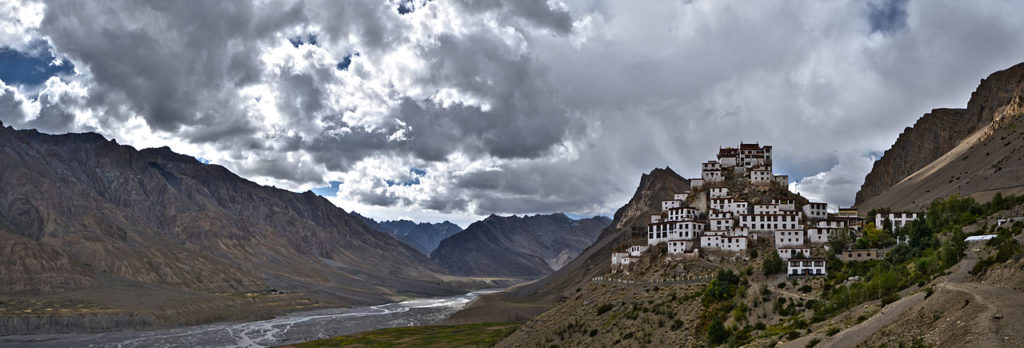
Key Monastery stands at 4,166 meters, making it the highest altitude monastery in India and second-highest in the world. Founded in the 11th century, this largest monastery in SPITI Valley serves as a major center for Buddhist learning.
The most remarkable aspect? Over 300 monks still live, study, and pray here. Young monks play in the courtyards. Butter lamps flicker in ancient temples. The sacred chants of “Om Mani Padme Hum” echo through halls that have witnessed a thousand winters.
Tabo Monastery, built in 996 AD, is more than 1000 years old and earned the title “Ajanta of the Himalayas.” It’s a UNESCO World Heritage site where ancient murals and stucco statues tell stories that predate most European cathedrals. The Dalai Lama himself has expressed his desire to retire to Tabo, maintaining it is one of the holiest places.
Dhankar Monastery perches precariously at 12,774 feet on the edge of a cliff, offering panoramic views that make your heart stop; both from beauty and from vertigo. In the 17th century, it served as the capital of SPITI and still houses Buddhist scriptures in Bhoti script.
Where Traditions Outlive Trends
While the outside world chases the next viral trend, SPITI communities follow rhythms established centuries ago. Religion plays a major role in everyday life, testified by piles of ‘mani’ stones, whitewashed chortens housing Buddhist relics, and prayer flags fluttering in thin air.
The people here don’t practice mindfulness as a wellness trend. They live it. Meditation isn’t scheduled between meetings; it’s woven into the fabric of daily existence. Monks don’t retreat to silence; they inhabit it naturally.
This isn’t nostalgia or resistance to change. It’s a conscious choice to preserve what works, to honor what endures. In SPITI, life remained focused around monasteries for centuries, creating a society where spiritual values aren’t Sunday add-ons but daily essentials.
Thriving Where Survival Is Victory
Farming at the Edge of Impossible
Imagine trying to grow food where the growing season is limited to a few months, with less than 1,000 hectares scratched out in isolated patches above the Spiti River. Where there’s plenty of water in rivers and glaciers, but the searing flats are dry as moon valleys.
Yet SPITI farmers have adapted brilliantly. The Lahaul Valley is one of India’s major disease-free seed potato-producing regions, with more than 90% going to states like West Bengal, Bihar, and Karnataka. They’ve diversified from five traditional crops in 1980 to nine by 1990, with green peas now covering significant farmland.
This isn’t just agriculture. It’s artistry born from necessity. Every harvest is a triumph. Every meal is earned.
The Warmth Behind Weathered Faces
The people of SPITI don’t smile because life is easy. They smile because they’ve mastered something we’re still learning; finding joy independent of comfort.
Visit a homestay in villages like Key or Kibber. You’ll be welcomed with butter tea and conversations that meander like mountain streams. Families will share their single blanket in freezing temperatures. They’ll offer you the warmest corner by their bukhari (wood stove) while they sit in the cold.
This generosity isn’t performance. It’s culture. It’s identity.
The real strength lies in the community’s commitment to collective welfare, their respect for fragile ecosystems, and their determination to pass these values to the next generation.
Spiritual Silence
The Sound of Nothing
In SPITI, silence isn’t the absence of sound. It’s a presence. A force. A teacher.
Stand anywhere in the valley and you’ll hear it;not with your ears but with your entire being. It’s the silence between heartbeats. The pause between thoughts. The space where anxiety goes to die.
This isn’t meditation retreat silence, curated and temporary. This is ancient, ongoing, geological silence; the kind that makes you realize how much noise you’ve been carrying inside.
The mountains here don’t inspire you to meditate. They simply make meditation inevitable. Even the most restless mind eventually surrenders to the overwhelming stillness.
Mountains That Make You Small (And Grateful)
SPITI’s landscapes don’t just dwarf you physically. They recalibrate your entire sense of scale and significance.
The Parung range peaks reach 7,030 meters while Manirang Peak soars to 6,598 meters. These aren’t just measurements. They’re monuments to perspective; reminders that your biggest problems are tiny specks in the universe’s timeline.
Yet instead of making you feel insignificant, SPITI’s vastness somehow makes you feel more connected. To the earth. To other humans. To something larger than Instagram followers or career ladders.
Local beliefs add another dimension to this spiritual landscape. People are superstitious; they talk of healing trees, spirits, and monks possessing magical powers. Whether you believe in such things doesn’t matter. What matters is recognizing that mystery and wonder still exist in a world we thought we’d completely mapped.
Explore visual documentation: ShivaTells – Exploring Spiti Valley: A Hidden Gem
Contrast with the Modern World
The Things SPITI Doesn’t Have (And Doesn’t Need)
No shopping malls. No traffic jams. No advertising billboards screaming at you to buy things you don’t need.
No 24/7 connectivity. No pressure to be constantly productive. No pretense that happiness comes from accumulation.
In SPITI, the population density is just 2 persons per square kilometer. Compare that to Delhi’s 11,320 or Mumbai’s 20,482. Here, space isn’t a luxury; it’s the default setting.
Time follows different rules too. The day begins with sunrise and ends with sunset, not because of some wellness guru’s advice but because that’s how life works when you’re not fighting against natural rhythms.
The Paradox of Progress
Here’s what’s ironic: Lahaul-Spiti has the highest per capita income in Himachal Pradesh and the highest irrigation intensity. By economic measures, they’re succeeding. Yet they’ve achieved this without sacrificing community bonds, environmental respect, or spiritual grounding.
The valley shows that development and tradition don’t have to be enemies. That progress doesn’t require abandoning identity. That you can improve living conditions without importing the anxieties that plague urban existence.
Recent decades have brought changes. Cash-crop agriculture, employment in state departments, and tourism are now main income sources. Roads have improved. Solar energy reaches remote villages. Young people access education and opportunities their grandparents never dreamed of.
Yet walk through villages like Hikkim (home to the world’s highest post office) or Komic, and you’ll find traditions thriving alongside modernity. Prayer wheels spin next to solar panels. Monks use smartphones to access Buddhist teachings. Ancient wisdom and contemporary tools coexist without contradiction.
Nature as the Ultimate Authority
When Weather Decides Everything
In our air-conditioned, climate-controlled bubbles, we’ve forgotten a fundamental truth: nature is in charge. SPITI remembers.
From November to April, heavy snow blocks roads and isolates the valley. No amount of money or influence changes this. The pass opens when winter decides it’s done, not when humans want it.
This enforced patience teaches something our instant-gratification culture has lost. Some things simply cannot be rushed. Some forces must be respected rather than controlled.
Coexistence, Not Conquest
The relationship between SPITI’s people and their environment is fundamentally different from the extractive mindset dominating much of modern civilization.
The valley is home to snow leopards, Himalayan brown bears, ibex, musk deer, and blue sheep. These aren’t tourist attractions behind fences. They’re neighbors sharing the same harsh landscape.
Remarkably, locals don’t hunt wild animals due to religious beliefs, even when facing their own resource limitations. The Pin Valley National Park and Kibber Wildlife Sanctuary protect these species, but the real protection comes from community values that see conservation as spiritual duty, not legal obligation.
The juniper forests, though threatened by overuse and habitat degradation, are used by local people for both religious purposes and subsistence; never wastefully, always respectfully. It’s a delicate balance that sometimes fails, but the intention to maintain it never wavers.
This philosophy extends to water, land, and all resources. SPITI communities understand what many societies have forgotten: you can’t conquer the mountain. You can only learn to live with it gracefully.
Planning Your Journey to SPITI
When to Visit This World Within a World
Summer (May to September): This is the best season when roads from Manali and Shimla are open, and weather is pleasant. Temperatures range from 15-25°C during the day. Perfect for trekking, biking, and monastery visits.
Monsoon (July to September): Not the best time due to landslides on routes via Manali and Kinnaur, though SPITI itself receives little rain. Travel with extra caution and flexibility.
Winter (October to April): Only for the brave and experienced. Extreme temperatures and heavy snowfall limit road access, with only the Shimla route remaining partially open. You’ll witness frozen waterfalls, snow-covered villages, and potentially spot elusive snow leopards. Temperatures drop below -20°C.
How to Reach the Middle Land
Route 1 – Via Manali (Summer only):
- Distance: 201 km from Manali to Kaza
- Open: Late May to mid-October
- Passes through Rohtang Pass/Atal Tunnel and Kunzum Pass
- More adventurous but challenging terrain
Route 2 – Via Shimla (Year-round):
- Distance: 412 km from Shimla to Kaza
- Open throughout the year (weather permitting)
- Through Kinnaur Valley
- Better for acclimatization with gradual altitude gain
Nearest Airport: Bhuntar (Kullu-Manali) or Shimla Nearest Railway Station: Kalka or Chandigarh
Essential Tips for Travelers
Altitude Considerations:
- Allow 2-3 days for acclimatization
- Stay hydrated and avoid alcohol initially
- Recognize symptoms of altitude sickness
Connectivity:
- Only BSNL mobile network works reliably
- Internet is slow and intermittent
- Embrace the digital detox
Cultural Respect:
- Remove shoes before entering monasteries
- Dress modestly (cover shoulders and knees)
- Ask permission before photographing people or inside temples
- Keep your voice low in sacred spaces
Essential Packing:
- Warm clothing year-round (temperatures drop drastically at night)
- Sun protection (high altitude UV exposure)
- Basic medicines (limited medical facilities)
- Cash (ATMs available only in Kaza)
- Reusable water bottle and snacks
Must-Visit Places in SPITI
- Key Monastery – The iconic symbol of SPITI
- Tabo Monastery – The Ajanta of Himalayas
- Dhankar Monastery – Perched on a dramatic cliff
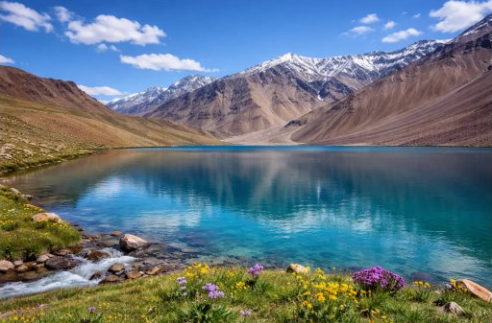
- Chandratal Lake – The Moon Lake at high altitude
- Pin Valley National Park – For wildlife enthusiasts
- Kibber Village – One of the highest inhabited villages
- Hikkim – World’s highest post office
- Langza – Buddha statue with fossil hunting opportunities
- Komic – One of Asia’s highest motorable villages
Experience Local Life
Stay in homestays rather than hotels. Eat with families. Learn basic phrases in Stod Bhoti. Join villagers for their daily chai. Ask about their lives, their challenges, their hopes.
Tourism can either exploit or uplift. Choose the latter. Support local businesses. Carry back your trash. Leave the valley better than you found it.
SPITI’s Message to the Modern World
What This World Within a World Teaches Us
SPITI isn’t perfect. Life here is hard; genuinely, physically, unrelentingly hard. Resources are scarce. Medical facilities are limited. Winters are brutal.
Yet the people here possess something many of us have lost: contentment that doesn’t depend on circumstances. Joy that survives hardship. Community that transcends convenience.
They’ve mastered the art of living with less and experiencing more. Of finding abundance in simplicity. Of building wealth that can’t be measured in currency.
The Question SPITI Asks
As you stand in this barren, beautiful landscape, SPITI asks you a question modern life tries hard to avoid:
What do you actually need to be happy?
Not what advertising tells you. Not what your social circle expects. Not what your resume requires. But truly, fundamentally; what does your soul need?
For many visitors, SPITI doesn’t just answer that question. It changes what the question means. It rewrites your definition of success, progress, and the good life.
A World We Can’t Afford to Lose
Climate change threatens SPITI’s delicate balance. Tourism brings both opportunities and risks. Globalization creeps into even the most remote valleys.
The world within a world isn’t isolated anymore. The question is whether it can retain its essence while adapting to inevitable change. Whether it can take what modernity offers; better healthcare, education, infrastructure; without importing modernity’s diseases: anxiety, alienation, environmental destruction.
That depends partly on policy, but mostly on choices. Choices by the communities themselves. Choices by visitors who come here. Choices by organizations like Pragya Foundation and others working to support sustainable development in mountain regions.
The Journey That Changes You
SPITI isn’t just a destination you tick off a bucket list. It’s a mirror that reflects everything you’ve become and everything you might still choose to be.
You arrive as a tourist and leave as something else. Not because SPITI tries to change you, but because stillness and space allow you to remember who you were before the world told you who to be.
The roads are treacherous. The altitude is challenging. The facilities are basic. Yet thousands make this journey every year, and most leave transformed.
Because SPITI offers what no luxury resort ever could: permission to be fully present. Freedom from constant stimulation. Reminder that you are simultaneously infinitesimally small and cosmically significant.
As Rudyard Kipling wrote over a century ago, SPITI remains “a world within a world.” The only question is whether you’re ready to step into it.
Comments from Nikhil Raj Sharma, Founder – Himalayan Geographic
“SPITI Valley represents everything Himalayan Geographic stands for; the preservation of ancient cultures in harmony with one of the world’s most challenging environments. Every time I visit this remarkable valley, I’m reminded that true development isn’t about imposing modern solutions but about respecting and supporting the wisdom communities have cultivated over centuries. SPITI teaches us that progress and tradition aren’t opposites; they’re partners in creating sustainable futures. This article captures the essence of why protecting and celebrating the Himalayan heritage is not just important; it’s essential for humanity’s collective soul.”
“As we document and share stories from regions like SPITI, our mission at Himalayan Geographic is to ensure these voices are heard, these landscapes are protected, and these ways of life are honored. SPITI isn’t just a travel destination; it’s a classroom where modern civilization can learn invaluable lessons about resilience, community, and living in balance with nature. I encourage every reader to visit responsibly, learn deeply, and carry SPITI’s wisdom back to wherever you call home.”
Recommended Resources & Further Reading
Video Documentaries:
Official Tourism Information:
Cultural & Conservation Organizations:
Disclaimer: The content and images published in this article are provided for general informational and educational purposes only. Some images may be generated or enhanced using artificial intelligence (AI) and are intended solely for illustrative use. The views, interpretations, and information expressed do not necessarily reflect the official position of Himalayan Geographic Research Foundation, nor do they constitute professional, legal, medical, or financial advice.
While efforts are made to ensure accuracy, no guarantees are given regarding completeness or reliability. Readers are encouraged to independently verify information and use their own judgment. By reading this article, you acknowledge that any reliance on the content is at your own risk, and Himalayan Geographic Research Foundation assumes no responsibility or liability for disagreements, interpretations, or outcomes arising from its use. If you do not agree with these terms, you are advised to discontinue reading.