
Why the Himalayan soundscape is disappearing under traffic, construction and loudspeakers and what this silent crisis means for wildlife, locals and your own peace of mind.
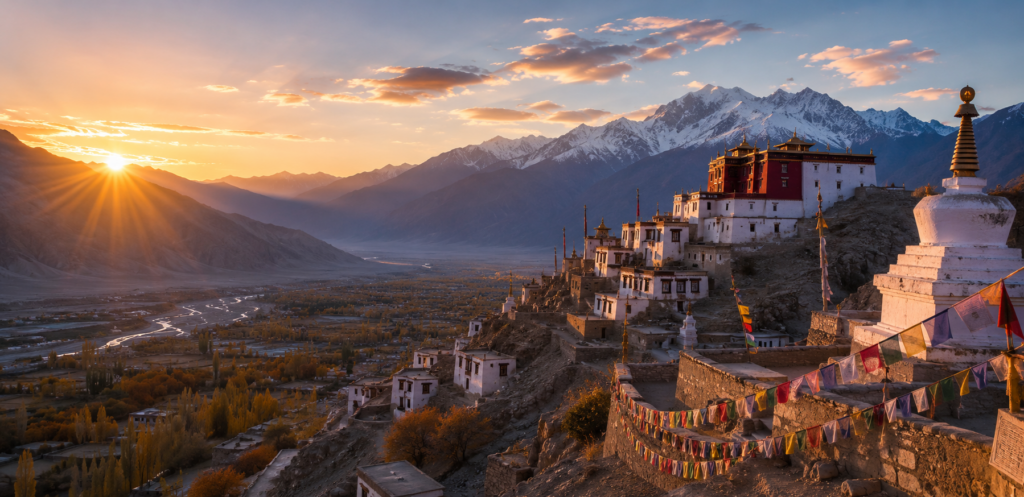
Stand on a ridge above Leh at 4 am and you can hear your own heartbeat. No traffic. No phone buzz. Just wind moving through juniper bushes and, somewhere far below, a river talking to itself.
That kind of silence is getting harder to find. Researchers who spent months recording sound across the Himalayas noted that the region is unusually quiet because almost no aircraft pass overhead, which is rare anywhere else on Earth today. But even they found that this quiet is no longer guaranteed. Trucks on mountain roads, construction crews repairing landslide damage, and new dam projects are slowly filling that silence with engine noise.
This is the story of the Himalayan soundscape; the natural mix of wind, water, birdsong, temple bells and human voices that has shaped life in these mountains for centuries. And it is disappearing faster than most people realise.
What Exactly Is a “Himalayan Soundscape”?
A soundscape is simply everything you hear in a place, layered together like instruments in an orchestra. Scientists who study this call it soundscape ecology, a field that looks at how natural sounds (birds, wind, insects) mix with human-made sounds (traffic, machines, music).
This area of study grew out of ecologist Rachel Carson’s early warnings in 1962 about a world that might one day fall silent because chemicals and pollution were killing the insects, frogs and birds that fill it with sound. In the Himalayas, that silent-world warning feels closer to reality every tourist season.
Why Silence Is Part of Himalayan Identity
Ask any elder in Spiti, Kinnaur or Ladakh what they remember most about their childhood mountains, and many will not talk about views. They will talk about quiet.
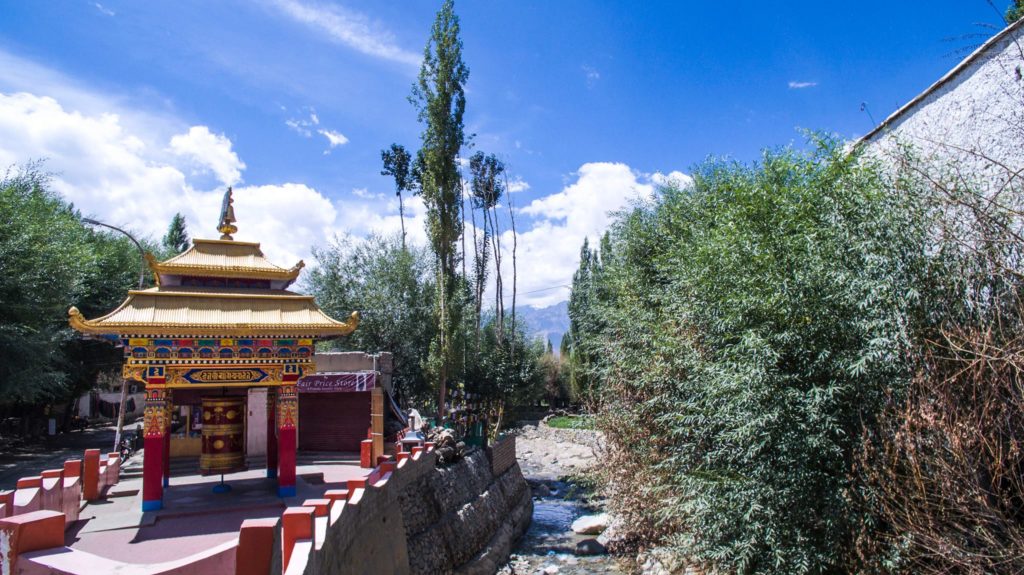
Monasteries built this quiet into daily life on purpose. At monasteries like Thiksey and Diskit, the sound of bells, chants and humming prayer wheels creates a deeply spiritual atmosphere meant to help visitors and monks reach a meditative state. Silence here is not empty. It is full of meaning.
One travel writer described sitting inside Thiksey monastery as feeling like a deep meditative peace where even the usually noisy Himalayan jackdaws fell silent, leaving only the soft sound of prayer wheels turning. That is not a tourist brochure line. That is what real Himalayan silence does to a visitor.
This silence shaped religion, farming routines, and even how villages were built; spread out, away from each other, so no house disturbed another. Losing that silence means losing a part of how Himalayan people understand themselves.
Traffic, Construction and Loudspeakers
Here is the part nobody puts on a postcard.
- Traffic jams that last hours. During peak season, vehicles queue for 4 to 6 hours on routes to Manali and Rohtang Pass, with diesel engines idling continuously in thin mountain air.
- Pilgrim season noise. Pilgrimage towns on the highway between Rishikesh and Badrinath face heavy vehicular noise and traffic congestion, especially during the holy season.
- Char Dham numbers. More than 5 lakh vehicles entered the Char Dham pilgrimage area in both 2023 and 2024.
- City-level strain. As Shimla’s population and tourism have grown, more vehicles have overwhelmed its roads, increasing noise pollution and reducing the city’s overall quality of life.
It is not only traffic. Loud speaker systems at homestays, generators running through power cuts, and music blasting from cars parked next to snowfields have all become normal. In January 2026, this reached a breaking point in one village.
The Sissu panchayat near the Atal Tunnel shut down tourism completely from 20 January to 28 February, citing noise pollution, littering and traffic congestion as the main reasons. Locals were tired of cars used as stages for loud parties in what used to be a quiet parking ground.

When the Mountains Go Quiet
Noise does not just annoy people. It changes how animals survive.
Take the Himalayan musk deer, a shy and endangered species. In Nepal’s Annapurna Conservation Area, GPS collar data showed that musk deer began travelling an extra 3 to 5 kilometres a day to avoid tourist foot traffic, burning energy they could not spare and cutting their reproductive success by an estimated 28%.
Birds suffer too. A 2024 study on snowmobile noise in Yellowstone found something that applies just as well to Himalayan snowmobiles and ATV tracks: engine noise reduced how often birds called out during mornings and evenings, which can affect their ability to find food, avoid predators and attract a mate.
Closer to home, conservationists have noted that loud tourist activity has disrupted the mating calls of endangered pheasant species in the Himalayan region. When mating calls go unheard, populations shrink quietly, with no headline to mark the loss.

What Noise Pollution Does to Local Communities
Locals do not get to leave when the season ends. They live inside this noise all year.
Growing traffic congestion has increased fuel consumption, eaten into working hours and even delayed law enforcement and medical teams trying to reach their destinations. Add constant generator hum and honking, and basic daily life becomes a small daily battle.
There is also a cultural cost that is harder to measure. Children growing up in homestays full of tourist noise are not hearing the same lullabies, the same evening prayers, or the same stories their grandparents heard. Slowly, the soundtrack of a culture changes; and once it changes, it rarely changes back.
Why Our Brains and Bodies Actually Need Quiet
This is not just a feel-good idea. It is backed by real research.
A well-known 2013 Duke University study found that two hours of silence per day triggered the growth of new brain cells in an area linked to memory and emotion, in mice studied in a lab setting. That sounds technical, but the takeaway is simple: silence helps the brain repair and grow.
Human studies back this up too. A 2021 study found that people working in silence had the lowest stress hormone levels and the least mental strain compared to people working with speech or other noise in the background.
So when a Himalayan trek leaves you feeling oddly peaceful, that is not just the view. That is your nervous system finally getting the quiet it has been starved of in city life.
Can Development and Silence Coexist?
This is the hard question, and the honest answer is: it depends on how development is done.
Roads, hospitals, schools and electricity are not the enemy. Nobody is asking Himachal, Uttarakhand or Ladakh to stay frozen in time while the rest of the world moves forward. Tourism genuinely supports hotels, guides, taxi drivers and shopkeepers across the region, and that income matters to real families.
The real problem is unplanned development; roads built without noise barriers, generators running without silencers, homestays built right next to nesting grounds. India already has rules for this. Silence zones near hospitals and schools are legally capped at 50 decibels in the day and 40 at night, but mountain towns rarely enforce these limits with the same seriousness as big cities.
Smart planning can fix a lot without stopping growth:
- Designated quiet zones around monasteries, sanctuaries and old villages.
- Vehicle entry limits during peak pilgrimage and tourist months.
- Electric shuttle buses instead of private cars in high-traffic valleys.
- Mandatory silencers on generators used at homestays and hotels.
- Noise-monitoring apps that let locals report violations directly to the panchayat.
- Eco-tourism certification that rewards quieter, smaller-footprint stays.
- School programmes teaching children why their valley’s silence matters.
What the Alps Can Teach the Himalayas
Switzerland faced a similar noise problem decades ago, and chose a different path. Villages like Zermatt, Wengen and Mürren are completely car-free, allowing only electric taxis, trains and cable cars to move people around.
This single decision cuts both air and noise pollution at the source, keeping the alpine environment calm even during peak season. Even when these towns are full of visitors, they do not sound like a city, because there are simply no engines roaring through the streets.
The result was not less tourism. It was more loyal tourism. People return year after year because the silence itself has become part of what they are paying for.
Himachal and Uttarakhand do not need to copy Switzerland exactly. The terrain, budgets and traffic patterns are very different. But the underlying lesson travels well: when a community protects its soundscape on purpose, the soundscape ends up protecting the local economy in return.
The Quiet Tourism Trend Is Already Here
Interestingly, a small but growing number of travellers are now actively seeking out silence rather than sightseeing.
At the Dhamma Sikhara meditation centre near Dharamkot in Himachal Pradesh, hundreds of people sign up every month for ten-day courses built around what is called Noble Silence, where talking, phones and even eye contact are paused so the mind can rest. Participants describe the experience as life-changing, not because of any luxury, but because the silence itself does the work.
This is proof that silence is not a side effect of Himalayan travel. For a growing number of people, it is the entire reason to come.
What Nikhil Raj Sharma, Founder of Himalayan Geographic, Says
“Silence is not nothing. It is one of the last free resources the Himalayas still have, and we are spending it carelessly. A hotel can be rebuilt. A musk deer’s breeding ground, once abandoned, does not come back in our lifetime.”
“We do not need to choose between development and silence. We need town planning that treats quiet the same way it treats clean water; as something that runs out if nobody protects it.”
A Few Sounds Worth Saving
Close your eyes and picture these:
- Wind moving through a high-altitude meadow at 3,000 metres.
- A monastery’s morning prayer bell echoing off a cliff face.
- A river under ice, barely audible, like a secret.
- An Himalayan monal calling out at dawn before any engine starts.
These sounds took thousands of years to settle into the landscape. A single tourist season of unchecked noise can push some of them out for good.
Have You Heard the Himalayas Go Quiet?
Maybe you have stood somewhere in Spiti or Ladakh and felt that strange, full silence the locals talk about. Or maybe you have sat in a six-hour traffic jam near Manali wondering where all the quiet went.
Share your experience in the comments below; we would love to know which Himalayan place gave you real silence, and which one surprised you with how loud it had become.
If this article changed how you will travel in the mountains, pass it on. The fewer car horns at 5,000 metres, the better for all of us.
Watch & Listen
For a feel of what genuine Himalayan monastery soundscapes are like, this short documentary-style video is worth ten minutes of your time: Exploring Incredible Leh: Thiksey & Hemis Monastery, Ladakh, India (YouTube).
Further Reading
- Soundscape ecology and Rachel Carson’s early warnings — Springer Nature Link, Analysis of Soundscapes as an Ecological Tool
- Bird vocalisation response to engine noise — Cretois et al., 2024, Journal of Applied Ecology
- Noise and overtourism impacts in Himachal Pradesh — Himalayan Geographic, Tourist Rush, Local Rage
- India’s CPCB noise zone standards — Central Pollution Control Board guidelines
Disclaimer: The content and images published in this article are provided for general informational and educational purposes only. Some images may be generated or enhanced using artificial intelligence (AI) and are intended solely for illustrative use. The views, interpretations, and information expressed do not necessarily reflect the official position of Himalayan Geographic Research Foundation, nor do they constitute professional, legal, medical, or financial advice.
While efforts are made to ensure accuracy, no guarantees are given regarding completeness or reliability. Readers are encouraged to independently verify information and use their own judgment. By reading this article, you acknowledge that any reliance on the content is at your own risk, and Himalayan Geographic Research Foundation assumes no responsibility or liability for disagreements, interpretations, or outcomes arising from its use. If you do not agree with these terms, you are advised to discontinue reading.