
Examination culture is killing curiosity. Discover 7 brutal truths about rote learning, what real education looks like, and why your marks may not mean what you think they do.
You memorised the water cycle in Class 6. Can you explain it today without Googling? Most people cannot. And that is not your fault that is the fault of examination culture.
Here is a shocking fact: India conducts over 30 million board examinations every year, yet the Annual Status of Education Report (ASER 2023) found that nearly 50% of Class 8 students cannot read a Class 2 text fluently. We are examining children constantly and understanding them almost never.
So the real question is this are our exams measuring how well students think, or just how well they can repeat?
What Is Examination Culture, Really?
Examination culture is the idea that a student’s worth equals their marks. It is the system where a three-hour paper decides your career, your family’s pride, and sometimes, tragically, your will to live.
It is not just about studying hard. It is about a deep, systemic belief that performance on a standardised test is the best way to judge human intelligence and potential. From JEE to UPSC, from Class 10 boards to college entrance exams, this culture runs India’s educational bloodstream.
And the problem is not the exam itself. The problem is what we have made it mean.
Are We Rewarding Recall Over Understanding?
John Dewey, the great education philosopher, said that education is not preparation for life it IS life. But our classrooms tell a different story.
A student preparing for board exams does not ask “why does this happen?” They ask “will this come in the exam?” That single shift in question changes everything.
Rote learning; mugging up facts, dates, definitions, and formulas without truly understanding them is the backbone of examination culture. And it works, in a narrow sense. Students pass. Parents celebrate. Schools rank high. Teachers feel successful.
But ask that same student six months later what osmosis means, and you get a blank stare.
“We are producing efficient answer-writers, not curious thinkers.” inspired by Dewey’s critique of passive learning
According to a 2022 study by the National Council of Educational Research and Training (NCERT), over 68% of Indian students rely primarily on memorisation techniques to prepare for exams. Critical thinking exercises are used by fewer than 20% of classrooms in rural India.
This is not a student problem. This is a design problem.
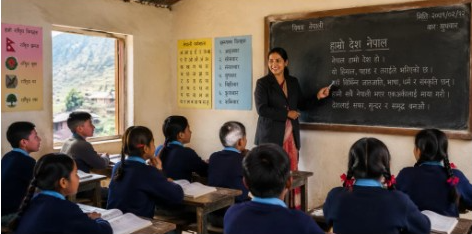
Do Marks Actually Reflect Competence? Let Us Be Honest.
Aristotle believed that true knowledge is knowing not just what something is, but why it is. He called this “episteme” deep understanding. Our current exam system tests almost none of it.
A student who scores 95% in Economics may not understand inflation when it hits their grocery bill. A student who tops Chemistry may not be able to read a medicine label correctly. This is the cruel joke of examination culture it rewards performance, not understanding.
Here is what research says:
- A 2019 paper in the Journal of Educational Psychology found that students who used rote learning scored well in immediate tests but showed 60% faster knowledge decay compared to those who used concept-based learning.
- The World Economic Forum’s Future of Jobs Report (2023) lists critical thinking, creativity, and problem-solving as the top three skills employers want none of which are tested in most Indian board exams.
- A McKinsey Global Institute report (2020) noted that India produces 1.5 million engineers annually, but fewer than 25% are considered industry-ready.
Marks measure short-term retention. They do not measure a person’s ability to adapt, create, or lead.
The Skill Crisis Nobody Wants to Talk About
Noam Chomsky once said that education is not about filling a bucket it is about lighting a fire. The examination culture we have built is very good at filling buckets. It is terrible at fires.
What skills does rote learning actually kill?
- Critical thinking: Students are not asked to question the textbook. They are asked to reproduce it.
- Problem-solving: Most exam questions have one correct answer. Real life never does.
- Communication and expression: Essay writing in exams rewards format over thought. Original ideas are penalised if they go off-syllabus.
- Creativity: When was the last time an Indian board exam asked a student to imagine, invent, or design?
The irony is that the very skills that will help students succeed in the 21st century analytical thinking, emotional intelligence, collaboration are the skills our examination culture actively discourages.
As Max Weber warned in a different context, bureaucratic systems tend to create rule-following over rule-questioning. Indian education has become exactly that a bureaucracy of marks, where following the format matters more than thinking beyond it.
What Is the Real Purpose of Education?
This is where it gets philosophical, and rightly so.
Aristotle said the goal of education is “eudaimonia” a flourishing life. Not a high-paying job. Not a good rank. A life where you use your full human potential.
Dewey added that school must connect to real life. Children learn best by doing, by experiencing, by making mistakes in safe environments. A child who plants a seed learns more about biology than one who reads about photosynthesis for three hours.
But what does our system do? It puts a 16-year-old in a hall with 200 other teenagers, gives them a paper, and says: “Your future starts now.”
The purpose of education has been quietly replaced. It used to be about becoming a good human. Now it is about becoming a good test-taker.
Sigmund Freud would note something darker here the anxiety produced by examination culture does not vanish after the exam. It lives in the unconscious, breeding fear of failure, imposter syndrome, and a lifelong association of learning with stress. Indian students consistently report among the highest academic stress levels in the world. The National Crime Records Bureau (NCRB) reported 13,089 student suicides in India in 2021 the highest ever recorded.
Examination culture is not just an academic problem. It is a mental health crisis.
Is Rote Learning the Student’s Fault or the System’s?
Here is the honest answer; it is the system’s fault, almost entirely.
Students are rational beings. They study what is tested. If the exam asks them to reproduce definitions, they will memorise definitions. If the exam asked them to solve real problems, they would learn real problem-solving.
The examination itself teaches the student what kind of thinking is valued. And right now, our exams say: memory is everything.
What would a better system look like?
- Open-book exams; testing application, not recall
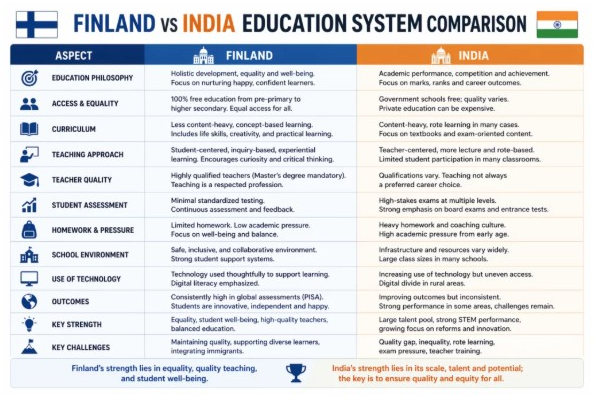
- Project-based assessments; like Finland’s school model, which has no standardised exams until age 18
- Portfolio evaluations; tracking growth over time, not just a single moment
- Oral and practical components; because life does not happen on paper
- Multiple intelligence testing; recognising that not all students shine the same way
Finland consistently ranks among the top countries in education quality. Their secret? Less testing, more trust. Teachers are trained to assess understanding, not just answers. Students collaborate rather than compete.
India is not Finland. But the lessons are available. The question is whether we have the will to use them.
Watch this: Sir Ken Robinson’s legendary TED Talk “Do Schools Kill Creativity?” has over 70 million views and asks exactly the right questions.
What Can Parents, Teachers, and Students Do Right Now?
You cannot change the system overnight. But you can change what happens inside your home and classroom.
For Parents:
- Stop making marks the only topic at dinner.
- Ask your child what they understood today, not what marks they got.
- Celebrate curiosity, not just scores.
For Teachers:
- Ask questions that have no single right answer.
- Give assignments that connect to real life.
- Let students debate, make mistakes, and revise.
For Students:
- Study to understand, not just to pass.
- Ask “why” before “what.”
- Remember that your marks are a snapshot, not a summary of who you are.
The Change Is Already Beginning
Across India, small but powerful shifts are happening.
- The National Education Policy (NEP) 2020 explicitly criticises rote learning and proposes competency-based assessments.
- CBSE has introduced case-based questions and source-based questions in boards since 2021.
- Schools like Riverside School in Ahmedabad (founded by Kiran Bir Sethi) have built global reputations by putting design thinking and empathy at the centre of learning.
- The Atal Innovation Mission is pushing schools to build tinkering labs where students solve real problems.
Change is slow. But it is moving.
“The mind is not a vessel to be filled, but a fire to be kindled.” Plutarch (quoted by Chomsky in lectures on education reform)
The Only Question That Matters
Examination culture, as it stands, is measuring the wrong thing. It is measuring how well a student can remember under pressure. It is not measuring wisdom, creativity, adaptability, or character.
The students sitting in exam halls today will run hospitals, courts, companies, and governments tomorrow. Do we want them to be good at memorising, or good at thinking?
The answer seems obvious. Making it happen; that is the real exam.
Our schools are teaching children to remember answers, not to find them. That is backwards. Real life never gives you a question paper. It gives you a mess, a problem, or a person and asks you to figure it out. Until our exams start testing that ability, we are just running a very expensive memory competition. And the losers are the children.
Related Articles You May Like:
- “NEP 2020: Will India’s New Education Policy Actually Change Anything?”
- “Finland vs India: What Our Schools Can Learn From the World’s Best“
- “Mental Health and Exam Pressure: Why Students Are Breaking Down“
Comments from Nikhil Raj Sharma, Founder, Himalayan Geographic:
“This piece hits home. I have seen brilliant young people from the hills of Uttarakhand score poorly in board exams simply because they had no access to coaching, not because they lacked intelligence. Our examination culture is deeply urban and deeply unfair. It is time we measured what students can do, not just what they can repeat.”
“At Himalayan Geographic, we work with students and communities where formal education reaches late and leaves early. What we have seen is that curiosity, observation, and practical knowledge are alive in every child. The tragedy is that no exam gives them credit for it. Reform is not optional anymore; it is urgent.”
Disclaimer: The content and images published in this article are provided for general informational and educational purposes only. Some images may be generated or enhanced using artificial intelligence (AI) and are intended solely for illustrative use. The views, interpretations, and information expressed do not necessarily reflect the official position of Himalayan Geographic Research Foundation, nor do they constitute professional, legal, medical, or financial advice.
While efforts are made to ensure accuracy, no guarantees are given regarding completeness or reliability. Readers are encouraged to independently verify information and use their own judgment. By reading this article, you acknowledge that any reliance on the content is at your own risk, and Himalayan Geographic Research Foundation assumes no responsibility or liability for disagreements, interpretations, or outcomes arising from its use. If you do not agree with these terms, you are advised to discontinue reading.