
The teacher quality crisis in Nepal is real and urgent. Discover 5 broken links; from recruitment to incentives; that are quietly destroying student futures across the country.
This is an education question, and education is my ground. Let me write this article the way a practitioner would; grounded in reality, not theory alone.
Teacher Quality Crisis in Nepal
Here is a fact that should disturb you: Nepal has more than 80,000 government school teachers; and a huge number of them have never received a single meaningful classroom observation in their entire career. Not once. No feedback. No coaching. No accountability. Just chalk, a blackboard, and decades of habit.
That is not a teacher failure. That is a system failure. And the teacher quality crisis in Nepal is, at its core, a crisis of system design not individual laziness.
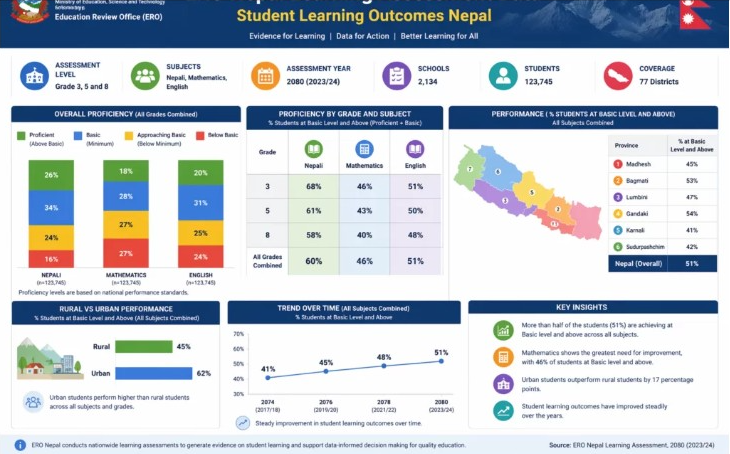
Nepal has passed education policies. It has trained teachers in batches. It has built school buildings and distributed textbooks. But student learning outcomes remain stubbornly low. In a 2022 assessment by the Education Review Office (ERO) of Nepal, less than half of Grade 8 students met basic learning standards in mathematics and Nepali. Something is seriously broken and it is not the children.
Let us walk through exactly where the system is failing, step by step.
Are We Selecting Teachers or Just Exam Passers?
The Teacher Service Commission (TSC) of Nepal was created to bring professionalism into teacher hiring. Good idea. But here is the problem; the TSC exam tests subject knowledge, not teaching ability.
A candidate who can solve algebra problems passes. But can that person explain fractions to a 10-year-old who is confused? Can they manage a classroom of 45 children in a village school with no electricity? The exam does not test for that. It never did.
Countries that have strong teacher quality; Finland, Singapore, Canada; they select teachers the way medical schools select doctors. They look at communication skills, emotional intelligence, and teaching aptitude from day one. Nepal selects the way a government office selects a clerk; who passed the written test.
The result? Many schools have teachers who know their subject but cannot teach it. And teaching is not the same as knowing.
A useful reference here is the World Bank’s SABER (Systems Approach for Better Education Results) report on Nepal, which flagged this exact gap in teacher selection criteria. (Reference: World Bank SABER Nepal Country Report, 2014, )
Training That Happens Once and Is Never Seen Again
Ask any government school teacher in Nepal: “When did you last receive training?” Many will say two years ago. Some will say five. A few will say never.
Nepal’s teacher training model is what education experts call a “one-shot” model. Teachers attend a training for a few days, receive a certificate, and go back to their classroom; where nothing changes. There is no follow-up. No mentoring. No classroom observation. No feedback loop.
This is like teaching someone to drive in a classroom for three days and then putting them on a highway alone; for the next thirty years.
What Real Professional Development Looks Like
Real professional development is ongoing. It includes:
- Peer observation; teachers watching each other teach and giving honest feedback
- Instructional coaching; a trained coach visiting classrooms regularly
- Subject-specific training; not generic seminars, but targeted skill building
- Reflection practice; teachers reviewing their own lessons and outcomes
The National Centre for Educational Development (NCED) in Nepal does run training programmes. But the scale, frequency, and follow-through are not yet where they need to be. (Reference: NCED Nepal,)
A good YouTube resource on this topic: Search “What makes a great teacher TED Talk” particularly the talk by Bill Gates where he discusses teacher coaching and feedback systems.
The Accountability Vacuum
Once a government teacher in Nepal is confirmed in service, the formal accountability structure becomes very thin. Headteachers rarely conduct classroom observations. District education offices are understaffed. The Education Review Office conducts national assessments but those results rarely feed back into individual teacher performance management.
In other words; a teacher can arrive late, teach poorly, and leave early for years. And nothing formal happens.
This is not a moral judgment on teachers. This is a structural observation. Humans in any job; teachers, engineers, doctors; perform better when there is a fair, transparent system of feedback and accountability. Remove that system, and performance drifts.
Bold statement worth sharing: “A school without accountability is not a school. It is just a building where children wait.”
The ERO Nepal does publish learning outcome data. (Reference: Education Review Office Nepal,) But until that data connects to teacher-level feedback and improvement plans, it stays as numbers in a report; not change on the ground.
The Incentive Problem; Why Would Anyone Try Harder?
Let us be honest. If a teacher works hard, prepares excellent lessons, improves student results and gets the same salary, the same promotion timeline, and the same treatment as a teacher who does the bare minimum; why would anyone push themselves?
This is not a cynical question. It is a management question.
Peter Drucker; the great management thinker said: “What gets measured gets managed.” Nepal’s public school system does not meaningfully measure teaching quality. So it does not manage it.
Current pay in Nepal’s government school system is largely seniority-based. Promotion comes with years of service, not with evidence of classroom effectiveness. There are no meaningful performance bonuses. There is limited public recognition for outstanding teachers.
Some steps exist; the Best Teacher Award at district and national level. But these are rare, inconsistent, and often based on personal relationships, not verified performance data.
Compare this to countries like South Korea or Estonia; where teacher career ladders are tied directly to demonstrated skills, peer reviews, and student progress data. The best teachers earn more, get leadership roles, and mentor others. That system attracts and retains talent.
Nepal needs to link pay, promotion, and recognition to actual teaching performance. Not tomorrow. Today.
(Reference: UNESCO IIEP, “Teacher Motivation and Incentives,“)
Politics in the Staffroom; Governance Failure Nobody Talks About
Here is the uncomfortable truth. In Nepal, teacher transfers and appointments have long been influenced by political party membership and local power networks. This is not a secret. It is widely reported.
A 2018 study by Martin Chautari, a Kathmandu based research institute, documented how teacher appointments in government schools were routinely linked to political affiliations rather than qualifications or school need. (Reference: Martin Chautari, Kathmandu, martinchautari.org.np)
When politics decides who gets transferred where; the most connected teacher gets a comfortable urban school, and the least connected gets a remote hillside posting with no facilities. Merit disappears. Institutional trust collapses.
Teachers who feel that hard work will not be rewarded; because connections matter more; stop investing in hard work. That is rational human behaviour, not moral weakness.
Nepal’s 2016 School Sector Development Plan and the 2019 National Education Policy both promised to depoliticise teacher management. But implementation has been slow and inconsistent. (Reference: Ministry of Education, Science and Technology Nepal,
The Only Thing That Actually Matters Are Children Learning?
All five problems above poor selection, weak training, no accountability, bad incentives, political interference they converge on one final outcome: students not learning.
ERO Nepal’s 2019 and 2022 national assessments show that a significant number of children in Grades 3, 5, and 8 are not reaching basic proficiency in reading and mathematics. (Reference: ERO Nepal National Assessment Reports,)
This is not just a Nepal problem. UNICEF’s State of the World’s Children report has consistently flagged South Asia; including Nepal; for learning poverty: children who are in school but not actually learning. (Reference: UNICEF,)
But Nepal’s geography and diversity make this even sharper. A child in Humla district and a child in Kathmandu are not having the same educational experience. The rural child often has an undertrained, under-supervised, under-motivated teacher. The system is not failing equally; it is failing the most vulnerable children the hardest.
What Nepal Must Do; A Reform Agenda That Actually Works
This is not a hopeless situation. It requires political will and system redesign.
Short-term actions (0–2 years):
- Reform TSC to include teaching aptitude and demo lessons in selection
- Launch structured mentoring for all new teachers in their first two years
- Make classroom observation by headteachers mandatory and formally recorded
Medium-term actions (2–5 years):
- Build a performance management framework linking teacher review to career progression
- Digitise teacher attendance and lesson planning (already piloted in some provinces)
- Establish school-based teacher learning communities with monthly peer sessions
Long-term actions (5–10 years):
- Redesign teacher pay structure to reward demonstrated competence
- Make TSC and teacher management fully independent from political influence
- Build provincial teacher training institutes with ongoing research and field support
(Reference: UNESCO Education Policy Review, Nepal, 2020,)
Related Articles You May Like
- “Why Nepal’s Education Budget Is Not the Problem; Governance Is“
- “10 Countries That Fixed Their Teacher Quality Problem And What Nepal Can Learn“
- “The Learning Poverty Crisis: Why Being in School Is Not the Same as Learning“
Comments from Nikhil Raj Sharma, Founder, Himalayan Geographic Research Foundation
“The teacher quality crisis in Nepal is not new; but the honesty with which we are now willing to discuss it is. What surprises me most is not the scale of the problem, but how long we have normalised it. I have visited schools in Mustang, Rukum, and Solukhumbu where teachers are doing extraordinary work under impossible conditions. They deserve a system that supports them. Right now, that system does not exist.”
“At Himalayan Geographic, we believe that documentation and honest storytelling are the first tools of reform. This article does exactly that; it names the chain of failure, not just the symptom. If Nepal is serious about its education future, the conversation must start here.”
“A school is only as good as its teachers. And a teacher is only as good as the system that trains, supports, and pushes them. Nepal is not short of dedicated teachers; it is short of a system that treats teaching as a serious profession. Fix the system. The teachers will follow.“
Disclaimer: The content and images published in this article are provided for general informational and educational purposes only. Some images may be generated or enhanced using artificial intelligence (AI) and are intended solely for illustrative use. The views, interpretations, and information expressed do not necessarily reflect the official position of Himalayan Geographic Research Foundation, nor do they constitute professional, legal, medical, or financial advice.
While efforts are made to ensure accuracy, no guarantees are given regarding completeness or reliability. Readers are encouraged to independently verify information and use their own judgment. By reading this article, you acknowledge that any reliance on the content is at your own risk, and Himalayan Geographic Research Foundation assumes no responsibility or liability for disagreements, interpretations, or outcomes arising from its use. If you do not agree with these terms, you are advised to discontinue reading.