
Himalayan adventure is changing fast. Melting glaciers, unpredictable weather, and collapsing ice are forcing climbers to rethink everything. Here’s what every trekker and mountaineer must know right now.
The Himalayas are not the same mountains your grandfather read about. They are melting, shifting, and fighting back. The adventurer who ignores this will not just lose the summit; they may lose their life. Respect the mountain more than your bucket list. That is all.
SHOCKING FACT: The Himalayas are losing ice at a rate 65% faster than in the previous decade. That is not a prediction. That is already happening.
The Mountain Has Changed. Have We?
Adventure in the Himalayas was once defined by endurance, skill, and courage. Tenzing Norgay and Edmund Hillary climbed Everest in 1953 with wool jackets and basic oxygen equipment. The mountain was dangerous, yes; but it was predictable in its danger. Today, a new variable has entered the equation; uncertainty.
Glaciers that once gave firm footing are now fractured. Ice walls collapse without warning. Snow patterns are irregular. What was a “standard route” ten years ago is now a gamble.
This is not just a technical difficulty. It is a transformation of the very nature of Himalayan adventure.
What the Science Is Telling Us (And It Is Alarming)
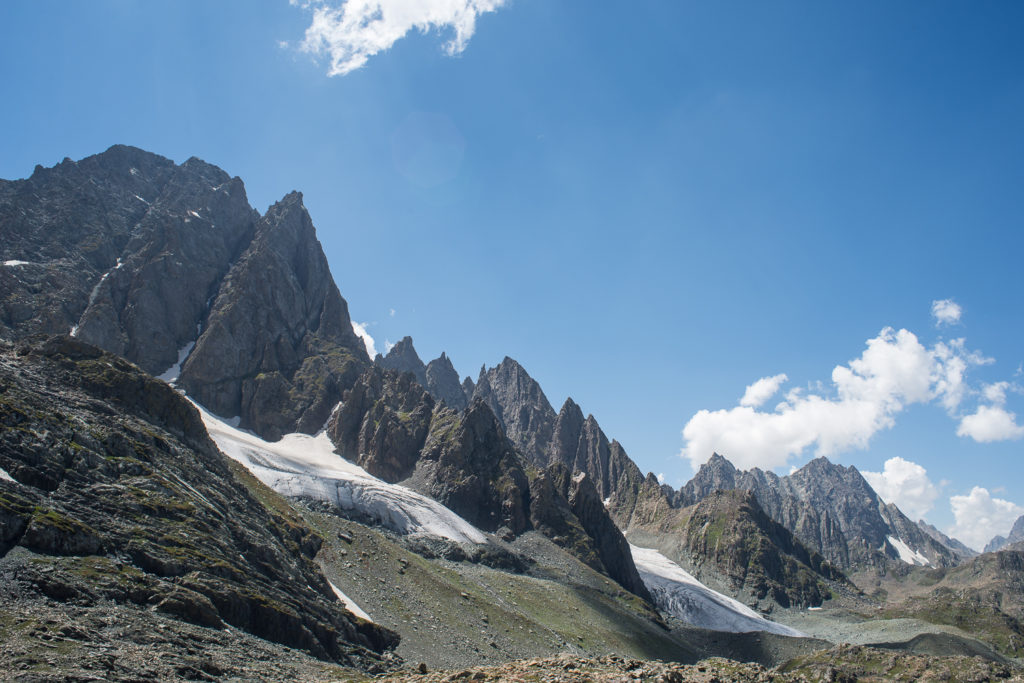
A 2023 study published in Science journal found that glaciers in the Hindu Kush Himalaya region could lose up to 75% of their volume by 2100 if emissions continue at the current pace. But even the best-case scenario; aggressive global climate action; still means a 36% loss.
Here are the ground-level effects climbers are reporting right now:
- Rockfall is increasing. Ice that once held mountain slopes together is melting. When it goes, so do the rocks.
- Crevasses are widening. Routes that were once crossable are now death traps.
- Base camps are shifting. Glacier movement is pushing traditional safe zones out of position.
- Weather windows are shrinking. The predictable spring and autumn climbing windows are now shorter and less reliable.
- Permafrost is thawing. This destabilises the ground under fixed ropes and anchor points.
Mountaineer and Himalayan guide Mingma Sherpa, who has summited Everest 12 times, said in a 2024 interview: “The mountain I climbed first time and the mountain now; they are not the same mountain.”
A Symbol of Global Crisis
Everest is the most watched mountain on Earth. And it is showing symptoms that cannot be ignored.
The Khumbu Icefall; the most dangerous section of the standard South Col route; has become significantly more unstable. Seracs (blocks of glacial ice) that once stood for seasons now collapse without notice. The Icefall Doctors, a team of Sherpa climbers who fix ropes and ladders through this section every year, have to start earlier, work faster, and recalculate routes more frequently.
In 2023, a sudden avalanche near Camp 1 buried fixed ropes under meters of ice and snow. No lives were lost; but the warning was clear.
Expedition teams are now:
- Starting climbs 10–14 days earlier in the season
- Using satellite weather forecasting apps like Mountain-Forecast.com and Windy
- Hiring additional safety officers alongside traditional Sherpa guides
- Building contingency days into itineraries for weather and route uncertainty
But here is the hard truth; technology can delay a bad decision. It cannot prevent one.
The Trekking Routes Are Not Safe Either
Many people believe serious climate risk only applies to high-altitude technical climbs. That is wrong.
Popular trekking routes; the Annapurna Circuit, the Langtang Valley, the Everest Base Camp Trek; are all being affected.
- Langtang Valley was devastated by the 2015 earthquake, which was made worse by the destabilised glacial terrain. Recovery has been slow.
- Annapurna Circuit has seen increased landslides due to erratic monsoon patterns and melting snowpack.
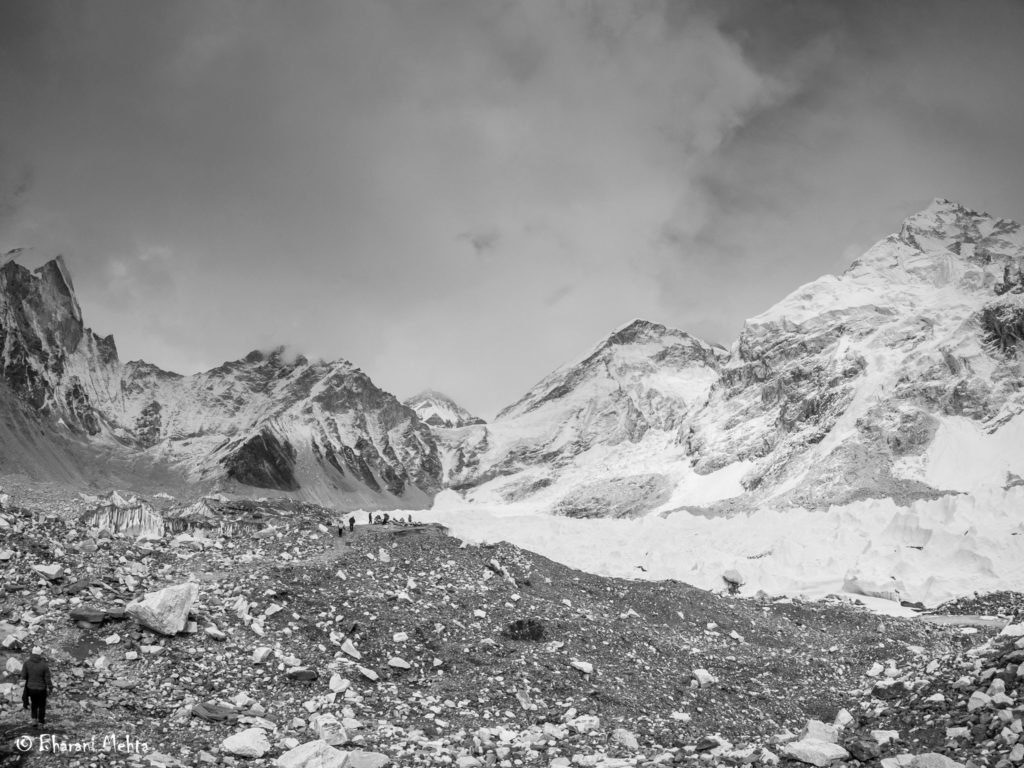
- Everest Base Camp Trek now crosses sections of glacier that were buried under stable moraine a decade ago. The path is narrower, less defined, and more dangerous.
Even seasonal streams; once predictable crossing points; are now either bone dry early in the season or dangerously flooded.
“We used to cross that stream in sandals,” said Dawa, a local trekking guide from Namche Bazaar. “Now in October, it runs like a river. We lost one porter’s pack last year.”
Guides, Porters, and Local Communities
“The mountain does not care about your summit certificate. It never did.”
The people who bear the greatest risk are not the paying climbers. They are the guides, porters, and rescue team members from local Himalayan communities.
These workers have depended on traditional environmental knowledge passed down through generations. They knew which slopes to avoid in April. They knew where the safe ice bridges were. That knowledge; built over centuries; is now becoming unreliable at alarming speed.
Issues facing Himalayan communities right now:
- Glacial Lake Outburst Floods (GLOFs): As glaciers melt, they form lakes held back by unstable ice dams. When those dams break, the floods are catastrophic. The Teesta river flood in Sikkim (October 2023) killed over 70 people and destroyed the Chungthang dam — triggered by a GLOF.
- Loss of drinking water: Many Himalayan villages depend on glacial meltwater. As glaciers disappear, water sources are drying up.
- Loss of income: Shorter and riskier climbing seasons mean fewer expeditions, fewer jobs, and less income for an entire regional economy.
Insurance coverage for high-altitude workers remains inadequate. Training for new hazard types; GLOF response, rockfall awareness, crevasse rescue; is still not standard.
Bhutan’s Answer
Bhutan has taken the most radical approach of any Himalayan nation. Most of its high-altitude peaks remain officially closed to climbers. Gangkhar Puensum; at 7,570 metres, the highest unclimbed mountain in the world; is protected entirely.
The reason is not only spiritual, though that matters too. It is about respect for an environment that sustains millions of people downstream.
This is not a popular position in the adventure tourism industry. But it raises a question worth sitting with: Is the summit worth the sacrifice?
Not every answer has to be yes.
India’s Himalayan Region
While Everest gets most of the global attention, the Indian Himalayan Region; covering states like Himachal Pradesh, Uttarakhand, Sikkim, and Arunachal Pradesh; is facing its own quiet emergency.
- The Gangotri Glacier, source of the Ganga, has been retreating at 22 metres per year.
- The Zemu Glacier in Sikkim has shrunk dramatically over the last three decades.
- Rohtang Pass, a major route connecting Manali to Lahaul-Spiti, now sees erratic snowfall and increased landslide risk.
The Indian Space Research Organisation (ISRO) has been tracking Himalayan glacier health via satellite. Their data shows consistent and accelerating retreat across nearly all monitored glaciers.
Adventure operators in Manali and Leh report that many fixed high-altitude camps are having to be relocated. Routes considered stable for decades are being reassessed every season.
A Practical Framework
The problem is real. But paralysis is not the answer. Here is what needs to happen; at every level:
For Climbers and Trekkers:
- Research current route conditions before every trip, not just once
- Hire certified local guides; their real-time knowledge is irreplaceable
- Carry emergency communication devices (PLBs or satellite phones)
- Build flexibility into your itinerary; “summit or bust” thinking is dangerous
- Follow Leave No Trace principles strictly
For Operators and Agencies:
- Update risk assessments annually, not every five years
- Provide proper insurance and hazard training for all local staff
- Invest in real-time weather monitoring equipment at base camps
- Be transparent about changing conditions with clients
For Governments and Policy Makers:
- Fund GLOF early warning systems in at-risk valleys
- Establish climate-adjusted safety standards for expedition permits
- Create compensation funds for local workers injured or killed in climate-related events
- Support community-based adaptation programmes in mountain villages
The Philosophy of Adventure Must Evolve
Here is the uncomfortable truth the adventure industry does not like to say out loud:
Not every mountain should be climbed. Not every season is a go. Not every route is worth it.
This is not weakness. This is wisdom.
The original spirit of mountaineering; set by people like George Mallory, Reinhold Messner, and more recently, Nirmal Purja; was never simply about reaching the top. It was about understanding your limits, respecting the mountain, and returning home alive.
Messner, who climbed all 14 eight-thousanders without supplemental oxygen, has spoken repeatedly about the ethical dimension of high-altitude climbing. He has argued that “fair means”; climbing without artificial aid; is as much a philosophical position as a technical one.
In a warming world, “fair means” must now include environmental awareness.
The true adventurer today is not the one who only climbs. It is the one who knows when not to climb.
Comments from Nikhil Raj Sharma, Founder, Himalayan Geographic
Nikhil Raj Sharma — Founder, Himalayan Geographic Research Foundation
“What we are witnessing in the Himalayas is not a slow change; it is a rapid unravelling. I have personally trekked routes in Himachal Pradesh and Uttarakhand that look completely different from five years ago. Slopes that were snow-covered in November are now exposed rock. This is not alarmism. This is observation.”
“At Himalayan Geographic, we believe that the first step to protecting these mountains is documenting what is being lost. You cannot save what you refuse to see. Every expedition, every trek, every photograph is a data point. We are asking the adventure community to become citizen scientists; observe, record, and report.”
“The mountains gave us everything; culture, water, spirituality, livelihood. We owe them more than footprints and summit selfies.”
BOLD STATEMENT
“The mountain has not become weaker. It has become more unpredictable. And unpredictable is more dangerous than hard.”
Species that survive are not the strongest. They are the most adaptable. The Himalayas are evolving, whether we like it or not. The question is not whether the mountains will change. They already have. The question is whether the humans who love them will change fast enough to protect both the mountains and themselves.
Adventure must grow up. It must add responsibility to its vocabulary.
Because the peak will wait. But the glacier will not.
Related Articles You Might Like:
- The Khumbu Icefall: The Most Dangerous Mile in Mountaineering
- How Sherpa Communities Are Adapting to Climate Change
- Glacial Lake Outburst Floods: The Hidden Himalayan Threat
- Trekking Responsibly: A Beginner’s Guide to Leave No Trace in the Himalayas
- India’s Glaciers: What ISRO’s Satellite Data Reveals
Disclaimer: The content and images published in this article are provided for general informational and educational purposes only. Some images may be generated or enhanced using artificial intelligence (AI) and are intended solely for illustrative use. The views, interpretations, and information expressed do not necessarily reflect the official position of Himalayan Geographic Research Foundation, nor do they constitute professional, legal, medical, or financial advice.
While efforts are made to ensure accuracy, no guarantees are given regarding completeness or reliability. Readers are encouraged to independently verify information and use their own judgment. By reading this article, you acknowledge that any reliance on the content is at your own risk, and Himalayan Geographic Research Foundation assumes no responsibility or liability for disagreements, interpretations, or outcomes arising from its use. If you do not agree with these terms, you are advised to discontinue reading.