
Tourism in the Himalayas is destroying the very mountains visitors come to see. With 50,000 metric tons of waste annually, water crises, and ecological collapse, we’re witnessing the slow death of the world’s highest peaks; all in the name of economic growth.
The snow on Rohtang Pass melts faster now. Not because the sun has grown hotter. But because fifty thousand cars choke the mountain roads every summer, their engines breathing carbon into air so thin it can barely fight back.
I’ve watched tourists step off buses in Manali, bottles of water in hand. Plastic bottles. They take selfies with glaciers that won’t exist in twenty years. They leave those bottles behind. And we call this progress.
This isn’t a travel guide. This is a witness statement. A record of what tourism is doing to the Himalayas. And if you think I’m being dramatic, ask yourself this: if tourism destroys the mountains, what exactly are tourists coming to see?
The Numbers Don’t Lie; The Mountains Are Drowning in Our Waste
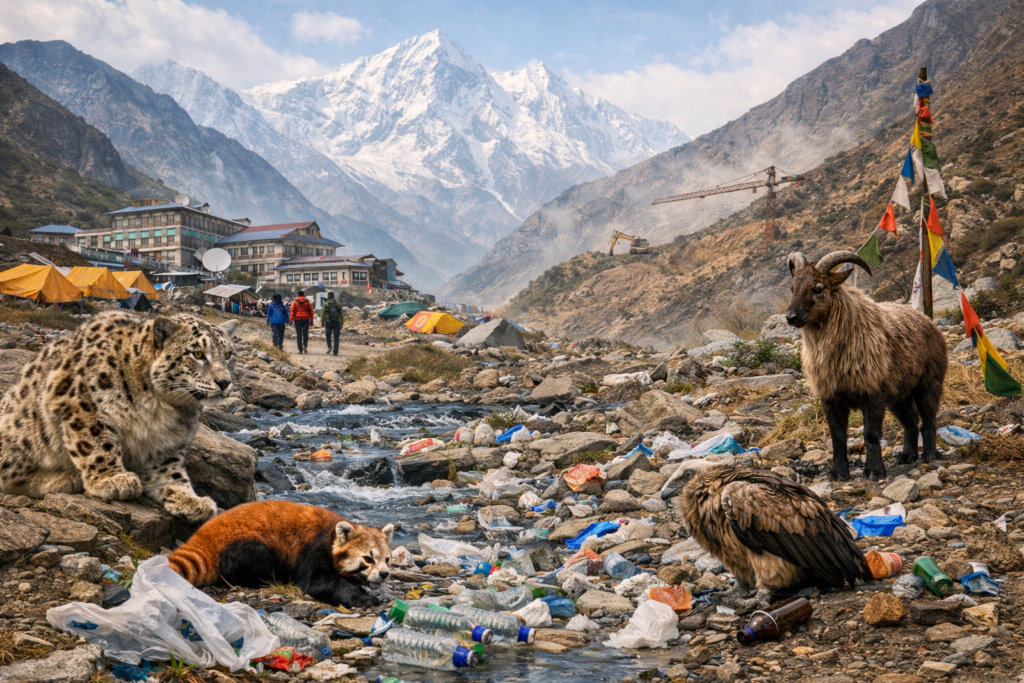
Mount Everest accumulated over 50 tons of waste during the 2023 climbing season, earning the grim title of the world’s highest garbage dump. But Everest is just the most famous victim.
Across the Indian Himalayan Region, tourism-related activities generate over five million metric tons of waste per year. Let that sink in. Five million metric tons. That’s the weight of approximately 35,000 blue whales. Except these whales are made of plastic bottles, food wrappers, and human excrement.
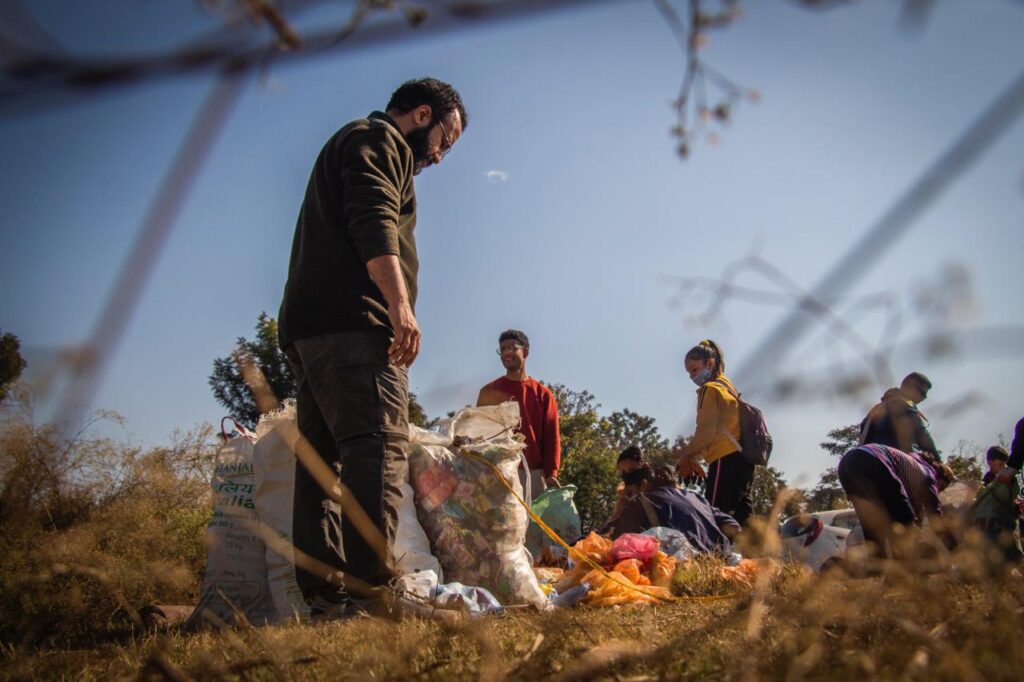
About 85% of plastic waste in remote areas remains uncollected. It sits there. In valleys. On trails. In rivers that flow down to millions of people who depend on them for drinking water.
In Dharamshala alone, 200 kilos of dry waste is segregated every single day. Every. Single. Day. This is a town with a population of around 30,000. But during peak season, tourists can outnumber locals five to one.
Trekkers generate 4.6 tons of waste per day during peak season in the Everest region. And despite heroic clean up efforts by specialized high-altitude porters; nicknamed “Eco-Sherpas”; the waste accumulates faster than it can be removed.
Here’s what really keeps me up at night: human waste from trekkers and climbers has contaminated water sources in 63% of popular trekking routes. We are literally poisoning the water towers of the world.
Water Crisis; When Paradise Runs Dry
Summer 2018. Shimla ran out of water.
Not low on water. Out of water.
Schools shut down. Hotels canceled bookings. Tourism came to a halt. The “Queen of Hills” became a cautionary tale of what happens when you treat natural resources like they’re infinite.
Shimla requires 43 million liters of water daily but often struggles to meet even half of that requirement during peak tourist seasons. Half. And still, tourists kept coming.
Do you know what hotels did? They bought water from outside. Trucked it in. While locals stood in lines for hours, wealthy hotels filled their swimming pools. Because tourism must go on, right?
The math is brutal. Shimla’s resident population of around 172,000 needs about 35-37 million liters per day, but the floating tourist population of about 100,000 adds an additional burden of 8 to 10 million liters. During peak season, tourists consume as much water as half the permanent population.
In Manali, drinking water shortages occur each year before the monsoon in May or June; coinciding with the peak tourist season. The pattern is clear. The more tourists arrive, the faster water disappears.
And it’s not just about quantity. Excessive groundwater extraction in Ladakh has resulted in water table depletion, affecting agriculture and daily life. We’re draining aquifers that took thousands of years to form. For what? So tourists can have long showers in mountain resorts?
The Ecological Collapse Nobody Talks About
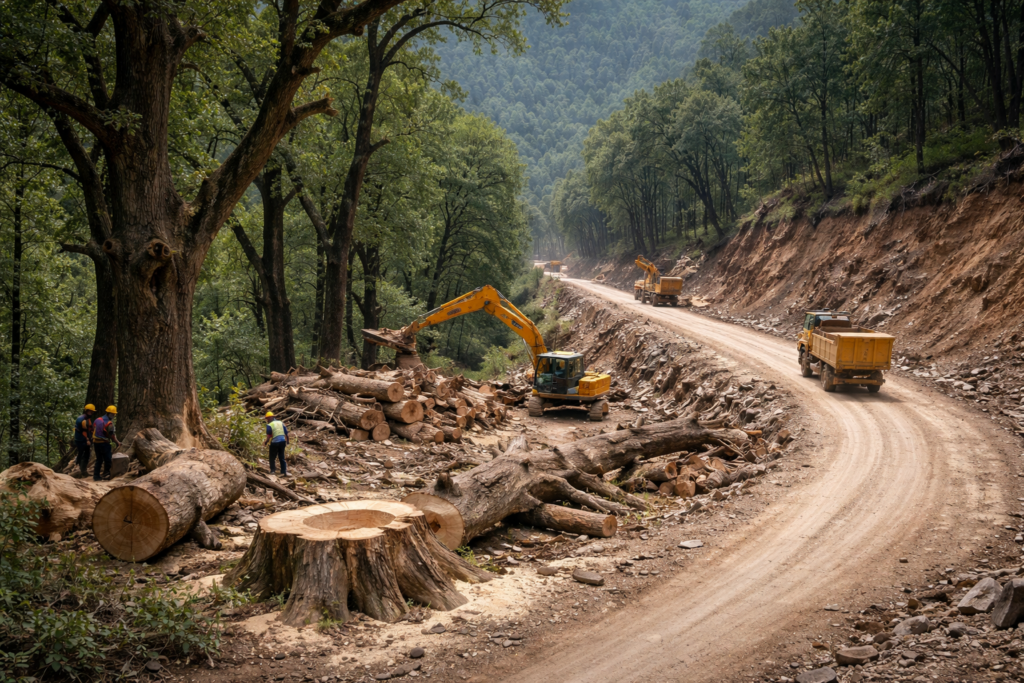
Forest cover in the Himalayan tourism belt has decreased by approximately 15% since 2000. Fifteen percent. Gone. To make room for hotels, roads, parking lots. To accommodate our Instagram moments.
Hotel construction in ecologically sensitive zones has increased by 345% in the past decade. Three hundred forty-five percent. Do you understand what that means? For every hotel that existed ten years ago, there are now more than four.
These aren’t abstract statistics. They have faces. Snow leopard sightings near tourist areas have declined by 47% despite increased conservation efforts. Think about that. We’re spending millions on conservation while simultaneously destroying the very habitats we’re trying to protect.
Red panda habitat has contracted by 23% in regions with high tourism development. The red panda; one of the most beloved species on Earth; is losing its home because we need more selfie spots.
Himalayan Brown Bears now derive over 75% of their food from garbage dumps. We’ve turned wild animals into scavengers. We’ve reduced apex predators to dependence on our trash. And we call this coexistence.
The Himalayan musk deer tells an even more heart-breaking story. Research shows these shy creatures now travel an additional three to five kilometres daily just to avoid human contact. That’s precious energy spent fleeing instead of feeding, mating, or caring for young.
Seasonal Madness: When Mountains Become Parking Lots
Tourism in the Himalayas isn’t spread evenly across the year. It’s concentrated into a few suffocating months.
During hot months, people from other parts of India flock to the relatively pleasant climates of tourist destinations, and residents in Shimla, Manali, and Dharamshala bear the brunt of pollution, noise, and lack of resources like water.
The Manali-Leh highway sees thousands upon thousands of vehicles during summer. Lakhs of cars and buses choke mountain roads, releasing carbon, dust, and heat; further destabilizing slopes. The emissions from these vehicles aren’t just polluting the air. They’re accelerating glacier melt.
Think about the absurdity. People drive to the mountains to see snow. Their vehicles emit heat and carbon that melt the very snow they came to see. And next year, they’ll complain there’s less snow and drive even higher to find it.
Every summer, Shimla transforms into a nightmare of traffic jams. Shimla is now known for its traffic congestion due to over-construction, lack of parking spaces, and improper roads. The town that was built as an escape from the heat of the plains is now hotter and more congested than the cities people are fleeing.

The Brutal Truth About “Economic Growth”
Let me be blunt. Tourism contributes about 7% to Himachal Pradesh’s GDP. Seven percent. For that seven percent, we’re sacrificing our water, our forests, our wildlife, our air quality, and our future.
The economic benefits don’t even reach most people. Tourism has created income inequality, with wealth increasingly concentrated in places like Shimla and Manali while other parts remain economically underdeveloped.
Hotel owners get rich. Tour operators prosper. But the local family that’s lived in these mountains for generations? They get water once every eight days during summer. They breathe polluted air. They watch their traditional way of life commercialized and then discarded.
The overwhelming presence of tourists has led to commercialization of traditional practices and cultural dilution. We’re not just destroying the environment. We’re eroding the very culture that makes these places special.
And the waste? Approximately 60% of waste in the Indian Himalayan Region is either dumped or burnt in the open. We generate millions of tons of garbage. And then we just… leave it there. Or burn it. Releasing toxic chemicals into the air that millions breathe.
When Monsoons Become Weapons
Climate change is already devastating the Himalayas. And tourism is making it worse.
In July 2024, torrential rains caused at least 17 roads to be blocked, and cracks developed on the Chandigarh-Manali highway, causing it to start sinking. This isn’t nature acting alone. This is nature responding to what we’ve done to it.
We’ve cut forests for hotels. We’ve built roads on unstable slopes. We’ve weakened the very structure of mountains. And then we act surprised when they collapse.
In July 2025, flash floods in Mandi killed more than 50 people and caused unprecedented road blockages, stranding thousands of tourists. Fifty people died. And thousands of tourists were inconvenienced. Guess which story dominated the news?
The irony is suffocating. Tourists come to see the beauty of monsoons. But monsoons now bring terror instead of refreshment because we’ve destroyed the natural systems that once absorbed and managed rainfall.
The Question Nobody Wants to Answer
Here’s what haunts me: if we destroy the Himalayas through tourism, what will be left to attract tourists?
We’re killing the golden goose. Except the goose isn’t golden. It’s ancient. It’s irreplaceable. It’s the source of water for nearly two billion people. It’s home to species found nowhere else on Earth. It’s sacred to millions.
And we’re sacrificing all of it for short-term profit.
The waste will pile higher. The water will run out. The forests will disappear. The animals will go extinct or flee. The mountains will slide into valleys during monsoons. And then what?
Will tourists still come to see traffic jams? Garbage dumps? Dry river beds? Concrete hotels with no power because the hydroelectric dams failed?
What Needs to Happen (And Won’t)
The solutions are simple. Implementation is where we fail.
We need strict limits on tourist numbers. Carrying capacity assessments that are actually enforced. Not suggested. Not recommended. Enforced.
We need to ban plastic in mountain regions. Completely. No exceptions. No plastic bottles. No plastic bags. No plastic packaging. None.
We need mandatory waste management systems for every hotel, every restaurant, every tour operator. You generate waste? You process it. You dispose of it properly. Or you don’t operate.
We need to charge tourists the real environmental cost of their visit. Not Rs. 500 entry fees. Thousands. The money goes directly into environmental restoration and community support.
We need off-season tourism incentives. Spreading visitors across the year instead of crushing mountain towns for three months.
But here’s the problem. Every time someone proposes limits, the tourism industry screams about economic loss. Politicians cave. And we continue racing toward ecological collapse.
A Record for the Future
This article will age. The numbers will change. They’ll get worse.
Ten years from now, someone will read this and think, “If only they’d listened.” Twenty years from now, the Himalayas we know might exist only in photographs. Fifty years from now, our grandchildren will ask us why we let this happen.
And we won’t have a good answer.
We’ll say we didn’t know. But we did know. We’ll say we couldn’t do anything. But we could have. We’ll say economic growth was necessary. But for whom? At what cost?
The mountains are choking. The water is running out. The animals are disappearing. The waste is piling up. The slopes are collapsing.
And we’re still calling it economic growth.
I’m writing this because I care. Because these mountains deserve better. Because the people who call them home deserve better. Because the animals, the rivers, the forests deserve to exist for their own sake; not just as backdrops for tourist photos.
This isn’t sustainable development. This isn’t responsible tourism. This is slow-motion ecological suicide. And we’re all accomplices.
The question isn’t whether the Himalayas can handle more tourism. They can’t. The question is whether we have the courage to say enough.
Related Resources
- Sustainable Waste Management in the Everest Region
- WWF India: Sustainable Tourism in the Himalayas
- World Bank Report: Tackling Solid Waste in the Himalayan Region
- Disasters in the Himalayas 2023-2025: Tourism Pressure Analysis
Comments from Nikhil Raj Sharma, Founder, Himalayan Geographic
“This article captures the urgency of what we’re witnessing in the Himalayas. As someone who has documented these mountains for years, I’ve seen first-hand how tourism has transformed from a sustainable livelihood option into an ecological crisis. The statistics are alarming, but the real tragedy is that we know the solutions; we just lack the political will to implement them.
At Himalayan Geographic Research Foundation, we’ve been studying carrying capacity assessments for mountain ecosystems. Our research shows that most popular destinations in the Himalayas are operating at 300-400% above their sustainable capacity during peak seasons. This isn’t just unsustainable; it’s catastrophic.
The question this article poses is the right one: if tourism destroys the mountains, what exactly are tourists coming to see? We need to shift from volume-based tourism to value-based tourism. We need travellers who respect these mountains, not just consume them. Otherwise, we’re documenting not the beauty of the Himalayas, but their obituary.”
Disclaimer: The content and images published in this article are provided for general informational and educational purposes only. Some images may be generated or enhanced using artificial intelligence (AI) and are intended solely for illustrative use. The views, interpretations, and information expressed do not necessarily reflect the official position of Himalayan Geographic Research Foundation, nor do they constitute professional, legal, medical, or financial advice.
While efforts are made to ensure accuracy, no guarantees are given regarding completeness or reliability. Readers are encouraged to independently verify information and use their own judgment. By reading this article, you acknowledge that any reliance on the content is at your own risk, and Himalayan Geographic Research Foundation assumes no responsibility or liability for disagreements, interpretations, or outcomes arising from its use. If you do not agree with these terms, you are advised to discontinue reading.