
Weekend tourism in the Himalayas is killing the very snow tourists come to see. Discover how traffic jams at 10,000 feet, black carbon deposits, and unchecked tourist numbers are accelerating glacier melt faster than climate change alone.
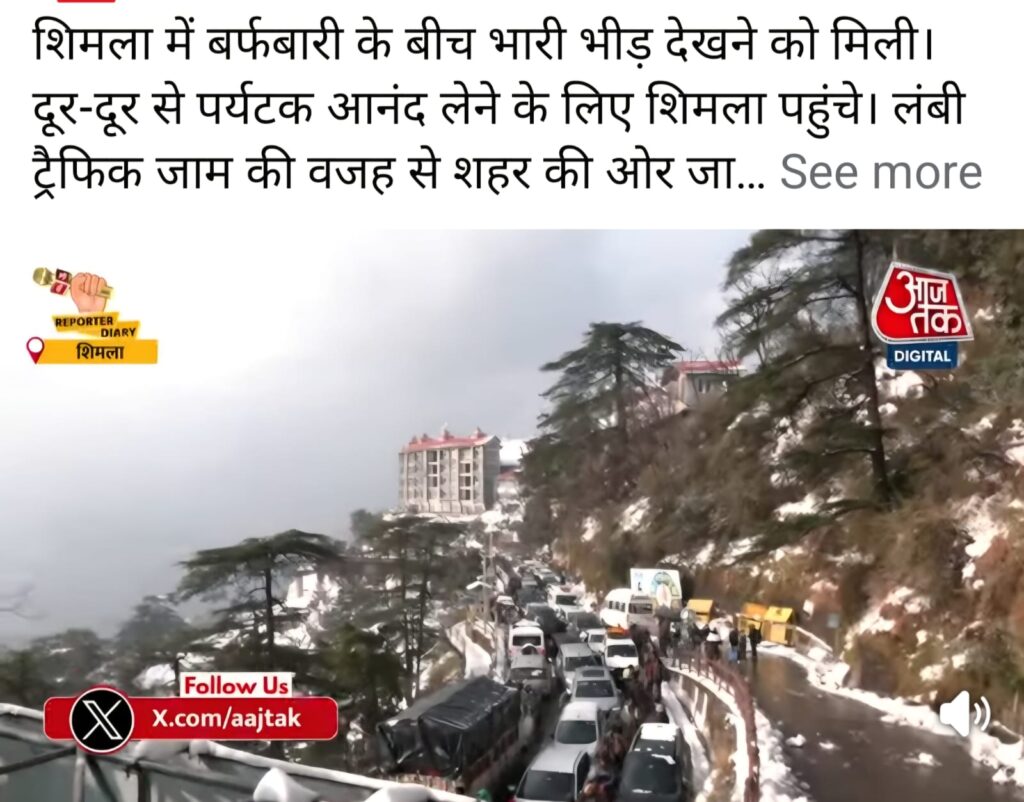
Just this week, over 2,000 vehicles became trapped in an 8-kilometer traffic jam in Manali, with tourists spending freezing nights in their cars. The scene wasn’t unique. It’s the new normal. Every winter weekend, thousands of vehicles crawl up fragile mountain roads, idling for hours in sub-zero temperatures, all for a selfie with snow. But here’s what those Instagram posts don’t show: every honk, every hour of idling, every diesel bus chugging up those slopes is writing a death sentence on the glaciers above.
The snow isn’t just melting because of global warming. It’s melting because we’re burning fuel just to photograph it.
The Lie of “Innocent Snow Tourism”
Snow is marketed as pure, magical, untouched. Travel brochures paint it as nature’s winter blessing. But the truth is darker and dirtier than the pristine white we see in photos.
Getting to snow requires fossil-fuel-heavy travel that contradicts everything “pure” about the destination. Over 33,500 vehicles entered Manali between December 1 and 27 alone. That’s not tourism. That’s an invasion. Each weekend, thousands of cars from Delhi, Chandigarh, and beyond make the 500-kilometer pilgrimage to Himachal Pradesh. SUVs marketed as adventure vehicles behave like carbon bombs on mountain roads.
Consider this: one trip to see snow generates more carbon than most people produce in a month of normal living. Yet we’ve normalized this destruction. We call it a “weekend getaway” while conveniently ignoring that we’re actively destroying what we came to see.
The marketing machinery sells snow as an experience. But experience has a cost. And in the Himalayas, that cost is measured in melting glaciers, contaminated water sources, and ecosystems pushed past their breaking point.
Traffic Jams at 10,000 Feet
Imagine a traffic jam. Now imagine it at 13,000 feet, where the air is thin, temperatures hover below freezing, and the ecosystem is already stressed. Traffic jams of six to seven hours on roads leading to Rohtang Pass are normal on peak days.
Let that sink in. Six hours. Of engines running. At high altitude. In an ecological red zone.
When a car idles in Delhi, pollution spreads. When it idles in the Himalayas, it settles; on snow, soil, and lungs. There’s nowhere for it to go. Mountain valleys trap emissions like a bowl traps smoke. The narrow roads amplify the problem. One jam equals emissions equivalent to an urban flyover, but with zero dispersal.
Over 20,000 vehicles have been recorded in a single day passing through areas like Atal Tunnel and Solang Valley. These roads were never designed for such traffic. Yet we’ve normalized queues stretching kilometers. We’ve normalized tourists spending nights in their cars. We’ve normalized emergency vehicles stuck for hours because someone wanted to touch snow.
The cruel irony? These traffic jams are happening in places we pretend to protect. If we wouldn’t accept an 8-hour traffic jam blocking a city hospital, why do we accept it blocking an entire mountain ecosystem?

Black Carbon; The Killer No One Talks About
Here’s the science that should terrify every snow tourist: black carbon.
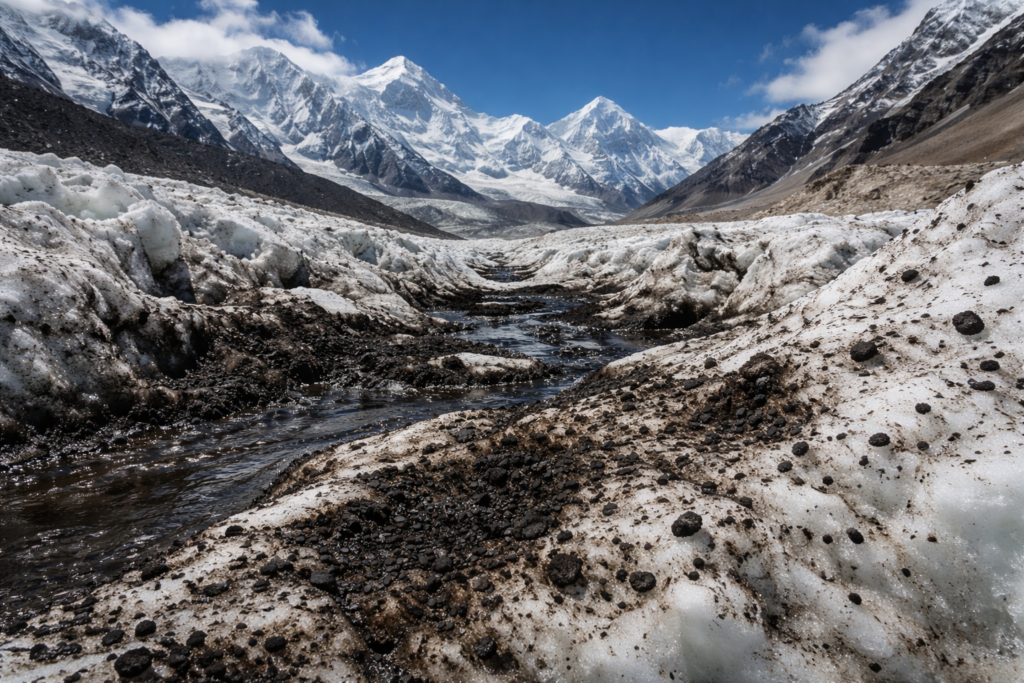
It’s the soot from diesel engines, incomplete combustion, and biomass burning. When these dark particles settle on white snow, they create what scientists call the albedo effect. Clean snow reflects 80-90% of sunlight. Snow contaminated with black carbon? It absorbs heat instead.
The result? Black carbon contributes to approximately 39% of total glacier mass loss during the pre-monsoon season. Read that again. Nearly 40% of glacier melting isn’t from climate change; it’s from the soot we’re depositing directly onto the ice.
Research shows that snow surface temperatures in the Himalayas have risen from an average of -11.27°C in the early 2000s to -7.13°C in recent years. This warming accelerates glacier retreat and threatens rivers that sustain millions downstream.
Every diesel bus idling in a traffic jam releases black carbon that will settle on glaciers kilometers away. Every SUV chugging uphill leaves a fingerprint on the ice. Tourism traffic peaks during the pre-monsoon season; exactly when black carbon concentrations are highest due to long-range transport and local vehicular emissions.
The Himalayas contain 55,000 glaciers that store more freshwater than anywhere except the Arctic and Antarctic. These glaciers feed the Indus, Ganges, and Brahmaputra rivers. Over 750 million people depend on this water. When we turn weekend tourism into a carbon-spewing spectacle, we’re not just damaging mountains. We’re threatening the water security of nearly a billion people.
Tourism Without Carrying Capacity = Slow Ecocide
The Himalayas are treated like an unlimited playground. There are no vehicle caps during peak snowfall. No seasonal tourism limits. No emissions-based entry restrictions.
National parks cap visitor numbers to protect ecosystems. Why can’t an entire mountain range do the same?
Shimla receives 8,000 to 10,000 vehicles daily during peak season, overwhelming infrastructure designed for a fraction of that load. During peak tourist months, Manali generates 35 tonnes of garbage daily compared to the usual 10-12 tonnes. The mountains literally cannot digest what we’re throwing at them.
Policy makers talk about “sustainable tourism” while doing nothing to enforce it. There’s no meaningful regulation. No accountability. Just an endless stream of vehicles choking mountain roads while authorities shrug and count revenue.
The excuse is always the same: tourism supports the economy. But at what cost? When the glaciers are gone, when the water runs out, when landslides become monthly events instead of yearly ones; what economy will be left to support?
The “Local Economy” Excuse
Here’s the line tourism advocates always use: “But what about local livelihoods?”
It’s a valid concern wrapped in a dishonest argument. Yes, tourism provides income. But who really benefits? And for how long?
Most hotels are owned by outsiders. Most tour companies are based in cities. The money flows through local hands but rarely stays. Meanwhile, locals inherit the pollution tourists leave behind.
Tourism feeds households today while starving rivers tomorrow.
Local communities face water shortages exacerbated by rapid snowmelt. They breathe air contaminated by thousands of idling vehicles. They deal with garbage mountains that take decades to decompose. They watch their mountains crumble under the weight of infrastructure built to serve tourists, not residents.
The rapid shrinking of glaciers influences the formation and expansion of glacial lakes, multiplying the risk of glacial lake outburst floods that can cause billions in damages. When those floods come, tourists will be long gone. Locals will bear the consequences.
The “local economy” argument is a smokescreen. Real sustainable livelihoods don’t destroy the resource they depend on. What we have now isn’t sustainable tourism; it’s extractive economics with a scenic backdrop.
Winter Travel as Performative Climate Blindness
Scroll through Instagram during winter. You’ll see the same people who share Greta Thunberg quotes posting snow trip reels. The same folks who rage about melting glaciers queue their cars on mountain roads the next weekend.
The cognitive dissonance is stunning.
You can’t mourn melting glaciers in the morning and contribute to their destruction by afternoon. You can’t claim to care about climate change while treating the Himalayas as your personal winter theme park.
This is performative environmentalism at its worst. Awareness without action. Concern without consequence. We know the damage we’re causing. Study after study confirms it. Yet weekends still see record numbers of vehicles on mountain roads.
The truth? We want the aesthetic of caring more than we want to actually change. A snowy mountain photo gets more likes than a post about staying home. So we keep going. Keep driving. Keep pretending our individual trip doesn’t matter.
But it does. Every single trip matters. When over 55,000 vehicles entered Shimla in just three days during one festive rush, each driver probably thought the same thing: “Just this once won’t hurt.” Multiply that by thousands, and you have an ecological crisis disguised as a holiday.
The Himalayas Are Not a Theme Park
Somewhere along the way, we forgot that mountains are living ecosystems. We started treating snowfall like an event drop on a streaming service. Arrive, consume, leave. Repeat.
Indigenous communities have always understood what we’ve forgotten: mountains deserve respect, not exploitation. Traditional practices worked with seasonal cycles, not against them. People lived in harmony with snow, not as tourists invading it for content.
Modern tourism has turned this relationship into a transaction. Snow has become a commodity. Mountains have become backdrops. The idea that we should limit our presence, that some places should remain untouched; that’s seen as anti-progress, anti-economic growth.
But what’s really anti-progress? Destroying the very resources future generations will need. What’s really anti-economic? Building an industry on a resource that’s literally melting away.
The Himalayas don’t need more tourists. They need fewer engines, fewer cameras, and far more restraint.
Research shows that there is no pristine environment left in the Himalayas, with black snow now visible on glaciers and snowfields. The degradation is visible. The science is clear. The only thing missing is action.
What Can Actually Change?
The solutions aren’t complicated. They’re just politically inconvenient.
Implement vehicle quotas. Cap the number of vehicles allowed into sensitive mountain areas during peak season. If Rohtang Pass can handle 1,000 vehicles safely, allow 1,000 not 3,500.
Charge environmental fees. Make tourism expensive enough that people think twice. Use the revenue for conservation and local community support that doesn’t depend on extractive tourism.
Mandate electric or low-emission vehicles. Ban diesel vehicles from mountain roads entirely. The technology exists. The will doesn’t.
Create seasonal closures. Some areas should be off-limits during critical periods. Let ecosystems recover without constant human presence.
Support local, low-impact tourism. Prioritize homestays over hotels. Walking tours over vehicle convoys. Quality over quantity.
Tell the truth in marketing. Stop selling the Himalayas as an Instagram opportunity. Start communicating the real environmental cost of visiting.
Improving brick kiln efficiency and promoting cleaner cookstoves could significantly reduce black carbon emissions, but vehicle emissions from tourism remain largely unaddressed. We have the tools to fix this. We lack the courage to implement them.
A Choice, Not a Tragedy
What’s happening in the Himalayas isn’t inevitable. It’s a choice.
Every weekend, thousands of people choose to drive hundreds of kilometers for a few hours in the snow. Authorities choose to allow unlimited vehicles on roads that can’t handle them. We collectively choose short-term gratification over long-term survival.
But choices can change.
You can choose not to take that weekend snow trip. You can choose to visit during off-peak times. You can choose public transport over private vehicles. You can choose to support tourism models that don’t destroy what they sell.
The question isn’t whether the Himalayas can survive our current approach. They can’t. The question is whether we’ll change before it’s too late.
Because right now, we’re writing a carbon story on every snowflake. We’re turning glaciers into graveyards. We’re pretending weekend tourism is harmless while the mountains literally melt beneath our wheels.
Will you be part of the problem? Or part of the solution?
Share your thoughts below. Have you witnessed the impact of over-tourism in the mountains? What changes would you support to protect these fragile ecosystems?
Related Resources
For deeper understanding of black carbon’s impact on Himalayan glaciers, watch:
- NASA’s Research on Himalayan Glacier Melt
- World Bank Report on Black Carbon
- Climate Change in the Himalayas Documentary
Further Reading
- World Bank: Glaciers of the Himalayas Report
- Black Carbon Research in Central Himalayas
- Climate Trends Analysis on Snow Surface Warming
Comments from Nikhil Raj Sharma, Founder, Himalayan Geographic:
“This article captures an uncomfortable truth that the tourism industry doesn’t want to acknowledge. We’ve been documenting the rapid changes in Himalayan ecosystems for years, and the connection between tourism traffic and glacier degradation is undeniable. The 8-kilometer traffic jam in Manali this week wasn’t just inconvenient; it was an environmental disaster playing out in real-time. Every idling engine, every diesel bus, every SUV contributes to the black carbon deposits accelerating glacier melt.
What frustrates me most is that we have solutions. We know vehicle quotas work. We know electric transport can replace diesel. We know carrying capacity limits protect ecosystems. But implementing these measures requires political will that seems absent. The local communities we work with tell us the same thing: tourism money is temporary, but environmental damage is permanent.
I hope this article makes readers pause before planning their next weekend snow trip. The Himalayas aren’t a theme park. They’re a living, breathing ecosystem that supports nearly a billion people downstream. We need to treat them with the respect and restraint they deserve.”
Disclaimer: The content and images published in this article are provided for general informational and educational purposes only. Some images may be generated or enhanced using artificial intelligence (AI) and are intended solely for illustrative use. The views, interpretations, and information expressed do not necessarily reflect the official position of Himalayan Geographic Research Foundation, nor do they constitute professional, legal, medical, or financial advice.
While efforts are made to ensure accuracy, no guarantees are given regarding completeness or reliability. Readers are encouraged to independently verify information and use their own judgment. By reading this article, you acknowledge that any reliance on the content is at your own risk, and Himalayan Geographic Research Foundation assumes no responsibility or liability for disagreements, interpretations, or outcomes arising from its use. If you do not agree with these terms, you are advised to discontinue reading.