
Why investing in women’s nutrition across all ages is critical for Himalayan communities. Pragya Foundation’s founder shares insights on breaking the cycle of malnutrition in mountain regions through empowerment, traditional foods, and community-led solutions. Read about the unique challenges and practical pathways to nutritional justice.
The Silent Crisis Above 3,000 Meters
Picture this: A woman in her thirties, winding up a mountain trail before dawn. She’s already tended to her livestock, fetched water from a stream half a kilometer away, and prepared breakfast for her family. By the time she eats; if she eats; it’s often whatever is left over. In remote Himalayan villages across Uttarakhand, this scene plays out every single day. And here’s the startling truth: anaemia affects 92.8% of women in some Himalayan regions, compared to India’s national average of 57%.
This isn’t just a health statistic. It’s a story of mothers, daughters, grandmothers, and sisters whose vitality is slowly being drained away by inadequate nutrition. Through my work with Pragya Foundation across Uttarkashi, Rudraprayag, and Tehri Garhwal, I’ve witnessed firsthand how malnutrition doesn’t discriminate by age. It affects girls skipping meals so their brothers can eat more. It affects adolescents whose bodies are changing but whose diets remain unchanged. It affects pregnant women carrying the next generation while their own bodies cry out for nourishment. And it affects elderly women who have spent lifetimes prioritizing everyone else’s needs above their own.
The question isn’t whether we should invest in women’s nutrition in the Himalayas. The question is: how can we afford not to?
Why Female Nutrition Matters; From Childhood to Elder Years
Let me be honest with you. When I first started thinking about women’s health in the mountains, I focused on menstrual hygiene. It seemed urgent, overlooked, and tangible. But as I traveled deeper into these communities during the COVID-19 pandemic, I realized something profound: you can’t talk about menstrual health without talking about nutrition. You can’t address period pain, irregular cycles, or reproductive health while ignoring what women are; or aren’t; eating.
Malnutrition in females isn’t a single-age problem. It’s a life-cycle crisis.
In girls aged 5-12: Poor nutrition during childhood stunts physical growth and cognitive development. In Uttarakhand, 26.6% of children under five are underweight, and 33.5% experience stunting. These girls grow up with weakened bodies that struggle through adolescence, childbirth, and beyond.
In adolescents (13-19 years): This is when girls need nutrition most. Their bodies are developing, menstruation begins, and they’re building bone density for life. Yet cultural norms often mean they eat last and least. NFHS-5 data reveals that 67.1% of children under five and 57% of women of reproductive age in India are anaemic; a crisis that begins in adolescence.
In women of reproductive age (20-49 years): These are the years of pregnancy, breastfeeding, hard physical labor, and household management. Studies in Kumaun region of Uttarakhand found 42.64% of women suffering from chronic energy malnutrition. Inadequate nutrition during pregnancy doesn’t just affect the mother; it programs malnutrition into the next generation.
In elderly women (50+ years): After decades of prioritizing others, elderly women face the compound effects of lifelong nutritional deficits. Weakened bones, compromised immunity, and chronic conditions become their daily reality.
This continuum of malnutrition creates a vicious cycle. A malnourished girl becomes a malnourished mother who gives birth to a malnourished child. We must break this cycle at every stage.
The Connection Between Menstrual Health and Nutrition; Why You Can’t Have One Without the Other
When Pragya Foundation began its menstrual waste management initiative in 2024, collecting and properly disposing of over 6,238 kilograms of menstrual waste across Tehri district, we thought we were addressing period dignity. And we were. But we quickly realized that dignity without health is incomplete.
Many women in our communities experience severe menstrual cramps, irregular periods, heavy bleeding, and fatigue. They asked us for solutions. At first, I thought better sanitary products and waste management would help. But the real issue ran deeper; literally, to their blood. Iron deficiency anaemia makes periods heavier and more painful. Calcium deficiency intensifies cramps. Vitamin B complex deficiency increases fatigue.
Without adequate nutrition, all our menstrual health education, biodegradable pads, and hygiene messaging can only go so far. A woman who’s chronically anaemic will struggle through her period no matter how good her sanitary products are. A teenager who’s calcium-deficient will experience debilitating cramps that keep her out of school.
This is why Pragya Foundation’s work must evolve. We can’t just manage menstrual waste; we must address the nutritional foundations of menstrual health. They’re inseparable.

Root Causes in Mountain Communities; Why the Himalayas Face Unique Challenges
The Himalayas aren’t just geographically remote; they’re nutritionally isolated. Let me explain what I mean.
Geographic Isolation Equals Food Insecurity
In high-altitude regions like Ladakh, communities must import around 73% of food grains and 67% of vegetables from outside. Transportation costs drive up prices, making nutritious food inaccessible to poor families. Himalayan states have the most expensive pulses, vegetables, cooking oil, milk, and sugar in the country.
During monsoons and harsh winters, roads become impassable. Communities get cut off for weeks or months. Fresh produce disappears. Families survive on stored grains and whatever they can preserve. Nutrition becomes a seasonal luxury rather than a daily right.
Poverty and Food Choices
When your family has limited income, nutrition takes a back seat to calories. You buy cheap rice and wheat because they fill stomachs. Protein-rich pulses, iron-rich leafy greens, calcium-rich dairy—these become occasional luxuries. Women, already eating less than men in their households, consume the least nutritious portions.
Cultural Norms; The “Eat Last, Eat Least” Syndrome
In many mountain households, serving order follows hierarchy: men first, then children, then women. By the time mothers sit down to eat, the nutritious parts are gone. They eat leftovers and staples. This cultural practice, repeated three times daily over decades, creates chronic malnutrition.
I’ve sat with women who insist they’re “not hungry” while their families eat. Later, they’ll admit they’re exhausted, dizzy, or weak. This isn’t a lack of hunger. It’s a cultural conditioning that devalues women’s nutritional needs.
Lack of Nutrition Education
Many families don’t understand what constitutes a balanced diet. They know full stomachs matter but not nutrient diversity. Mothers don’t realize that finger millet (mandua) is more nutritious than polished rice, or that traditional green vegetables are iron powerhouses.
Even when nutrition information is available, it’s rarely tailored to mountain contexts. Government pamphlets talk about foods not available locally. They don’t explain how to use traditional Himalayan ingredients for optimal nutrition.
The Empowerment Approach; Women as Leaders, Not Just Recipients
Here’s what I’ve learned from three years of community work: solutions imposed from outside rarely stick. Real change comes when women themselves become agents of transformation.
Women Aren’t Passive Recipients; They’re Community Nutritionists Waiting to Happen
At Pragya Foundation, over 30,000 women have engaged with our various initiatives in just one year. These women aren’t just beneficiaries; they’re partners. Our menstrual waste collection teams are local women. Our awareness ambassadors are local women. Our knowledge sharers are local women.
Why? Because women trust women. When a neighbor who understands your daily struggles tells you about iron-rich foods, you listen. When a mother like you shares how she improved her daughter’s health, you believe her. Peer-to-peer learning works because it’s contextual, trusted, and practical.
Women-Led Nutrition Groups; The Power of Collective Learning
Imagine this: Ten women from a village meet once a week. They discuss what they cooked, what their families ate, who fell sick. They share recipes using locally available ingredients. They support each other in negotiating better nutrition for their daughters. They pool resources to buy nutritious foods in bulk.
This isn’t hypothetical. This is exactly what effective community nutrition programs look like. Women’s self-help groups already exist across Uttarakhand. What if we equipped them with nutrition knowledge? What if we made them hubs of dietary wisdom?
Kitchen Gardens and Local Food Systems
Women in mountain communities know the land. They know which greens grow wild, which tubers store well, which grains thrive at altitude. The Himalayas are incredibly biodiverse. Traditional inhabitants of the Himalayan region make balanced use of resources including medicinal and edible plants.
The problem isn’t a lack of nutritious food; it’s the erosion of traditional food knowledge and the shift toward market-dependent diets of polished rice and refined wheat.
Women-led kitchen gardens can revive traditional varieties. Community seed banks can preserve nutritious indigenous crops. Women’s cooperatives can create local food systems that prioritize nutrition over profit.
Practical Solutions from the Ground; What Actually Works in the Himalayas
After years of working in Uttarakhand’s remote districts, I’ve learned that solutions must be context-specific, culturally appropriate, and community-led. Here’s what works:
1. Nutrition Education Tied to Existing Women’s Groups
Rather than creating new structures, let’s use existing self-help groups, Mahila Mandals, and Anganwadi networks. Train women in:
- Recognizing malnutrition symptoms in themselves and their families
- Understanding micronutrients; why iron, calcium, vitamin A, and B vitamins matter
- Using locally available foods for balanced diets
- Traditional food preservation techniques
2. Reviving and Promoting Traditional Himalayan Superfoods
The Himalayas are home to incredibly nutritious traditional foods that are being forgotten. Let me name a few:
Mandua (Finger Millet): Higher in calcium than milk, rich in iron and protein. Perfect for growing children and anaemic women.
Jhangora (Barnyard Millet): Gluten-free, rich in protein and calcium, excellent for diabetics.
Pahadi Red Rice: Loaded with antioxidants, fiber, and iron.
Traditional Greens: Himalayan stinging nettle (bichchoo ghaas), fiddlehead ferns (linguda), traditional spinach varieties; all iron powerhouses.
Pulses: Local varieties of black soybean (bhatt), horse gram (gahat), and kidney beans provide essential protein and iron.
These foods grow locally, are climate-resilient, and are culturally familiar. We don’t need to import quinoa or chia seeds. We need to reclaim our own nutritional heritage.
3. School and Community Feeding Programs with a Himalayan Twist
Mid-day meal programs exist, but they often serve polished rice and dal with little variety. What if we transformed these programs?
- Include finger millet porridge for breakfast
- Serve local vegetables and greens
- Add seasonal fruits when available
- Educate children about the nutrition in what they’re eating
Community kitchens during festivals and gatherings can model balanced nutrition. Make nutrition visible, delicious, and celebratory.
4. Linking Nutrition to Reproductive and Menstrual Health Services
This is where Pragya Foundation’s integrated approach makes sense. When we visit villages for menstrual waste collection, we also talk about:
- How iron-rich foods reduce menstrual fatigue
- Why calcium matters for reducing cramps
- The connection between nutrition and fertility
- Nutrition needs during pregnancy and breastfeeding
Health isn’t compartmentalized. Women’s bodies aren’t either. Let’s integrate services.
5. Working with Men and Community Leaders
Women can’t improve family nutrition alone. We need men to understand why their wives and daughters need to eat first sometimes. We need fathers to insist their daughters eat nutritious meals. We need community leaders to challenge the “eat last” culture.
At Pragya Foundation, we’re beginning to include men in our awareness sessions. It’s slow work, but necessary. Cultural change requires everyone’s participation.
6. Making Nutritious Food Affordable and Accessible
In Himalayan states, the cost of groceries for a nutritious diet is significantly higher than the national average. We need:
- Subsidized nutritious foods in public distribution systems
- Women’s cooperatives for bulk buying
- Better agricultural support for growing nutritious traditional crops
- Fair pricing for local producers
7. Leveraging Technology for Nutrition Education
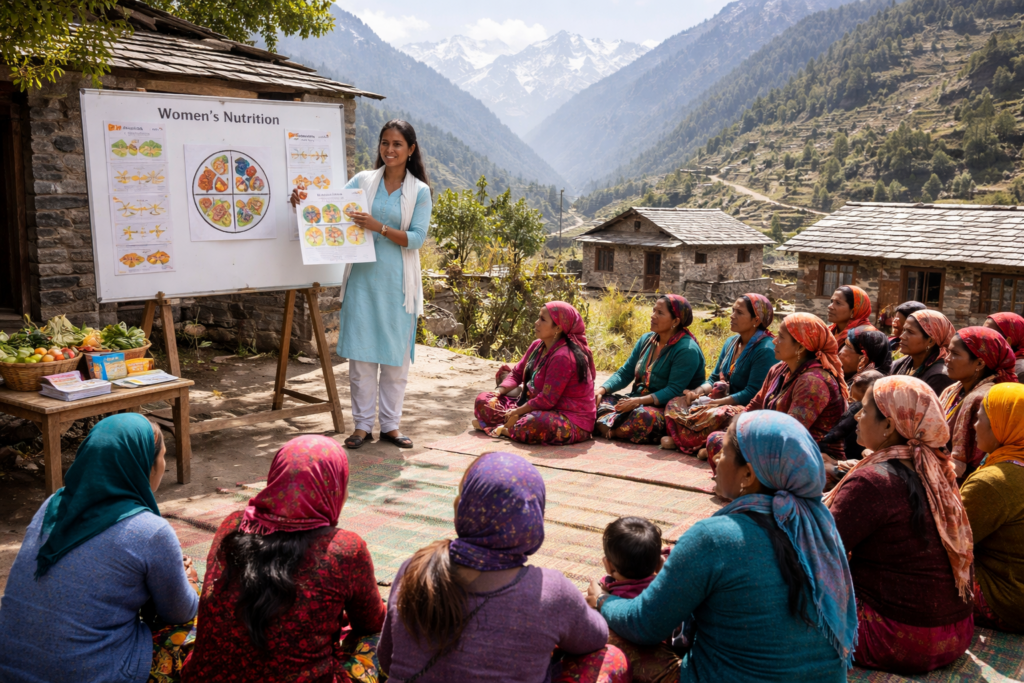
Mobile phones have reached even remote villages. YouTube videos, WhatsApp groups, and radio programs in local languages can spread nutrition information. Visual guides showing locally available foods and their benefits can empower women to make better choices.
Moving the Mountain Together
Standing at 3,000 meters above sea level, looking across the majestic Himalayan ranges, I feel both humbled and determined. These mountains have stood for millennia. The women in their shadow deserve the same strength and endurance.
But they need nutrition to fuel that strength. They need societies that value their health. They need systems that support their wellbeing.
This isn’t just about food. It’s about justice. It’s about recognizing that when we invest in women’s nutrition, we’re investing in healthier children, more productive communities, and a stronger nation.
What Government Can Do
- Expand and adapt POSHAN Abhiyaan specifically for mountain contexts
- Subsidize nutritious traditional foods in PDS
- Fund women-led nutrition programs in remote areas
- Train Anganwadi workers in mountain-specific nutrition
- Support research on Himalayan food systems and nutrition
What NGOs Can Do
- Integrate nutrition into all women’s health programs
- Document and promote traditional nutritious foods
- Create women’s nutrition leadership programs
- Partner with local communities, not impose solutions
- Advocate for policy changes
What Communities Can Do
- Challenge cultural norms that deprive women of nutrition
- Revive traditional food systems and seed diversity
- Support women’s nutrition groups
- Value women’s health as much as men’s
- Include nutrition in community decision-making
What Every Woman Can Do
- Recognize your nutritional needs matter
- Learn about locally available nutritious foods
- Share knowledge with other women
- Advocate for yourself and your daughters
- Join or form women’s nutrition groups
My Personal Commitment
Through Pragya Foundation, I commit to making women’s nutrition central to all our work. We will:
- Continue our menstrual health initiatives while adding nutrition education
- Create nutrition ambassadors among the 30,000+ women we’ve reached
- Document and promote traditional Himalayan nutritious foods
- Partner with local women to build community nutrition programs
- Advocate tirelessly for policy changes that support mountain women’s nutrition
The mountain we must move is high. The path is steep. But women in the Himalayas have been climbing steep paths their entire lives. Now it’s time we cleared the path for them.
It’s time we ensured that every girl, every woman, every mother, every grandmother in these mountains has access to the nutrition she needs and deserves. Not as charity. Not as an afterthought. But as a fundamental right.
Because when women are nourished, families thrive. Communities prosper. Mountains come alive with possibility.
The work ahead is immense. But so is the potential for change. Let’s move this mountain together.
About the Author
Pragya Dixit is the founder of Pragya Foundation, a community-centered non-profit transforming lives in remote Himalayan regions through women’s empowerment and environmental sustainability. Founded in January 2024, the foundation has reached over 30,000 women across Uttarkashi, Rudraprayag, and Tehri Garhwal districts through its innovative menstrual waste management program and community development initiatives. Pragya’s work bridges art, activism, and community service, bringing creative solutions to complex challenges facing mountain women.
References & Further Learning
Watch: Women’s Nutrition and Health in Mountain Regions – A collection of educational resources on women’s health in challenging terrains
Read More:
- Functional Foods in Northwestern Himalayan Region
- Traditional Dietary Knowledge in Central Himalaya
- Food and Nutrition Security in Hindu Kush Himalaya
Connect: Follow @pragyafoundationofficial on Instagram to see the foundation’s ongoing work in Himalayan communities.
Nikhil Raj Sharma, Founder, Himalayan Geographic: “Pragya Dixit’s work with Pragya Foundation represents a crucial intersection of women’s health, environmental sustainability, and community empowerment that the Himalayan region desperately needs. Her integrated approach to addressing menstrual health while recognizing the foundational importance of nutrition shows a deep understanding of ground realities in mountain communities.
At Himalayan Geographic Research Foundation, we believe that investing in women’s nutrition isn’t just a health intervention; it’s an investment in the future of Himalayan communities. The data showing 92.8% anaemia prevalence among women in some Himalayan regions compared to 57% nationally is a call to action we cannot ignore. We’re proud to feature this important work and encourage our readers to support such grassroots initiatives that create real, measurable change in the lives of mountain women. The Himalayas have always demanded resilience from their inhabitants. It’s time we provided the nutritional foundation for that resilience to flourish.”
“What particularly strikes me about Pragya’s approach is the recognition that solutions must come from within communities, not imposed from outside. Her emphasis on reviving traditional Himalayan superfoods like mandua and jhangora, rather than importing expensive alternatives, shows practical wisdom. This is the kind of sustainable, culturally appropriate intervention that actually creates lasting change. Every girl who receives proper nutrition today becomes a healthy mother tomorrow; and that intergenerational impact is how we break cycles of poverty and malnutrition in mountain regions.”
Disclaimer: The content and images published in this article are provided for general informational and educational purposes only. Some images may be generated or enhanced using artificial intelligence (AI) and are intended solely for illustrative use. The views, interpretations, and information expressed do not necessarily reflect the official position of Himalayan Geographic Research Foundation, nor do they constitute professional, legal, medical, or financial advice.
While efforts are made to ensure accuracy, no guarantees are given regarding completeness or reliability. Readers are encouraged to independently verify information and use their own judgment. By reading this article, you acknowledge that any reliance on the content is at your own risk, and Himalayan Geographic Research Foundation assumes no responsibility or liability for disagreements, interpretations, or outcomes arising from its use. If you do not agree with these terms, you are advised to discontinue reading.