
7 frozen rivers & silent valleys where Himalayan winters create breathtaking transformations. Expert photography tips, best locations & local insights.
Did you know that the Himalayas receive less than 10% of their annual visitors during winter, yet this is when the mountains reveal their most breathtaking secrets? While most travelers pack away their hiking boots when snow begins to fall, those who venture into these frozen valleys discover a world that seems borrowed from another planet; where rivers turn to crystal highways and silence becomes a tangible presence.
I’ll never forget standing at the edge of Pangong Tso in January, watching the lake transform into a vast sheet of ice that creaked and groaned like a living creature. That moment changed everything I thought I knew about the Himalayas.
The Magic Behind the Metamorphosis
When Mountains Put On Their Winter Cloak
Winter doesn’t just arrive in the Himalayas; it orchestrates a complete transformation. Between November and February, temperatures plummet to minus 20°C in higher elevations, triggering changes that reshape the entire landscape.
The process begins subtly. Morning frost coats every surface with intricate ice crystals. Within weeks, waterfalls freeze mid-cascade, creating spectacular ice sculptures that can reach heights of 50 feet or more.
Rivers slow their frantic rush. Ice begins forming along the edges, creeping inward until entire stretches solidify into frozen highways that locals have used for centuries.
The Science of Frozen Beauty
What actually happens when a Himalayan river freezes?
The transformation follows precise physics. As air temperatures drop below freezing, the water’s surface loses heat through radiation. Ice crystals form first along the banks where the water is shallowest and flow is slowest.
These crystals multiply and link together, creating frazil ice; tiny floating plates that give the river a slush-like appearance. Over several weeks, these plates accumulate and freeze solid, forming ice thick enough to support human weight.
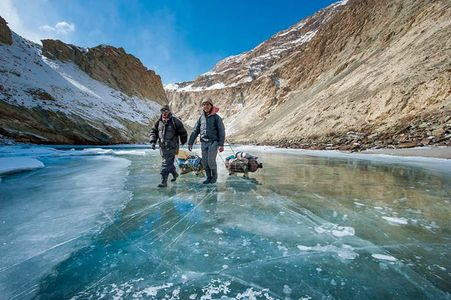
The Chadar Trek in Ladakh showcases this phenomenon perfectly. The Zanskar River freezes into a 6-inch-thick ice sheet that becomes a walking route connecting remote villages. This natural bridge has existed in local culture for over 1,000 years.
Clear winter skies amplify the visual drama. With minimal atmospheric moisture, visibility can extend over 100 kilometers. Mountains that seemed distant in summer suddenly appear close enough to touch.
Check out this stunning visual journey of the Chadar Trek
Nature’s Winter Gallery
Spiti Valley
Spiti transforms into an ice kingdom from December through March. The valley floor, sitting at 12,500 feet, becomes a study in white and blue contrasts.
Key Beg Monastery perches above the frozen Spiti River like a fortress from a fantasy novel. The monastery, over 1,000 years old, looks particularly striking when surrounded by snow-covered peaks that glow pink during sunrise.
The village of Kibber, one of the world’s highest inhabited settlements at 14,200 feet, offers unparalleled views of snow leopard territory. Winter is actually the best time to spot these elusive cats as they descend to lower elevations seeking prey.
Temperature: Ranges from minus 15°C to minus 30°C
Best time: January to February
Access: Requires careful planning; roads often close
Ladakh’s Frozen Treasures
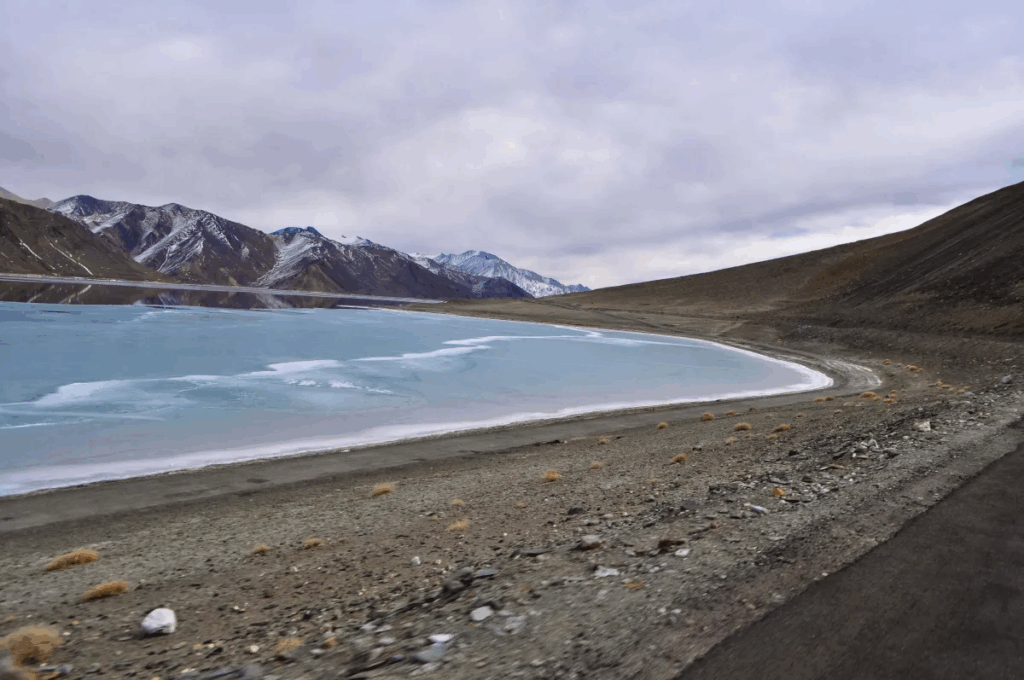
Pangong Tso Lake becomes a surreal spectacle in winter. This high-altitude lake, made famous by Bollywood films, freezes completely; a rare phenomenon for such a large water body at 14,270 feet elevation.
The ice varies in color from deep blue to milky white, depending on trapped air bubbles and ice thickness. Walking across its surface feels like stepping onto another world.
Tso Moriri, Ladakh’s other great lake, offers an even more remote experience. Fewer tourists brave the journey here, meaning you might have miles of frozen lake entirely to yourself.
Nubra Valley in winter presents a stark contrast to its summer greenery. Sand dunes at Hunder receive light snow coverage, creating the bizarre sight of snow-dusted desert landscapes backed by ice-covered peaks.
Watch the transformation of Pangong Lake through winter
The Eastern Himalayan Secrets
Sikkim’s Tsomgo Lake sits at 12,400 feet and freezes solid by January. The lake, considered sacred by local Buddhists, takes on an otherworldly quality when covered in ice and surrounded by prayer flags snapping in the wind.
The surrounding landscape becomes a photographer’s paradise. Rhododendron forests drip with icicles, creating natural chandeliers that catch and refract sunlight into rainbow prisms.
Arunachal Pradesh’s Tawang offers a different winter experience. At a slightly lower elevation, it receives heavy snowfall that blankets the region’s 400-year-old monastery; the largest in India and second-largest in the world after Lhasa’s Potala Palace.
Uttarakhand’s Frozen Gems
The Roopkund Trek becomes extraordinarily beautiful but extremely challenging in winter. The mysterious skeleton lake freezes completely, and the surrounding peaks of Trishul and Nanda Ghunti create a dramatic amphitheater of ice and rock.
Chopta, often called the “Mini Switzerland of India,” transforms into a pristine winter wonderland. The trek to Tungnath Temple; the world’s highest Shiva temple at 12,800 feet; offers spectacular views of snow-covered peaks including Nanda Devi, Trishul, and Chaukhamba.
The meadows become vast expanses of untouched snow. Early morning walks reveal wildlife tracks; signs of Himalayan monal pheasants, barking deer, and occasionally even snow leopards.
Understanding Himalayan Sunrises and Sunsets
Why Winter Skies Are Different
Winter creates atmospheric conditions that produce the most spectacular light displays. Cold air holds less moisture, resulting in exceptional clarity. This allows sunlight to travel through thinner atmospheric layers, creating more intense colors.
The “alpenglow” effect becomes particularly dramatic. During sunrise and sunset, peaks catch direct sunlight while valleys remain in shadow, causing mountains to literally glow red, orange, and pink against deep blue skies.
This phenomenon occurs because at low sun angles, light travels through more atmosphere, scattering blue wavelengths and allowing warm colors to dominate. Snow-covered peaks amplify this effect by reflecting and intensifying the colored light.
The Golden Hour Becomes the Golden Two Hours
In summer, the golden hour lasts maybe 30 minutes. Winter extends this magic to nearly two hours because the sun rises and sets at much shallower angles.
This extended timeline gives photographers unprecedented opportunities. You can watch the light quality evolve gradually, creating different moods and compositions without rushing.
The best locations for capturing winter light include:
- Tiger Hill in Darjeeling for Kanchenjunga sunrise views
- Sandakphu for panoramic views of four of the world’s five highest peaks
- Khardung La Pass for dramatic sunset backdrops
- Chandratal Lake for reflection photography
Learn professional photography techniques for Himalayan winter landscapes
The Sound of Silence
Winter brings something increasingly rare in our modern world; true silence. Snow absorbs sound waves, and the absence of summer’s rushing waters, buzzing insects, and chattering birds creates an acoustic vacuum.
This silence is profound enough to be physically felt. Your heartbeat becomes audible. Footsteps crunch loudly against frozen ground. A distant avalanche sounds like thunder even from miles away.
Many visitors report this silence as the most memorable aspect of their winter Himalayan journey. It creates space for introspection and meditation that simply doesn’t exist during busier seasons.
Photography Tips and Storytelling Angles
Technical Considerations for Winter Shooting
Cold weather destroys batteries. Carry at least three fully charged batteries and keep spares inside your jacket close to your body. Switch them frequently to maintain power.
Condensation poses a serious risk when moving between extreme cold and warm interiors. Place your camera in a sealed plastic bag before bringing it inside, allowing it to warm gradually without moisture forming on sensitive electronics.
White snow confuses camera meters. Your images will turn out gray unless you add 1-2 stops of exposure compensation. Shoot in RAW format for maximum post-processing flexibility.
Composition Strategies That Work
Lead with frozen rivers as natural leading lines. Ice patterns, cracks, and snow accumulation create compelling foreground interest that draws viewers into the frame.
Use the rule of thirds but don’t be enslaved by it. Winter’s stark contrasts often work better with centered compositions that emphasize symmetry.
Include scale elements. A tiny human figure or prayer flag makes massive landscapes comprehensible. Without scale references, even dramatic scenes can fall flat.
Shoot during blue hour; the period just before sunrise and after sunset when the sky turns deep blue but isn’t completely dark. This creates beautiful contrast with snow that still holds reflected light.
Master the art of winter landscape composition
Story Elements That Resonate
People make landscapes relatable. Include local villagers, monks, or fellow travelers in your shots. Their bright traditional clothing pops against white backgrounds.
Capture the details others miss: ice crystals on prayer flags, frost patterns on windows, steam rising from butter tea, weathered hands holding hot cups.
Document the journey, not just destinations. The struggle through deep snow, setting up camp in freezing conditions, and shared meals in village homes tell more complete stories.
Video and Time-Lapse Opportunities
Cloud movement over frozen lakes creates mesmerizing time-lapses. Set your camera to shoot one frame every 3-5 seconds over 2-3 hours for spectacular results.
Sunrise sequences work particularly well. Watching color wash over ice-covered mountains in 30 seconds of video creates powerful emotional responses.
Consider creating “day in the life” mini-documentaries. Follow a local shepherd, monastery caretaker, or fellow trekker through their winter routine.
The Cultural Dimension
How Communities Adapt and Thrive
For Himalayan residents, winter isn’t a tourist attraction; it’s a survival challenge that has shaped culture for centuries. Villages become isolated when passes close, creating self-sufficient communities that rely on summer’s harvest.
Traditional heating methods fascinate visitors. Homes use “bukhari” stoves that burn yak dung or wood, creating warmth and a gathering place for family storytelling.
Winter festivals gain special significance. Losar (Tibetan New Year) celebrations in February bring communities together with elaborate ceremonies, mask dances, and feasts that break the monotony of isolation.
The Spiritual Aspect
Many Himalayan sacred sites gain accessibility in winter. Frozen rivers become pilgrim routes. Monasteries that seemed distant and difficult to reach suddenly sit at the end of ice highways.
Meditation caves used by ancient hermits take on new meaning. Imagine sitting in the same spot where Buddhist masters spent winters in solitary practice centuries ago, experiencing similar cold and silence.
The practice of “tummo” or inner heat meditation becomes practically relevant rather than theoretical. Monks demonstrate the ability to dry wet sheets on their backs in freezing temperatures through controlled breathing and meditation.
Planning Your Winter Himalayan Journey
When to Go for Different Experiences
Early winter (November-December) offers the best balance. Temperatures remain tolerable, fresh snow creates pristine conditions, and most roads stay open.
Deep winter (January-February) provides the most dramatic landscapes but presents serious challenges. Only experienced travelers should attempt higher elevations during this period.
Late winter (March) brings warming trends. While still beautiful, snow begins melting, and conditions become inconsistent.
Essential Gear You Actually Need
Layering is everything. Base layers should be merino wool or synthetic, never cotton. Mid-layers provide insulation; down or synthetic depending on budget. Outer shells must be windproof and waterproof.
Footwear makes or breaks winter trips. Insulated boots rated to minus 40°F with crampon compatibility for ice walking are essential.
Don’t forget the small stuff: chemical hand warmers, lip balm with SPF, glacier glasses, and a headlamp with extra batteries.
Acclimatization and Safety
High-altitude winter travel compounds normal altitude challenges. Give yourself extra time to adjust. What might need two days in summer could require three or four in winter.
Hypothermia becomes a serious concern. Know the signs: shivering, confusion, slurred speech, and loss of coordination. If you or a companion shows these symptoms, warming must begin immediately.
Travel with experienced guides familiar with winter conditions. Solo winter travel in the Himalayas is genuinely dangerous, not adventurous.
Essential safety tips for winter Himalayan travel
The Environmental Perspective
Climate Change’s Visible Impact
Winter travel reveals climate change effects that summer visitors might miss. Glaciers show their retreat most clearly when stripped of summer snow cover. Dark glacier ice exposed in winter absorbs more heat, accelerating melting when temperatures rise.
Locals report changing patterns. Snowfall arrives later and melts earlier than in past generations. Rivers that once reliably froze now show open water sections even in January.
Photography becomes documentation. Your winter images create baseline records that future visitors might compare against, revealing environmental changes over time.
Responsible Winter Tourism
Small visitor numbers make individual impact more noticeable. Pack out everything, including toilet paper. Frozen ground makes natural decomposition nearly impossible.
Support local economies directly. Winter is economically challenging for mountain communities. Hiring local guides, staying in village homestays, and buying handicrafts provides crucial income.
Respect wildlife stress. Animals struggle in winter without tourist harassment. Keep distances from wildlife, never feed animals, and avoid disturbing winter dens or roosting sites.
Hidden Winter Wonders
The Ice Stupa Phenomenon
Ladakh’s artificial glaciers represent innovative climate adaptation. These cone-shaped ice formations, created by spraying water into cold air, store winter water that melts gradually in spring for agriculture.
Visiting an ice stupa combines stunning visuals with meaningful environmental storytelling. The structures can reach 100 feet tall and hold millions of gallons of water.
Frozen Waterfalls as Climbing Destinations
Ice climbing transforms frozen waterfalls into vertical playgrounds. Routes in Manali, Spiti, and Ladakh attract climbers worldwide seeking pristine ice conditions.
Even if you don’t climb, watching experts ascend these frozen cascades provides spectacular photography and genuine adventure ambiance.
Wildlife Photography Opportunities
Snow leopards become more visible in winter. Desperate for food, these normally shy cats descend to lower elevations, increasing sighting opportunities in places like Hemis National Park.
Himalayan birds; snow partridge, blood pheasant, and various rosefinches; show more boldly against white backgrounds. Their colorful plumage creates striking contrasts with snow.
Telling Your Winter Story
Building Narrative Arc
Start with arrival; the first shocking breath of thin, cold air. Build through daily discoveries and challenges. Climax with your most dramatic experience (reaching a frozen lake, watching sunrise from a high pass).
Include failure and difficulty. Stories where everything goes perfectly aren’t relatable or interesting. Describe the altitude headache, the tent nearly blowing away, or the meal that burned because water boils at lower temperatures.
End with transformation. How did this journey change you? What will you carry forward?
Social Media Strategies That Work
Instagram Stories work brilliantly for winter content. The immediacy and rough authenticity match the raw nature of winter travel.
Create carousel posts showing transformation; the same location from summer to winter, or a frozen waterfall’s progression over weeks.
Reels and TikToks gain traction with contrast content: “Summer vs Winter in the Himalayas” or “What Minus 20°C Really Feels Like.”
Writing for Different Platforms
Blog posts allow depth. Use them for detailed guides, photography tutorials, and personal narratives with proper structure and SEO.
Medium articles work for philosophical or environmental pieces. The platform’s reading-focused audience appreciates longer, more contemplative content.
Twitter threads can effectively share quick tips, daily updates, or photo series with brief context.
The Emotional Truth of Winter Mountains
Here’s what guidebooks rarely mention: winter Himalayan travel is hard. Not Instagram-caption hard, but genuinely physically and mentally challenging.
You’ll question your decisions. You’ll be colder than you’ve ever been. Your fingers will hurt. Your lungs will burn.
And then the sun will rise over a frozen valley, painting everything gold and pink and impossible. Steam will rise from your tea while you stand in minus 15°C, feeling more alive than you ever have.
That’s the real magic; not just the scenery, but discovering your own capacity to embrace difficulty and find beauty in harshness.
Final Thoughts
Frozen rivers and silent valleys offer something increasingly rare: genuine transformation. Winter strips the Himalayas to their essence; raw, pure, and uncompromising.
Most travelers will continue visiting during comfortable summer months. But those who venture into winter’s grip discover the mountains as locals know them, as pilgrims have experienced them for centuries, and as they truly are beneath the seasonal masks.
The question isn’t whether winter makes the Himalayas magical. The question is whether you’re ready to experience that magic on the mountains’ terms rather than your own.
Comments from Nikhil Raj Sharma, Founder, Himalayan Geographic:
“Winter in the Himalayas has always held a special place in my heart. There’s an honesty to these frozen months that summer simply cannot replicate. When we started Himalayan Geographic, one of our core missions was to showcase the mountains in all their seasons, not just during peak tourist times. These silent valleys teach us patience, resilience, and the profound beauty of stillness; lessons our increasingly chaotic world desperately needs. I encourage every mountain lover to experience at least one winter in the high Himalayas. It will change you.”
“The stories emerging from winter travel are among the most powerful we publish. They represent a deeper engagement with place, moving beyond superficial tourism into genuine cultural and environmental understanding. This is the kind of transformative travel writing that inspired me to create this platform.”
“We strive to use only images that are either royalty-free, in the public domain, or shared with appropriate permissions. However, if you believe any image on this website has been used without proper credit or violates copyright, please contact us immediately. We will promptly review the content and, if necessary, update the attribution or remove the image without delay. We do not claim ownership of any third-party images unless explicitly stated.”