
Discover how Himalayas prepare for winter; from ancient villages storing food to spiritual festivals honoring mountain spirits. A fascinating look at survival, tradition, and nature’s dramatic seasonal shift in the world’s highest mountains.
Did you know that mountain spirits guide the Himalayas through winter? Yes, you read that right. In Kinnaur’s remote villages, ancient festivals bid farewell to protective spirits who watch over communities during the harsh months. But the magic of winter preparation in these towering peaks goes far beyond folklore: it’s a symphony of nature, tradition, and raw human resilience.
When Nature Sounds the Alarm
The Himalayas don’t wait for your weather app to announce winter’s arrival. Nature sends the first signals weeks before the first snowflake falls. And unlike the gentle transition you might experience in the plains, here the shift is dramatic, urgent, and utterly captivating.
Temperature takes the lead. The mercury begins its downward journey as early as late September in the higher reaches. By October, daytime temperatures at moderate altitudes drop from comfortable 15-18°C to a chilly 5-12°C. But here’s the surprising twist: temperatures at glaciated elevations near Mount Everest show a counterintuitive cooling pattern despite global warming, thanks to enhanced glacier katabatic winds drawing cool air downward.
The winds tell their own story. As winter approaches, the southwestern monsoon winds that drench the Himalayas retreat southward. In their place, western disturbances begin their reign; bringing cold, dry air from Central Asia. These disturbances are the unsung heroes of Himalayan winter, delivering the snow that will sustain millions downstream. Watch how these winds shift, and you’ll see winter coming weeks before anyone else.
Then come the clouds. The thick, moisture-laden monsoon clouds give way to high, wispy formations. Clear skies become more frequent, especially after the monsoon ends in September. This clarity reveals the snow-capped peaks in all their glory; nature’s grand unveiling before the winter curtain falls.
The sequence matters. First, the winds change direction. Then temperatures plummet at higher altitudes. Finally, cloud patterns shift, bringing the crystalline clarity that makes autumn the most popular trekking season. By November, heavy winter snows begin falling on the high mountain passes, and by December, the transformation is complete.
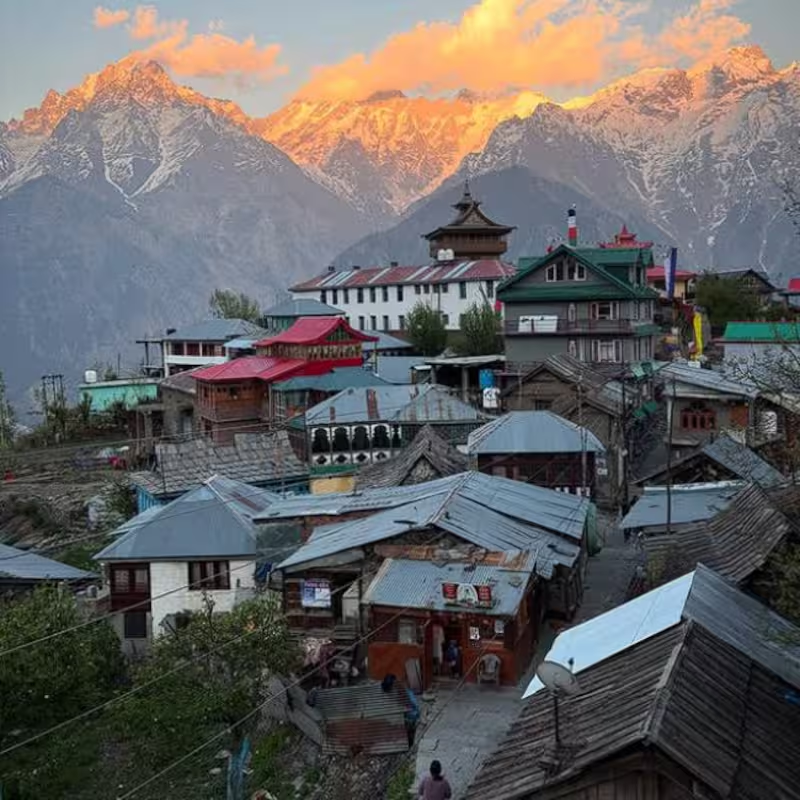
Villages Race Against Time
Imagine living where winter isn’t just cold; it’s a six-month isolation from the outside world. That’s reality for high-altitude Himalayan villages. And their preparation is nothing short of extraordinary.
Stocking the Pantry of Survival
Food storage becomes an art form when roads close for half the year. In Ladakh’s trans-Himalayan region, where cultivation stops due to sub-zero temperatures, villagers have perfected traditional storage methods passed down through generations. They store potatoes, cabbage, onion, radish, carrot, wheat, and barley using low-cost indigenous techniques compatible with their ecological conditions.
The ingenious “toli” structures; pyramid-shaped hay stacks; dot the landscape. Women carry bundles of dry grass on their backs from ghasni (natural grasslands) to create these towering food reserves for livestock. Some communities hang grass bundles from tree branches, letting them dry in the crisp mountain air while keeping them away from ground moisture.
Fermented foods become survival staples. Gundruk and sinki; fermented vegetables created through unique pit fermentation; provide essential nutrition when fresh produce vanishes under snow. These aren’t modern innovations but accidental inventions from ancient Nepal, now treasured traditions. The Himalayan people also prepare fermented bamboo shoots, preserved as pickles in the Eastern regions.
Here’s what shocks most outsiders: Despite greenhouse technology arriving in Ladakh, traditional storage remains crucial. Households report that storage options during winter are still limited, and the concern of seasonality in diet remains largely unresolved.
Livestock: The Heartbeat of Mountain Life
The livestock migration is a spectacular natural phenomenon. In Bharmour and Lahaul, at winter’s onset in October-November, flocks of sheep and goats migrate to Kangra valley and Pathankot, avoiding fodder scarcity. Come April, they return to manure the fields during early growing season.
Shepherds follow age-old practices. As summer approaches, livestock migrates to still higher altitudes. At season’s end in September-October, when winter returns, they descend from high altitude areas along traditional routes. Landlords provide hospitality, food, and cash payment for night droppings that fertilize their fields; a perfect symbiotic relationship.
Fodder becomes gold. Farmers harvest grass when completely dry, storing it in semicircular or conical heaps. In some areas, this compost remains within animal sheds for nearly a year before being carried to fields during winter when well-decomposed. The practice of stall feeding has increased dramatically over recent decades, requiring intensive human labor but ensuring animal survival through brutal winters.
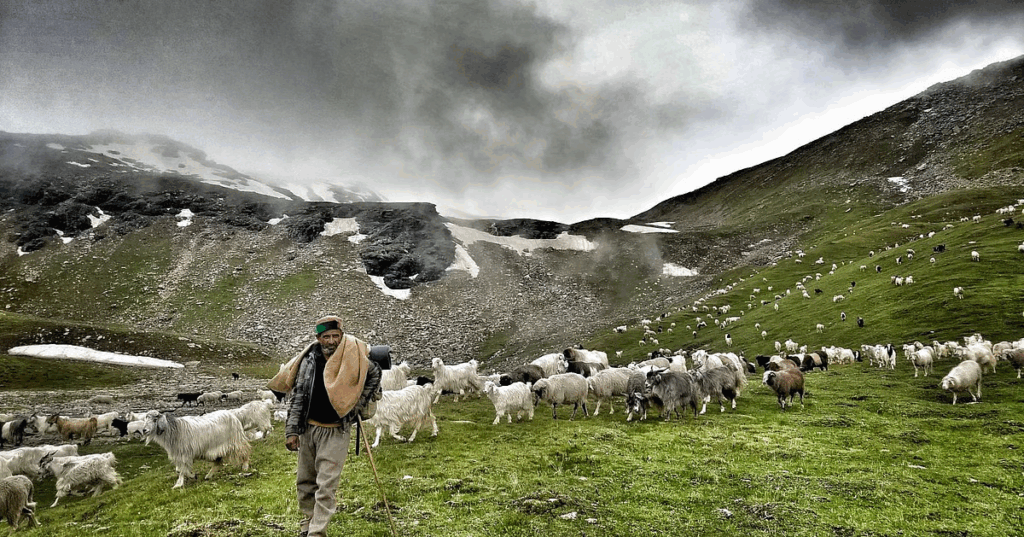
The numbers tell the story. Recent surveys show significant livestock reductions; 46% in some villages, 76% in others; mostly due to workforce lack. Modern households keep just one or two lactating cows to meet their needs, fundamentally changing centuries-old patterns.
Housing: Fortresses Against the Cold
Winter-proofing homes is serious business when temperatures drop to -30°C or lower. Villages at elevations above 4,500 meters experience severe winter with temperatures far below freezing. In Dras, India; known as the “Gateway to Ladakh”; temperatures plummet to -45°C in winter, making it one of the coldest inhabited places on Earth.
Homes transform into sealed sanctuaries. Thick mud walls, small windows, and central hearths become standard. Many families prepare biogas plants, with approximately 30% of households in accessible areas using this technology. While biogas hasn’t replaced firewood entirely, it reduces total firewood use by 20-25%, conserving precious forest resources.
The modern challenge is real. Power cuts become routine when heavy snow breaks power lines. Villagers must prepare for days without electricity, stocking candles, batteries, and alternative heating sources. Mobile network access remains imagination in many villages, creating profound isolation.
Check out this incredible documentary on Himalayan village winter life: Life in Himalayan Villages During Winter
When Tourism Hibernates
Winter dramatically reshapes the tourism landscape across the Himalayas. The crowds that throng mountain trails during spring and autumn vanish like morning mist.
Trekking: The Brave Few
Only the lower-altitude treks remain accessible. The Chopta-Chandrashila Trek in Uttarakhand, Kuari Pass Trek in Garhwal, and Langtang Valley in Nepal continue welcoming trekkers. But make no mistake; these aren’t casual walks. What’s “easy-moderate” in other seasons becomes “moderate” or even “challenging” in winter.
The legendary Chadar Trek epitomizes winter’s extreme appeal. Trekkers walk on a thin ice layer formed over the Zanskar River in temperatures dropping to -30°C. The 9-day trek covers approximately 75 kilometers, mostly on ice that can thin or break with continuous walking. It’s called one of the most challenging treks in the world for good reason.
Equipment becomes critical. High-quality sleeping bags rated for -10°C or lower, insulated snow boots with excellent grip, thermal layers, down jackets, and waterproof outer shells separate success from disaster. Trekkers must complete a 5-kilometer run in 30 minutes and begin preparation 1.5-2 months in advance.
Transport: When Roads Sleep
By November, early winter snows fall on passes closest to the Himalayas. High-altitude roads become impassable, cutting off entire regions. The famous Manali-Leh highway closes, isolating Ladakh from the rest of India. Villagers endure intense cold following valley floors where river crossings are no longer problematic; rivers freeze solid.
Helicopter services become lifelines for emergencies, but they’re expensive and weather-dependent. Many villages accept winter isolation as inevitable, preparing six months’ worth of supplies before roads close.
Tourism economics shift dramatically. Hotels in high-altitude areas shut down completely. Staff migrate to lower elevations seeking work. The few operational establishments in accessible areas offer significantly reduced rates, creating opportunities for budget travelers who don’t mind the cold. Local economies that thrive on summer tourism enter survival mode, relying on stored wealth and winter agriculture.
The Spirit of Seasons
Winter in the Himalayas isn’t just endured; it’s celebrated, honored, and woven into the spiritual fabric of mountain communities.
Ancient Festivals Mark the Transition
The Raulane festival in Kinnaur stands as a testament to this spiritual connection. This 5,000-year-old tradition marks the departure of Sauni; protective mountain spirits believed to watch over villages during winter. Masked dancers move slowly through village courtyards, wearing wool from their own sheep and masks carved by elders, performing rituals older than memory itself.
The timing is deeply intentional. Raulane arrives at winter’s close or spring’s beginning, varying by village. It follows no fixed date, beautifully reflecting how mountain life resists strict calendars. Together with the Suskar festival focused on land, livestock, and blessings, these traditions mark the threshold where winter’s protection gives way to spring’s promise of sowing, shearing, and orchard care.
Lhosar (Tibetan New Year) holds prominent cultural significance among Sherpa, Tamang, and Gurung communities. Families gather, express gratitude for the past year, and wish prosperity for the coming one. The origins trace back centuries to pre-Buddhist Bon customs and Tibetan Buddhism practices. Celebrations include cultural performances, traditional music and dance, and elaborate feasts.
Spiritual Preparations
Monasteries become centers of winter activity. The Mani Rimdu Festival in the Everest region is celebrated for 19 days with sacred ceremonies and rituals. The final three days open to public viewing, featuring monks performing masked Cham dances in elaborate costumes, chanting prayers, and making offerings.
The Dumji Festival commemorates Guru Rinpoche’s birth, believed to have occurred on a lotus flower in the 8th century. This incredible celebration includes four to six days of intricate rituals led by monastery lamas, involving the construction of symbolic chorten (stupas) made from dough.
Winter becomes contemplation season. With agricultural work paused and mobility limited, communities turn inward for spiritual practices. Meditation, prayer, and religious study intensify. The harsh external environment creates perfect conditions for internal spiritual work.
Watch this beautiful video on Himalayan winter festivals: Himalayan Winter Festivals and Traditions
The Modern Challenge
Climate change is rewriting winter’s script in the Himalayas. The annual mean surface-air temperature has increased at about 0.1°C per decade during 1901-2014, with faster warming of 0.2°C per decade during 1951-2014. High elevations above 4,000 meters experience even stronger warming; as high as 0.5°C per decade; a phenomenon called elevation-dependent warming.
The consequences are profound. Several areas exhibit declining snowfall trends and retreating glaciers. Glacial Lake Outburst Floods pose constant threats to Sherpa villages. Lake Imja near Mount Everest, formed by accelerated glacial melt, could burst at any moment, releasing catastrophic floods.
Yet paradoxically, parts of the high-elevation Karakoram Himalayas have experienced increased wintertime precipitation associated with enhanced western disturbances. The Himalayas, often called the “Third Pole,” remain unpredictable; their climate as complex as their geography.
Traditional knowledge meets modern science. Villagers notice changes in snow patterns, earlier melting, and unpredictable weather. Their observations, combined with scientific data, paint a concerning picture for future winters in this fragile ecosystem.
Lessons from the Roof of the World
What can we learn from how the Himalayas prepare for winter? The mountain communities teach us about resilience, planning, and living in harmony with nature’s rhythms.
Preparation is survival. There’s no room for procrastination when winter isolation means no second chances. Every family must anticipate needs months in advance; food, fuel, fodder, and medical supplies.
Community trumps individualism. Festivals aren’t just celebrations; they’re social glue holding communities together through difficult months. Neighbors help neighbors prepare homes, share resources, and provide emotional support.
Tradition contains wisdom. Ancient storage techniques, livestock migration patterns, and spiritual practices aren’t quaint folklore; they’re evolved responses to extreme conditions, tested and refined over millennia.
Adaptation is constant. While honoring traditions, Himalayan communities embrace beneficial innovations; greenhouses, biogas, improved insulation; showing that tradition and progress aren’t opposites.
Your Turn to Explore
Have you experienced a Himalayan winter? Or are you planning your first winter trek to these magnificent mountains? The Himalayas in winter offer something you simply cannot find elsewhere; pristine snow-covered landscapes, intimate cultural experiences, and profound silence broken only by prayer flags fluttering in the wind.
But remember: Winter here demands respect. Preparation isn’t optional; it’s mandatory. Whether you’re trekking to Kedarkantha, witnessing the Raulane festival, or simply visiting lower-altitude villages, come prepared for cold, isolation, and challenges that will test you in ways city life never does.
The reward? An experience that will fundamentally change how you understand winter, mountains, and human resilience.
What aspect of Himalayan winter preparation fascinates you most? Have you witnessed these seasonal transformations firsthand? Share your experiences or questions in the comments below; let’s keep this conversation going!
Want to explore more about Himalayan culture and adventures? Subscribe to our newsletter for weekly stories from the roof of the world, practical trekking tips, and insider guides to hidden mountain gems.
Comments from Nikhil Raj Sharma, Founder, Himalayan Geographic
“This article beautifully captures the essence of what makes Himalayan winters so unique and challenging. Having spent years documenting life in these mountains, I’m constantly amazed by the resilience and wisdom of mountain communities. Their winter preparation isn’t just about survival; it’s a profound relationship with nature that modern society has largely forgotten.
The integration of ancient traditions with contemporary challenges, especially climate change impacts, represents the greatest test these communities have faced in centuries. We must document, preserve, and learn from their knowledge before it’s too late.
What strikes me most is how spiritual practices anchor communities during winter’s isolation. The Raulane festival, Lhosar celebrations, and monastery rituals aren’t mere customs; they’re psychological and social infrastructure as crucial as food storage and livestock management.
I encourage every reader to experience a Himalayan winter respectfully and responsibly. These aren’t tourist attractions; they’re living cultures facing existential challenges. Witness, learn, support; but above all, honor the people who call these spectacular mountains home.”
“We strive to use only images that are either royalty-free, in the public domain, or shared with appropriate permissions. However, if you believe any image on this website has been used without proper credit or violates copyright, please contact us immediately. We will promptly review the content and, if necessary, update the attribution or remove the image without delay. We do not claim ownership of any third-party images unless explicitly stated.”