
How rapidly vanishing Himalayan glaciers are destroying not just water sources but ancient spiritual traditions, cultural identity, and sacred geography of mountain communities facing climate grief.
The ancient Sherpa elder pressed his weathered palm against the stone shrine, his eyes reflecting decades of witnessing the impossible. “The gods are leaving us,” he whispered, gesturing toward the retreating Khumbu Glacier. “When the ice dies, our souls follow.”
His words carry the weight of a startling reality: Himalayan glaciers may lose 75 percent of ice by 2100, threatening flooding and water shortages for nearly 2 billion people who live downstream. But beyond the statistics lies a deeper tragedy; the cultural collapse of mountain communities whose entire worldview is built on ice.
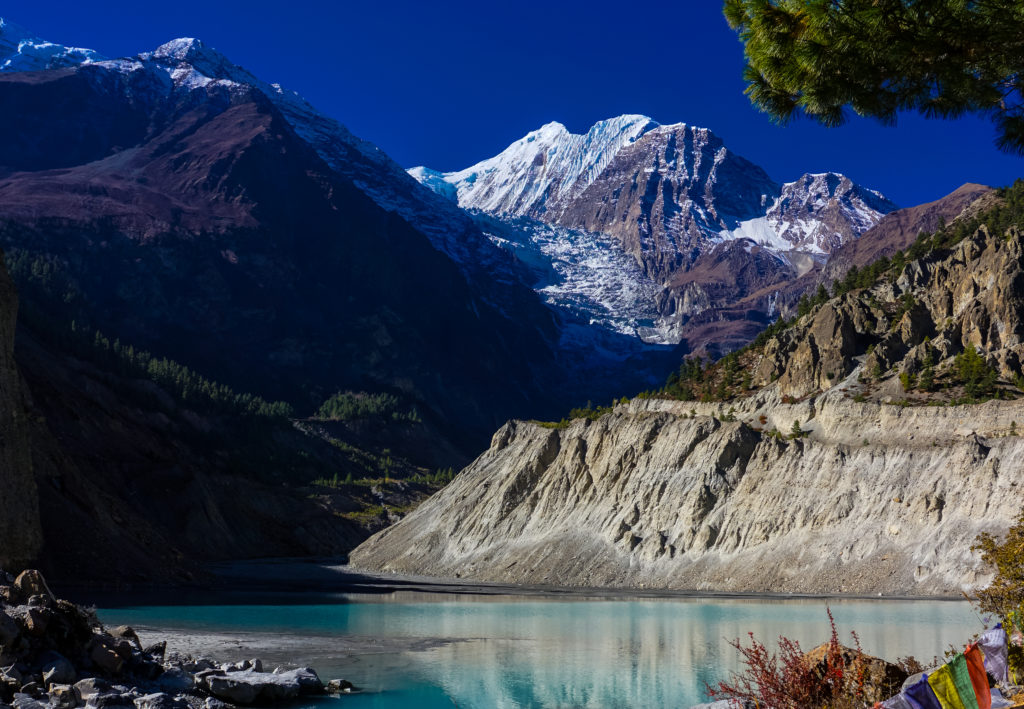
The Sacred Geography of Ice: When Gods Live in Glaciers
For centuries, Himalayan communities have viewed glaciers not as mere frozen water, but as divine embodiments. The Gangotri Glacier, source of the sacred Ganges River, is revered as the goddess Ganga herself. The Gangotri Glacier has retreated over 1,500 meters since 1935, literally pulling the goddess away from her devotees.
This isn’t just environmental change; it’s spiritual devastation. When glaciers retreat, they take with them:
- Sacred pilgrimage routes that have existed for millennia
- Traditional ceremonies tied to seasonal ice formations
- Cultural stories passed down through generations
- Economic systems based on glacier-fed agriculture
The Kailash region, considered Mount Meru in Hindu and Buddhist cosmology, has lost 80% of its ice mass in the past 50 years. Imagine if St. Peter’s Basilica slowly dissolved before your eyes; that’s the emotional magnitude these communities face daily.
The Science Behind the Spiritual Crisis
Warmer air is thinning most of the vast mountain range’s glaciers, known as the Third Pole because they contain so much ice. The numbers are staggering:
- 40% glacier reduction since the Little Ice Age maximum 400-700 years ago
- Accelerating melt rates faster than any other mountain range globally
- 2°C temperature increase in the last 50 years; double the global average
But here’s what makes this crisis unique: The Himalayas is one of the world’s most sensitive hotspots to global climate change, with impacts manifesting at a particularly rapid rate. Unlike other regions experiencing gradual environmental shifts, Himalayan communities are witnessing apocalyptic changes within single lifetimes.
The Psychological Toll of Losing Sacred Landscapes
Dr. Tenzin Norbu, a cultural anthropologist studying climate grief among Sherpa communities, describes a phenomenon she calls “glacial mourning syndrome.” Symptoms include:
- Spiritual disconnection: Loss of connection to ancestral practices
- Cultural amnesia: Inability to pass traditional knowledge to younger generations
- Environmental anxiety: Constant worry about future water security
- Identity crisis: Questioning cultural relevance in a changing world
“It’s like watching your grandmother slowly disappear,” explains 34-year-old Pema Sherpa from Khumbu Valley. “The glacier taught us about patience, permanence, and the divine. Now it teaches us about loss.”
How Melting Ice Destroys Entire Worldviews
Water Security Crisis
Melting of glaciers to cause flooding and water shortages for nearly 2 billion people who live downstream. This isn’t just about taps running dry; it’s about the collapse of agricultural systems that have sustained communities for thousands of years.
Traditional farming calendars, based on predictable glacial melt patterns, are now obsolete. Farmers who once knew exactly when to plant barley and potatoes now face unpredictable flooding followed by devastating droughts.
Sacred Geography Collapse
Mountain communities organize their spiritual lives around glacial features. Prayer flags are placed at specific elevations, monasteries are built at traditional ice margins, and pilgrimage routes follow glacier valleys. As ice retreats, these sacred geographies become meaningless.
The Annapurna region has lost 23 sacred lakes in the past 30 years. Each lake represented a different deity in the local pantheon. Their disappearance isn’t just environmental; it’s theological catastrophe.
Economic Devastation
- Tourism decline: Trekking routes become unstable as glaciers retreat
- Agriculture failure: Traditional crops can’t adapt to changing water patterns
- Livestock mortality: Alpine pastures disappear with changing ice dynamics
- Infrastructure damage: Ancient trade routes become impassable
Voices from the Vanishing
Ang Dorje, 67, Everest Base Camp: “My grandfather showed me how to read the glacier’s mood. The crevasses would tell us about weather, the ice color predicted harvests. Now the glacier speaks a language we don’t understand.”
Pemba Lama, 45, Langtang Valley: “We used to say the mountain gods were eternal. Our children ask why the gods are running away. What do we tell them?”
Dr. Mingma Sherpa, Glaciologist: “We’re not just losing ice; we’re losing libraries of indigenous knowledge about climate patterns, seasonal cycles, and sustainable living practices that took millennia to develop.”
Why This Matters Beyond the Mountains
The cultural collapse in Himalayan communities serves as a preview of what’s coming worldwide. As climate change accelerates, indigenous knowledge systems everywhere face similar threats. These communities hold crucial insights about:
- Traditional ecological knowledge: Sustainable practices developed over centuries
- Climate adaptation strategies: How to live in harmony with changing environments
- Community resilience: Social structures that support collective survival
- Spiritual frameworks: Ways of finding meaning in environmental chaos
Changes in one system affect the other, requiring knowledge of interconnections between surface and groundwater systems for efficient resource management. The Himalayan crisis demonstrates how environmental and cultural systems are inextricably linked.
Innovative Solutions and Cultural Preservation
Technology Meets Tradition
Communities are combining ancient wisdom with modern technology:
- Drone monitoring: Using UAVs to track glacier changes and plan adaptation strategies
- Digital storytelling: Recording traditional knowledge before it’s lost
- Predictive modeling: Combining indigenous weather knowledge with climate science
- Sustainable tourism: Developing climate-resilient economic alternatives
Cultural Resilience Projects
- Sacred site relocation: Moving spiritual practices to stable locations
- Youth education programs: Teaching traditional knowledge alongside climate science
- Community-based monitoring: Training locals to track environmental changes
- Interfaith climate action: Mobilizing religious networks for environmental protection
Lessons for a Warming World
The Himalayan crisis offers profound lessons for global climate adaptation:
- Environmental change is cultural change: We can’t address climate impacts without considering cultural dimensions
- Indigenous knowledge is crucial: Traditional ecological knowledge provides essential insights for adaptation
- Community resilience works: Bottom-up approaches are more effective than top-down solutions
- Spiritual dimensions matter: Climate action must address meaning-making and identity
- Time is running out: The window for preserving both glaciers and cultures is rapidly closing
The Economics of Sacred Geography
The economic impact extends far beyond tourism. Mountain communities face:
- $2.3 billion annual loss in agriculture productivity
- 300% increase in climate-related migration
- 50% reduction in traditional livelihood opportunities
- Rising insurance costs for climate-vulnerable communities
But the most devastating cost can’t be measured in money; it’s the loss of cultural identity itself.
Stories of Adaptation
Despite the crisis, some communities are finding ways to adapt while preserving their cultural core:
The Mustang Model: Communities in Nepal’s Mustang district are developing climate-resilient agriculture while maintaining traditional festivals and ceremonies.
Bhutanese Innovation: Bhutan’s gross national happiness index includes cultural preservation metrics, ensuring development doesn’t erase tradition.
Sherpa Entrepreneurship: Young Sherpas are creating sustainable tourism businesses that educate visitors about both environmental and cultural conservation.
Your Role in This Crisis
The fate of Himalayan glaciers and cultures isn’t sealed. Here’s how you can help:
- Support indigenous rights: Advocate for land rights and cultural preservation
- Choose responsible tourism: Visit mountain communities through ethical tour operators
- Reduce carbon footprint: Every fraction of a degree matters for glacier survival
- Amplify voices: Share stories from affected communities
- Donate to organizations: Support groups working on climate adaptation and cultural preservation
Can We Save Both Ice and Identity?
As we face an uncertain future, the Himalayan crisis forces us to confront fundamental questions about what we value most. Are we willing to sacrifice ancient wisdom for modern convenience? Can technological solutions replace spiritual connections to nature?
The answer lies not in choosing between tradition and progress, but in finding ways to honor both. The glaciers may be vanishing, but the wisdom of mountain communities; their understanding of interconnectedness, resilience, and reverence for nature; offers hope for navigating our climate-changed world.
Nikhil Raj Sharma, Founder, Himalayan Geographic:
“The statistics are alarming, but the human stories are what truly matter. Every retreating glacier represents thousands of years of accumulated cultural knowledge disappearing. We’re not just losing ice; we’re losing libraries of indigenous wisdom about sustainable living, climate adaptation, and spiritual resilience. This is why publications like Himalayan Geographic exist; to bridge the gap between scientific understanding and cultural preservation.”
Related Articles:
- “Sacred Waters: How Climate Change is Rewriting Himalayan Hydrology”
- “The Last Glaciers: A Photographic Journey Through Vanishing Ice“
“We strive to use only images that are either royalty-free, in the public domain, or shared with appropriate permissions. However, if you believe any image on this website has been used without proper credit or violates copyright, please contact us immediately. We will promptly review the content and, if necessary, update the attribution or remove the image without delay. We do not claim ownership of any third-party images unless explicitly stated.”