
7 shocking truths about who pays the real price for your weekend in the hills. From overcrowded Manali to Everest’s waste crisis – the hidden cost of Himalayan tourism revealed.
The Instagram post shows pristine snow-capped peaks, a perfectly positioned yoga mat, and the caption “Living my best life in the mountains #blessed.” What it doesn’t show is the 3-hour traffic jam to reach that spot, the overflowing garbage bins just outside the frame, or the local family whose ancestral land was sold to build yet another “eco-resort.”
Here’s a startling fact: The Himalayas receive over 15 million tourists annually, but the mountain ecosystem can sustainably support less than half that number. Every weekend warrior heading to the hills contributes to what experts are calling an “ecological time bomb.”
Your weekend in the hills might feel like the perfect escape from city chaos, but someone else is paying the real price. The question isn’t whether you deserve that mountain high ; it’s whether the mountains can survive giving it to you.
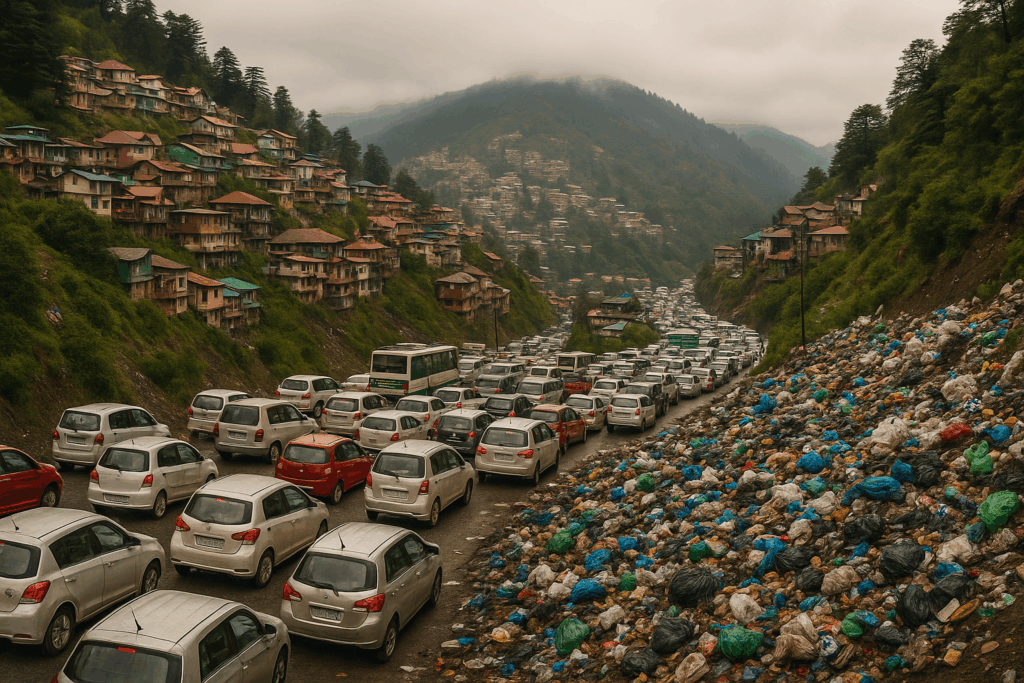
The Instagram vs Reality Gap
We’ve all seen them ; those picture-perfect mountain posts flooding our feeds. Manali’s Mall Road bathed in golden hour light. Kasol’s “Israeli” cafes promising authentic vibes. Mussoorie’s scenic viewpoints offering “breathtaking” sunsets.
But scroll past the filters, and here’s what you’ll find: Shimla’s Ridge Road so congested that locals avoid their own city center. Darjeeling facing water shortages despite being in one of India’s wettest regions. Pokhara’s once-pristine Phewa Lake choked with hotel waste.
The harsh truth? Your weekend in the hills has become everyone else’s weekday nightmare.
Take Manali, for instance. What was once a quiet hill station serving 50,000 visitors annually in the 1990s now hosts over 1.7 million tourists each year. The infrastructure built for a small town is buckling under the weight of a small country’s worth of visitors.
When Roads Become Parking Lots
Picture this: You’ve planned the perfect weekend getaway to Shimla. You leave Delhi at 6 AM, expecting to reach by afternoon. Instead, you’re stuck in a 15-kilometer traffic jam that moves slower than a mountain goat.
This isn’t just inconvenience ; it’s infrastructure collapse in real-time.
In Himachal Pradesh alone, roads designed for 500 vehicles daily now handle 5,000 during peak season. The result?
- 12-hour journeys for what should be 6-hour drives
- Vehicles burning fuel while stationary, pumping emissions into pristine mountain air
- Local ambulances unable to reach hospitals during tourist season
- Fruit trucks carrying local produce rotting in traffic while tourists complain about delayed check-ins
Mussoorie’s situation mirrors this chaos. The town’s approach roads, built in British colonial times for horse carriages, now accommodate thousands of cars daily. Local resident Priya Negi shares, “We’ve become prisoners in our own town during weekends. Even buying groceries becomes impossible.”
Check out this eye-opening documentary about Himalayan traffic chaos
The Water Crisis Hidden in Plain Sight
Here’s something your travel blogger didn’t mention: the Himalayas are running dry, and your weekend in the hills is accelerating the process.
Darjeeling ; famous for its tea and mountain railways ; faces acute water shortages. Hotels pump groundwater 24/7 to fill swimming pools and maintain landscaped gardens while local families wait in queues for their daily water supply.
In Kasol and Parvati Valley, the river that gives the region its name is slowly choking. Not from industrial pollution, but from tourist waste. Plastic bottles, food wrappers, and human waste from inadequate toilet facilities flow directly into the river system.
The numbers are staggering:
- A single tourist generates 2.5 kg of waste daily in hill stations (compared to 0.8 kg at home)
- 70% of waste in Himalayan tourist areas is non-biodegradable
- Groundwater levels in major hill stations have dropped 30-50 feet in the last decade
Nepal’s Everest region has become the world’s highest garbage dump. Climbers and trekkers generate so much waste that helicopters now make regular trips just to airlift trash. The irony? People pay thousands to witness pristine nature while simultaneously destroying it.
When Dreams Displace Communities
Fifteen years ago, Tenzin Norbu’s family grew barley and potatoes on their ancestral land in Lachen, North Sikkim. Today, that same land hosts a “luxury eco-resort” where tourists pay ₹8,000 per night to experience “authentic mountain life.”
Tenzin now works as a porter for the same tourists, earning in a month what his family’s land was sold for in a single transaction.
This story repeats across the Himalayas:
- In Manali, land prices have increased 400% in five years, forcing locals to sell and migrate to cities
- Young people in Ziro Valley abandon traditional farming to work in tourism, leaving agricultural knowledge to die with elderly generations
- Families in Nainital can no longer afford to live in homes their great-grandparents built
Joshimath’s tragedy serves as a wake-up call. The town literally started sinking due to uncontrolled construction and tourist infrastructure. Hundreds of families lost their homes not to natural disasters, but to unchecked tourism development.
The real estate boom around popular destinations creates what economists call “tourist gentrification.” Locals become service providers in their own homeland, unable to afford the rising costs their communities now demand.
Culture for Sale: When Sacred Becomes Scenic
Walk through Kasol today, and you’ll hear more Hebrew than Himachali. The region has earned the nickname “Little Israel,” celebrated in travel circles as an exotic cultural blend. But ask elderly locals, and they’ll tell you about festivals that no longer happen, traditional crafts nobody practices, and children who speak tourist languages better than their mother tongue.
Tawang Monastery in Arunachal Pradesh, one of Buddhism’s holiest sites, now manages crowds more than it nurtures spiritual practice. Monks spend more time managing tourist queues than in meditation. The sacred butter lamps that once burned in peaceful silence now compete with camera flashes and selfie sticks.
Even Bhutan’s Tiger’s Nest Monastery, perched dramatically on a cliff face, struggles to maintain its spiritual essence as tourists seeking the perfect Instagram shot interrupt prayer sessions and meditation practices.
Cultural commodification transforms living traditions into performance pieces. Local festivals adapt to tourist expectations rather than community needs. Traditional architecture gets “upgraded” with modern amenities that destroy authentic building techniques passed down through generations.
The question becomes: are we preserving culture or pickeling it for tourist consumption?
The Hidden Environmental Toll
Your weekend in the hills leaves footprints that last decades. The Himalayas store 40% of Asia’s freshwater, but tourist pressure threatens this critical resource.
Here’s what one weekend trip actually costs the environment:
- Carbon footprint: A Delhi-Manali road trip generates 120 kg of CO2 per person
- Water consumption: Tourist accommodations use 300-500 liters per person daily (local households use 50 liters)
- Waste generation: 60% of tourist waste in hill stations never gets properly processed
- Ecosystem disruption: Popular trekking routes show 70% loss in native vegetation within 500 meters of trails
Spiti Valley, once pristine and isolated, now faces the “Ladakh problem” ; too much tourism, too fast. Local environmentalist Lobzang Gyatso explains, “We’re seeing plants and animals disappear that survived here for thousands of years. Climate change is bad enough – tourist pressure makes survival impossible.”
Watch this documentary on Himalayan ecosystem destruction
Solutions That Actually Work
Not all hope is lost. Some regions prove that sustainable mountain tourism is possible – it just requires thinking beyond next weekend’s Instagram post.
Bhutan’s High Value, Low Volume Model
Bhutan charges $200-250 per tourist per day ; and it works. The policy ensures only serious travelers visit, provides substantial revenue for conservation, and prevents overcrowding. Tourist satisfaction rates remain above 95% because experiences feel authentic rather than commercialized.
However, even Bhutan faces pressure to increase numbers for economic reasons, showing how challenging sustainable tourism remains.
Community-Led Tourism Success Stories
Ziro Valley in Arunachal Pradesh pioneered community-controlled tourism. Local tribes decide visitor limits, guide training, and revenue distribution. The result? Sustainable income for families, preserved cultural practices, and protected ecosystems.
Spiti Valley communities created homestay networks that keep tourism revenue within villages rather than flowing to outside hotel chains. Tourists get authentic experiences while communities maintain control over their development.
Innovative Waste Management
Sikkim implemented strict waste management protocols requiring tourists to carry out all non-biodegradable waste. The policy reduced tourist waste by 60% while encouraging more mindful travel behavior.
Some Nepal regions now charge “waste bonds” ; refundable deposits that tourists lose if they don’t properly manage their waste during treks.
What Responsible Mountain Tourism Looks Like
Sustainable tourism isn’t about stopping people from visiting mountains ; it’s about changing how we visit them.
10 Ways to Make Your Weekend in the Hills Count Positively:
- Choose off-season travel ; Visit during shoulder months when infrastructure isn’t overwhelmed
- Stay longer, travel less frequently ; One 7-day trip creates less impact than three weekend trips
- Use local guides and homestays ; Ensure your money reaches communities, not corporate chains
- Carry out all waste ; Pack everything you bring, including organic waste
- Respect water scarcity ; Take shorter showers, skip pool hotels, carry your own water bottle
- Learn basic local language phrases ; Show respect for local culture beyond transactions
- Buy local products ; Support traditional crafts and farming rather than imported souvenirs
- Follow designated trails ; Prevent ecosystem damage from off-trail hiking
- Participate in community activities ; Attend local festivals, learn traditional skills
- Contribute to conservation ; Donate to local environmental initiatives or volunteer for clean-up drives
Technology Solutions
Digital permits and visitor caps help manage crowds while protecting ecosystems. Some regions now use apps to distribute tourist flow across different areas and seasons.
Waste tracking systems make tourists accountable for their environmental impact throughout their journey.
Community feedback platforms allow locals to voice concerns and suggestions about tourism development in their areas.
The Real Cost of Your Mountain High
So who really pays for your weekend in the hills?
The porter carrying your backpack for ₹500 a day while you spend ₹5,000 on accommodation.
The local family whose children develop respiratory problems from increased vehicle emissions but can’t afford medical care.
The mountain springs drying up because hotels extract groundwater faster than monsoons can replenish it.
The traditional craftsperson whose handmade products can’t compete with cheap, mass-produced “local” souvenirs.
The Buddhist monk whose morning prayers get interrupted by tourists seeking sunrise photos.
The ecosystem itself ; losing species, soil, and stability with each passing tourist season.
The irony cuts deep: we escape to mountains for peace, purity, and authenticity, then collectively destroy exactly what we came seeking.
Your Next Weekend: Escape or Responsibility?
The mountains will always call to us. That’s not changing, nor should it. But how we answer that call makes all the difference.
Next time you plan your weekend in the hills, ask yourself:
Am I running away from responsibility, or running toward it?
Will my presence add value to this place, or just extract it?
Can I leave these mountains better than I found them?
The choice isn’t between tourism and no tourism – it’s between mindful travel and mindless consumption. The mountains have given us so much: clean air when cities choke, pure water when rivers die, silence when noise overwhelms, and perspectives when life feels narrow.
Maybe it’s time we gave something back.
Nikhil Raj Sharma, Founder, Himalayan Geographic:
“Every weekend, we witness the paradox of people seeking nature while unknowingly contributing to its destruction. The Himalayas aren’t just tourist destinations ; they’re living ecosystems that deserve our respect, not just our revenue. As travelers, we have the power to choose between being part of the problem or part of the solution. The mountains are calling, but they’re also pleading.”
“What strikes me most is how tourism could be the Himalayas’ greatest ally instead of its biggest threat. We’ve seen it work in places like Bhutan and Spiti. The formula isn’t complex ; respect carrying capacity, involve local communities, and prioritize long-term sustainability over short-term profits. Every tourist has the power to vote with their wallet for the kind of mountain tourism they want to see.”
What’s your mountain story? Have you witnessed the impact of overtourism during your weekend in the hills? Share your experiences and thoughts on how we can travel more responsibly in the comments below.
“We strive to use only images that are either royalty-free, in the public domain, or shared with appropriate permissions. However, if you believe any image on this website has been used without proper credit or violates copyright, please contact us immediately. We will promptly review the content and, if necessary, update the attribution or remove the image without delay. We do not claim ownership of any third-party images unless explicitly stated.”