
The complete Mussoorie to Manali distance guide covering 514 km of breathtaking Himalayan routes, travel time, elevation changes, and hidden gems across India’s most spectacular mountain terrain.
Picture this: You’re standing at Lal Tibba in Mussoorie, gazing at the snow-capped Himalayan peaks at 2,275 meters above sea level, and suddenly you’re struck by wanderlust. The distance from Mussoorie to Manali spans 514 kilometers ; but this isn’t just any ordinary road trip. This is a transformative journey through the heart of the Western Himalayas that will leave you breathless, literally and figuratively.
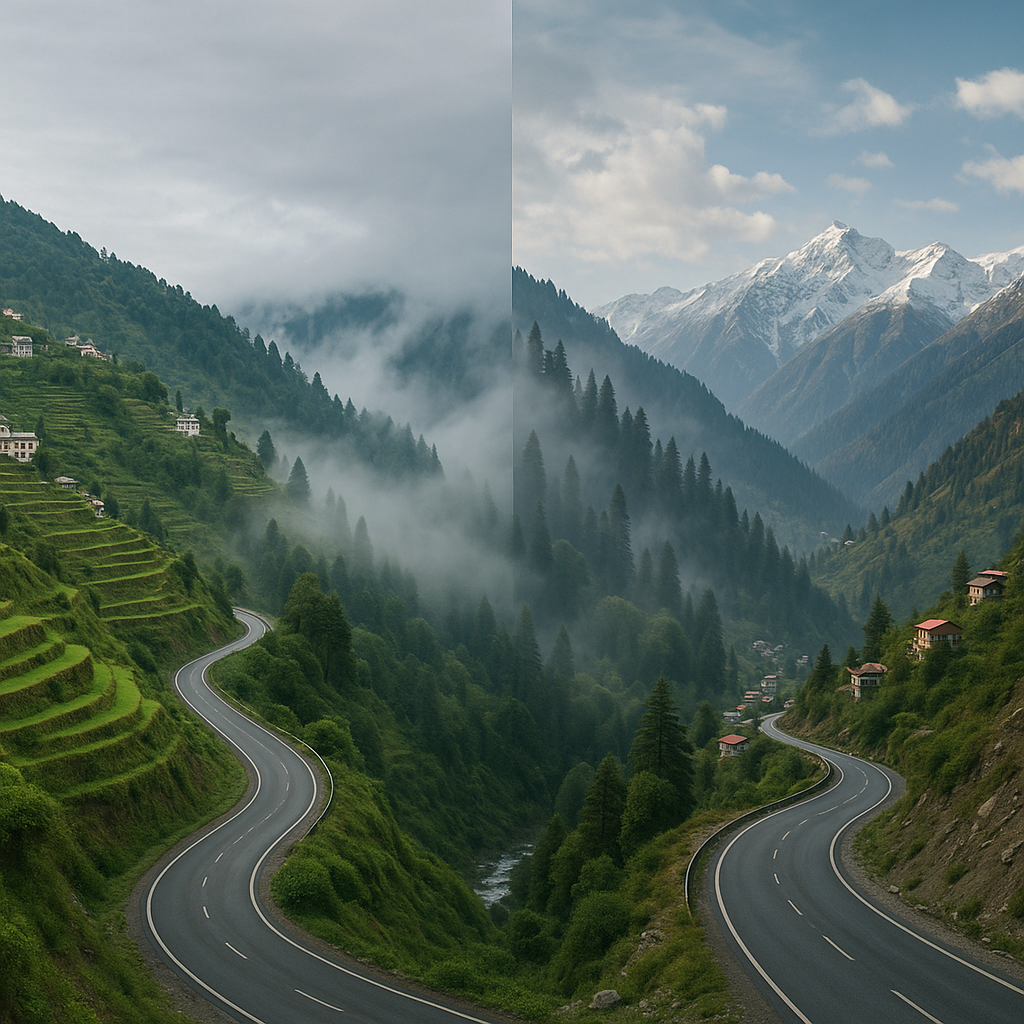
Here’s something that might surprise you: The straight-line distance between these two hill stations is only 214 kilometers, but the winding mountain roads nearly double that distance. Why? Because you’re not just traveling horizontally ; you’re dancing with the Himalayas themselves.
Your Himalayan GPS Guide
When planning your Mussoorie to Manali adventure, you have several route options, but the most popular and scenic path takes you through a mesmerizing tapestry of landscapes.
Primary Route: The Crown Jewel Path
Distance: 514 km
Travel Time: 9-12 hours (depending on stops and road conditions)
Best Route: Mussoorie → Dehradun → Zirakpur → Chandigarh → Kullu → Manali
This route isn’t just about getting from point A to point B. It’s about witnessing the dramatic transformation of the Indian landscape as you climb through different ecological zones.
Alternative Routes Worth Considering
Via Haridwar Route:
- Distance: Approximately 520 km
- Travel Time: 10-11 hours
- Highlights: Spiritual vibes of Haridwar, Rishikesh detour possible
Via Shimla Route:
- Distance: Approximately 580 km
- Travel Time: 12-14 hours
- Highlights: Colonial charm of Shimla, more scenic but longer
Hour-by-Hour Journey Breakdown: Mussoorie to Manali Distance: What to Expect
Hours 1-2: Mussoorie to Dehradun (35 km)
You’ll begin your descent from the “Queen of Hills” at 2,112 meters elevation. The winding roads offer spectacular views of the Doon Valley. Stop at Robber’s Cave (Guchhupani) if you have time ; it’s a natural phenomenon that’ll make your Instagram followers jealous.
Hours 3-4: Dehradun to Chandigarh (165 km)
This stretch takes you through the plains of Uttarakhand into Punjab’s agricultural heartland. The elevation drops significantly, and you’ll notice the temperature rising. Perfect time for that roadside chai break.
Hours 5-6: Chandigarh to Bilaspur (120 km)
Welcome to Himachal Pradesh! The landscape starts changing as you approach the foothills again. Bilaspur, situated on the banks of Govind Sagar Lake, offers stunning water views surrounded by hills.
Hours 7-9: Bilaspur to Manali (194 km)
This is where the magic happens. You’ll climb from 673 meters at Bilaspur to over 2,050 meters at Manali. The Beas River becomes your constant companion as you wind through the Kullu Valley.
A Rollercoaster Ride Through the Clouds
One of the most fascinating aspects of this journey is the elevation changes. Mussoorie sits at 6,932 feet (2,112 meters), while Manali is located at approximately 2,050 meters above sea level.
Elevation Profile:
- Mussoorie: 2,112m (Starting point)
- Dehradun: 640m (Descent to valley)
- Chandigarh: 365m (Plains level)
- Bilaspur: 673m (Gradual climb begins)
- Manali: 2,050m (Mountain destination)
This elevation dance means you’ll experience multiple climate zones in a single day. Pack layers – trust me on this one.
The Himalayan Geography Masterclass
Western Himalayan Ranges You’ll Encounter
Shivalik Range: Your first mountain encounter after leaving the plains. These are the youngest and lowest hills of the Himalayan system.
Pir Panjal Range: This range features the famous Rohtang Pass at 3,978 meters elevation, though you won’t cross it on this particular route, you’ll see its magnificent presence.
Dhauladhar Range: The dramatic white-peaked backdrop to Manali that looks like nature’s own amphitheater.
Rivers That Paint the Landscape
The geography tells a story through its rivers. You’ll cross or follow several major waterways:
- Yamuna tributary systems near Mussoorie
- Ghaggar-Hakra system in the plains
- Sutlej tributaries in Himachal
- Beas River – your final companion into Manali
Plan Like a Pro
The recommended travel time is approximately 9 hours, but here’s the real talk: Budget 10-12 hours for a comfortable journey with proper stops.
Factors Affecting Travel Time:
- Weather conditions (monsoon can add 2-3 hours)
- Traffic in Chandigarh (peak hours can be brutal)
- Mountain road conditions (especially in winter)
- Your photography addiction (those views are irresistible)
Best Travel Times by Season
Summer (April-June): Perfect weather, all roads open, but expect tourist crowds.
Monsoon (July-September): Risky due to landslides, but lush green landscapes are spectacular.
Winter (October-March): Clear mountain views, but carry snow chains and warm clothes.
Must-Stop Destinations That’ll Make Your Journey Legendary
Dehradun: The Valley of Scholars
Don’t just pass through ; explore the Forest Research Institute and Tapkeshwar Temple. The colonial architecture will transport you back in time.
Chandigarh: Le Corbusier’s Masterpiece
Rock Garden and Sukhna Lake deserve at least a 2-hour stop. This planned city is an architectural marvel.
Bilaspur: The Lake City
Govind Sagar Lake offers perfect sunset views. If you’re traveling in evening, this is your golden hour spot.
Kullu Valley: Apple Paradise
The transformation from arid hills to lush orchards is magical. Stop at roadside stalls for fresh apples and local honey.
Budget Your Himalayan Adventure
Fuel Costs:
- Average fuel consumption: 12-15 liters per 100 km
- Total fuel needed: ~60-75 liters
- Estimated cost: ₹5,000-6,500
Toll Charges:
- Multiple state borders mean various tolls
- Estimated total: ₹800-1,200
Food and Refreshments:
- Breakfast: ₹300-500
- Lunch: ₹500-800
- Snacks and tea: ₹300-500
Total Estimated Cost for Car: ₹7,000-10,000
Pro Tips from Himalayan Veterans
Vehicle Preparation
- Check tire pressure and tread depth
- Carry spare tire and repair kit
- Engine oil and coolant top-up
- First aid kit and basic tools
Navigation Wisdom
- Download offline maps (network can be patchy)
- Carry physical maps as backup
- Share your route with family/friends
- Keep emergency contact numbers handy
Packing Essentials
- Layered clothing for temperature changes
- Sunglasses and sunscreen (mountain sun is intense)
- Water bottles and energy snacks
- Power bank for devices
- Cash (many places don’t accept cards)
Secret Stops Only Locals Know
Nalagarh Fort (Slight Detour)
A heritage hotel that’s perfect for a royal lunch break. The fort offers panoramic views of the Shivalik foothills.
Tattapani Hot Springs (Near Kullu)
Natural hot water springs perfect for relaxing tired muscles after hours of mountain driving.
Kasol (30 km detour from main route)
If you have extra time, this “Mini Israel” of India offers a completely different cultural experience.
Instagram-Worthy Spots
Golden Hour Locations
- Sunrise: Lal Tibba, Mussoorie
- Sunset: Govind Sagar Lake, Bilaspur
- Blue Hour: Beas River valley approaching Manali
Panoramic Viewpoints
- Mussoorie Mall Road: Classic hill station shots
- Chandigarh Rose Garden: Architectural beauty
- Kullu Valley: Snow-capped peaks reflection
Mountain Driving Essentials
Mountain driving requires different skills than plain road driving. Here’s your safety checklist:
Driving Techniques:
- Use engine braking on downhill stretches
- Maintain safe following distance
- Honk at blind curves
- Never overtake on curves or slopes
Emergency Preparedness:
- Keep vehicle documents ready
- Carry emergency contact numbers
- Know locations of nearest hospitals
- Keep extra water and food
From Garhwal to Himachal
This journey isn’t just geographical ; it’s cultural. You’ll transition from:
- Garhwali culture in Uttarakhand (known for hospitality and simple living)
- Punjabi influence in the plains (vibrant and energetic)
- Himachali traditions in the mountains (ancient customs and apple orchards)
Each region has distinct cuisine, language dialects, and architectural styles. It’s like traveling through three different countries in one day.
What Mother Nature Has in Store
Microclimate Variations
The 514-km journey takes you through multiple microclimates:
- Temperate climate in Mussoorie (cool summers, cold winters)
- Continental climate in plains (hot summers, cold winters)
- Alpine climate approaching Manali (mild summers, severe winters)
Seasonal Considerations
Pre-Monsoon (March-May): Clear skies, perfect visibility, blooming rhododendrons
Monsoon (June-September): Lush greenery but potential landslides and road closures
Post-Monsoon (October-November): Crystal clear mountain views, perfect photography weather
Winter (December-February): Snow-capped peaks, possible road closures at higher elevations
Different Route, New Discoveries
Consider taking a different route back to maximize your Himalayan experience:
Alternative Return Routes:
- Via Shimla (longer but more scenic)
- Via Dharamshala (explore Dalai Lama’s residence)
- Via Palampur (tea gardens and paragliding)
Your Digital Companions
Recommended Apps:
- Google Maps: Primary navigation
- Maps.me: Offline backup
- Windy: Weather forecasting
- iOverlander: Find fuel stations and restaurants
Leaving Only Footprints
As you traverse this pristine Himalayan landscape, remember your environmental responsibility:
Sustainable Travel Practices
- Don’t litter (carry a trash bag)
- Respect local wildlife and vegetation
- Use water responsibly
- Support local communities by buying local products
- Choose eco-friendly accommodations
Carbon Footprint Considerations
- Consider carpooling with fellow travelers
- Offset your carbon footprint through tree plantation
- Choose fuel-efficient vehicles
- Combine multiple destinations in one trip
More Than Just Miles
This 514-km journey is also a psychological transformation. You’ll experience:
Elevation Euphoria: The natural high from mountain air and stunning views Cultural Immersion: Connecting with different communities Digital Detox: Many areas have limited connectivity, forcing you to be present Achievement Satisfaction: Completing a challenging mountain drive
Best Accommodation Options En Route
Overnight Stay Recommendations
Dehradun:
- Hotel Madhuban (luxury option)
- Treebo Trend (mid-range)
- Various budget hotels near railway station
Chandigarh:
- JW Marriott (luxury)
- Hotel Mountview (heritage)
- Budget options in Sector 22
Bilaspur:
- Govind Sagar Resort
- HPTDC properties
- Local guesthouses
Culinary Adventures Across States
Must-Try Regional Specialties
Uttarakhand Cuisine:
- Aloo ke Gutke (spiced potatoes)
- Kafuli (spinach curry)
- Bal Mithai (local sweet)
Punjab/Chandigarh Delights:
- Butter Chicken
- Amritsari Kulcha
- Lassi varieties
Himachali Flavors:
- Dham (traditional feast)
- Chana Madra (chickpea curry)
- Siddu (steamed bread)
Vehicle Care Tips
Pre-Journey Vehicle Check
- Engine: Oil levels, coolant, brake fluid
- Tires: Pressure, tread depth, spare tire condition
- Electrical: Battery, lights, indicators
- Documentation: Registration, insurance, pollution certificate
During Journey Maintenance
- Check tire pressure at elevation changes
- Monitor engine temperature on climbs
- Regular fuel stops (don’t let tank go below quarter)
- Listen for unusual sounds or vibrations
Emergency Contacts and Resources
Important Phone Numbers
- Tourist Helpline Uttarakhand: 1364
- Tourist Helpline Himachal: 1905
- Highway Police: 1033
- Emergency Services: 112
Medical Facilities En Route
- Dehradun: Combined Military Hospital, Max Hospital
- Chandigarh: PGI, Fortis Hospital
- Kullu: Kullu Hospital, Private clinics
- Manali: Mission Hospital, Civil Hospital
Seasonal Photography Guide
Spring (March-May)
- Focus: Blooming flowers, fresh green foliage
- Best Times: Early morning, late afternoon
- Equipment: Macro lens for flowers, wide-angle for landscapes
Summer (June-August)
- Focus: Lush monsoon landscapes, waterfalls
- Challenges: Rain protection for equipment
- Opportunities: Dramatic cloud formations
Autumn (September-November)
- Focus: Clear mountain views, golden hour lighting
- Best Conditions: Crystal clear visibility
- Recommendations: Telephoto lens for distant peaks
Winter (December-February)
- Focus: Snow-covered landscapes, winter sports
- Challenges: Battery drain in cold weather
- Preparation: Extra batteries, waterproof gear
Local Festivals and Events Calendar
Uttarakhand Celebrations
- Kumbh Mela (Haridwar – every 12 years)
- Nanda Devi Raj Jaat (August-September)
- Harela Festival (July-August)
Himachal Pradesh Festivities
- Kullu Dussehra (October)
- Winter Carnival Manali (January)
- Phagli Festival (February-March)
Planning your journey around these festivals can add cultural richness to your experience.
Multiple Itinerary Options
1-Day Express Journey
- Focus: Reaching destination quickly
- Stops: Minimal (fuel, food, restroom)
- Duration: 9-10 hours
- Best For: Business travelers, tight schedules
2-Day Leisurely Journey
- Day 1: Mussoorie to Chandigarh (overnight stay)
- Day 2: Chandigarh to Manali
- Benefits: Relaxed pace, proper rest
- Best For: Families, elderly travelers
3-Day Adventure Journey
- Day 1: Mussoorie to Dehradun (explore city)
- Day 2: Dehradun to Bilaspur (lake activities)
- Day 3: Bilaspur to Manali (scenic route)
- Benefits: Complete exploration, photography opportunities
- Best For: Photography enthusiasts, adventure seekers
Communication and Connectivity
Network Coverage Reality Check
- Excellent: Urban areas (Dehradun, Chandigarh)
- Good: Highway stretches, major towns
- Limited: Remote mountain sections
- Patchy: Deep valleys, high altitude areas
Digital Preparation
- Download offline maps and music
- Share live location with family when possible
- Carry portable charger/power bank
- Keep important contacts saved offline
Your Himalayan Journey Awaits
The 514-kilometer journey from Mussoorie to Manali isn’t just about covering distance ; it’s about collecting moments that will last a lifetime. From the colonial charm of the “Queen of Hills” to the adventure capital of India, this route offers everything a mountain lover could dream of.
Whether you’re seeking spiritual solace, adventure thrills, or simply want to witness some of the most spectacular landscapes on Earth, this Himalayan corridor delivers experiences that no photograph can truly capture.
The Western Himalayas are calling, and your adventure vehicle is ready. Pack your bags, fuel up your spirit, and prepare for a journey that will redefine your relationship with the mountains.
Nikhil Raj Sharma, Founder Himalayan Geographic:
“This Mussoorie-Manali route represents the essence of Himalayan travel ; it’s not just about the destination, but the transformative journey through diverse landscapes, cultures, and elevations. Having traveled this route multiple times, I can attest that every journey offers something new. The key is to travel responsibly and respect the fragile mountain ecosystem.”
“For first-time travelers, I recommend taking the 2-day option. The mountains demand respect and patience. Don’t rush ; the Himalayas have their own rhythm, and once you sync with it, you’ll understand why we call them sacred.”
“From a geographical perspective, this route offers one of the best cross-sections of the Western Himalayan ecosystem. You’re literally traveling through geological time, witnessing the formation of the youngest mountain range on Earth.”
Related Articles:
“We strive to use only images that are either royalty-free, in the public domain, or shared with appropriate permissions. However, if you believe any image on this website has been used without proper credit or violates copyright, please contact us immediately. We will promptly review the content and, if necessary, update the attribution or remove the image without delay. We do not claim ownership of any third-party images unless explicitly stated.”