
How Nikhil Raj Sharma’s Himalayan Geographic is revolutionizing education, environment, and employment across the world’s highest mountain range; and why it matters to us all.
What would drive someone to dedicate their life to some of the most remote, challenging regions on Earth? For Nikhil Raj Sharma, founder and director of Himalayan Geographic, the answer lies in the faces of the children now receiving education in formerly forgotten villages, in the restored forests climbing up mountainsides, and in the hands of artisans crafting their way out of poverty.
A Triple Vision for the Roof of the World
While others see insurmountable challenges in the Himalayas, Sharma sees opportunities; specifically through what he calls the “three Es”: Education, Environment, and Employment. This integrated approach has transformed Himalayan Geographic from a small initiative into a movement spanning Jammu, Kashmir, Ladakh, Himachal Pradesh, Uttarakhand, Northeast India, Nepal, Bhutan, and Tibet.
“The Himalayas don’t need charity,” Nikhil Sharma often tells visitors. “They need sustainable systems that honor ancient wisdom while embracing new possibilities.”
Education: Knowledge as the Ultimate Currency
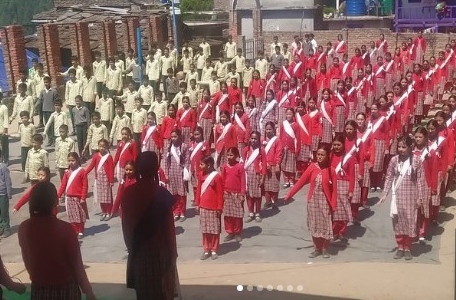
In villages where schools once stood empty or didn’t exist at all, Himalayan Geographic has created learning hubs that blend:
- Traditional knowledge passed down for generations
- Modern educational techniques adapted for mountain environments
- Technology that connects isolated communities to global resources
“We discovered that education in the Himalayas requires unique approaches,” Sharma explains. “A child in Ladakh faces different challenges than one in Nepal or Bhutan, yet all deserve the same quality of learning.”
Through partnerships with local educators, Himalayan Geographic has developed curriculum that prepares youth not just for exams, but for meaningful contribution to their communities. The results speak volumes; graduation rates have doubled in participating villages.
Environment: Guardians of the Sacred Peaks
The Himalayas; home to the world’s third-largest ice mass after the Arctic and Antarctic; face unprecedented threats from climate change and development. Sharma’s environmental initiatives strike a critical balance:
- Community-led reforestation programs have planted over 100,000 native trees
- Waste management systems now operate in areas once overwhelmed by tourist trash
- Ancient conservation practices are being documented and revitalized
“When we began,” Sharma recalls, “outsiders were telling Himalayan communities how to protect their environment. We flipped this model; these people have been environmental stewards for centuries. They just need support applying their knowledge to new challenges.”
Employment: Mountains of Opportunity

Perhaps most revolutionary is Sharma’s approach to employment; creating economic ecosystems that keep talented young people in their communities rather than forcing migration to overcrowded cities.
Himalayan Geographic’s employment initiatives include:
- Eco-tourism training that transforms local knowledge into sustainable livelihoods
- Artisan collectives that connect traditional craftspeople to international markets
- Agricultural innovation centers that improve yields while preserving heirloom varieties
“The ultimate measure of success isn’t how many jobs we create,” says Sharma, “but how many young people can build meaningful lives in the places where their ancestors thrived.”
The Path Forward
From a single passionate founder to a network of thousands of Himalayan change-makers, Nikhil Raj Sharma’s vision has grown like the rhododendron forests he helps protect; slowly at first, then with remarkable strength and beauty.
For those inspired by Sharma’s work, the invitation is clear: the Himalayas need allies, not saviors. Whether through supporting Himalayan Geographic’s initiatives, choosing responsibly sourced Himalayan products, or simply sharing the stories of these remarkable mountain communities, everyone can play a part.
As Sharma often concludes his talks: “The Himalayas have given the world so much; water, wisdom, wonder. Now it’s our turn to give back.”
For more information on Nikhil Raj Sharma’s transformative work across the Himalayas, visit www.nikhilrajsharma.com
We strive to use only images that are either royalty-free, in the public domain, or shared with appropriate permissions. However, if you believe any image on this website has been used without proper credit or violates copyright, please contact us immediately. We will promptly review the content and, if necessary, update the attribution or remove the image without delay. We do not claim ownership of any third-party images unless explicitly stated.