
Discover 8 amazing Ladakh animals that have adapted to survive in extreme Himalayan conditions, from the elusive snow leopard to the sacred black-necked crane.

Nestled in the northernmost part of India, Ladakh stands as a breathtaking testament to nature’s diversity. Often called “Little Tibet” or the “Land of High Passes,” this region features an otherworldly landscape of rugged mountains, cold deserts, and pristine alpine meadows. What makes Ladakh truly extraordinary is not just its dramatic scenery but also the resilient wildlife that has adapted to thrive in this harsh, high-altitude environment.
Despite appearing barren at first glance, Ladakh hosts a surprisingly rich biodiversity. Its unique ecosystem provides sanctuary for several rare and endemic species that have evolved remarkable adaptations to survive extreme conditions, including temperatures that plummet to -30°C (-22°F) in winter and minimal rainfall throughout the year.
In this article, we’ll introduce you to eight incredible animals that call this Himalayan region home. From the mysterious snow leopard to the hardy Himalayan marmot, these creatures showcase nature’s ingenuity in one of the world’s most challenging habitats.
1. Snow Leopard (Panthera uncia)
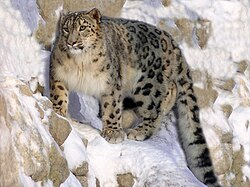
The snow leopard is undoubtedly the most iconic and sought-after wildlife sighting in Ladakh. Often called the “ghost of the mountains,” this elusive big cat is masterfully adapted to the harsh mountain environment. Its thick, spotted gray-white coat provides perfect camouflage against rocky terrains, while its wide, fur-covered paws act like natural snowshoes.
Where to Find Them
Snow leopards primarily inhabit Hemis National Park, which protects the largest population of these cats in India. They typically roam at elevations between 3,000-5,400 meters (9,800-17,700 feet), preferring steep, rugged terrains with adequate cover.
Conservation Status
Currently classified as Vulnerable on the IUCN Red List, snow leopards face numerous threats including poaching for their beautiful fur and bones (used in traditional medicine), retaliatory killings by farmers protecting livestock, and habitat loss due to climate change and human encroachment. According to wildlife experts, only about 200-300 snow leopards remain in Ladakh, making every sighting a rare privilege.
Learn more about snow leopard conservation at Snow Leopard Conservancy India Trust.
2. Black-necked Crane (Grus nigricollis)

Among Ladakh’s avian residents, none carries more cultural significance than the elegant black-necked crane. Standing up to 1.4 meters (4.6 feet) tall, these majestic birds are easily identified by their striking black necks and bright red crowns contrasting against otherwise white plumage.
Cultural Importance
For centuries, local Buddhists have revered the black-necked crane as a symbol of longevity, peace, and harmony. They feature prominently in local folklore, traditional songs, and Buddhist art. The arrival of these birds each summer is celebrated as an auspicious sign throughout the region.
Habitat and Behavior
These cranes migrate to Ladakh’s high-altitude wetlands (above 4,000 meters) during summer months for breeding, particularly in the Changthang Wildlife Sanctuary. They build their nests on the small island-like formations within these marshlands, safe from most predators. Their distinctive trumpeting calls can be heard echoing across the valleys during breeding season.
As noted in The Hindu BusinessLine, these cranes are facing increasing threats due to habitat degradation and climate change affecting their wetland breeding grounds.
3. Himalayan Blue Sheep (Bharal – Pseudois nayaur)
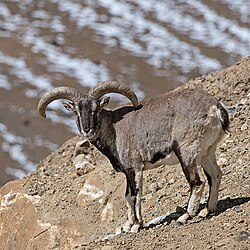
Despite its name, the Himalayan blue sheep or bharal is actually more closely related to goats than sheep. These medium-sized ungulates sport a distinctive bluish-grey coat that provides remarkable camouflage against Ladakh’s rocky landscape.
Masters of Mountainous Terrain
Bharals demonstrate astonishing agility on precipitous slopes that would challenge even the most experienced human climbers. They can navigate nearly vertical cliff faces with ease, finding footholds on the tiniest of ledges. This remarkable ability serves as their primary defense mechanism against predators.
Ecological Importance
As the main prey species for snow leopards, blue sheep play a crucial role in Ladakh’s ecological balance. Where bharal populations thrive, snow leopards usually follow. According to Outlook Traveller, spotting herds of these nimble creatures grazing on sparse vegetation along mountainsides is a common and delightful experience for wildlife enthusiasts in Ladakh.
4. Red Fox (Vulpes vulpes)
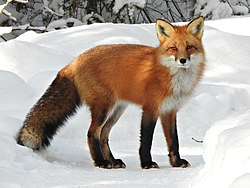
The red fox brings a splash of color to Ladakh’s otherwise muted landscape. With its distinctive bushy tail tipped in white and reddish-orange fur, this adaptable canid has successfully colonized diverse habitats across the region.
Adaptability Champions
What makes red foxes remarkable is their ability to thrive in various environments, from verdant valleys to arid cold deserts. They’ve developed thick fur that provides excellent insulation against Ladakh’s extreme temperatures, while their acute hearing allows them to detect prey moving beneath snow or soil.
Behavior and Diet
Dawn and dusk are the best times to spot these cunning hunters as they search for small mammals, birds, and insects. In Ladakh, they’ve also adapted to human presence and sometimes venture near settlements to scavenge for food. As MoneyControl reports, their opportunistic nature has helped them maintain stable populations despite environmental challenges.
5. Himalayan Marmot (Marmota himalayana)
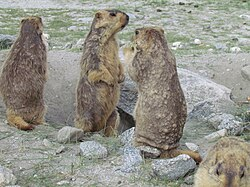
Anyone traveling through Ladakh will likely encounter the charming Himalayan marmot. These large ground-dwelling rodents, about the size of a domestic cat, are among the most visible wildlife in the region thanks to their diurnal habits and curious nature.
Winter Survival Specialists
Perhaps the most fascinating aspect of marmot life is their hibernation strategy. To survive Ladakh’s brutal winter, these resilient creatures retreat into complex burrow systems and enter a deep hibernation that lasts over six months. During this period, their body temperature drops dramatically, and their heartbeat slows to just a few beats per minute.
Where to Find Them
Himalayan marmots inhabit alpine meadows and grasslands between 3,500-5,200 meters (11,500-17,000 feet). They’re particularly common along popular trekking routes like the Markha Valley, where they can often be seen standing sentinel-like on their hind legs outside their burrows, whistling warnings to colony members when danger approaches.
6. Tibetan Wild Ass (Kiang – Equus kiang)
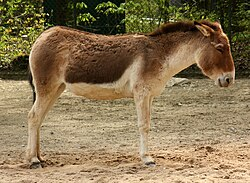
The Tibetan wild ass, locally known as kiang, is the largest of all wild ass species and one of the most magnificent mammals to roam Ladakh’s open plains. With a chestnut brown coat that becomes lighter on the underparts and distinctive white patches around the muzzle, these equids make for an impressive sight against the stark landscape.
Built for Speed
Evolution has shaped kiangs into exceptional runners, capable of sustaining speeds of up to 70 km/h (43 mph) across the open plateaus—an essential adaptation for escaping predators like wolves in an environment with limited hiding places. Their powerful lungs efficiently process the thin mountain air, allowing them to maintain this impressive pace even at high altitudes.
Conservation Status
While still relatively common in parts of Ladakh, particularly the Changthang Wildlife Sanctuary, kiang populations face growing challenges. As Outlook Traveller notes, competition with domestic livestock for grazing land and habitat fragmentation due to development threaten their long-term survival.
7. Ladakh Urial (Shapu – Ovis vignei)
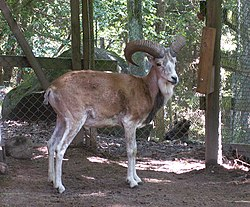
The Ladakh urial or shapu is a wild sheep species characterized by its impressive curved horns that can grow up to 100 cm (39 inches) in males. Their reddish-brown coat with a distinctive black stripe running down the front legs and a white rump patch makes them relatively easy to identify.
Habitat Preferences
Unlike blue sheep that prefer higher elevations, urials typically inhabit lower altitude grassy slopes and canyons between 3,000-4,000 meters (9,800-13,100 feet). They’re often found in the lower reaches of Ladakh’s valleys, particularly around the Indus River basin.
Conservation Challenges
Listed as Vulnerable on the IUCN Red List, the Ladakh urial faces significant threats. According to Life on the Planet Ladakh, habitat loss due to expanding agriculture, competition with domestic livestock, and hunting pressure have drastically reduced their numbers. Current estimates suggest fewer than 3,000 individuals remain in the wild, with Ladakh harboring a significant portion of this population.
8. Tibetan Wolf (Canis lupus chanco)
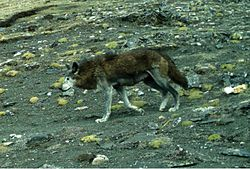
The Tibetan wolf, a subspecies of the gray wolf, represents one of Ladakh’s top predators. Slightly smaller than its European counterparts, this canid has evolved specialized adaptations for high-altitude living, including a thicker coat with dense underfur that provides crucial insulation during harsh winters.
Hunting and Social Behavior
These wolves typically hunt in packs of 2-6 individuals, preying primarily on wild ungulates like blue sheep and urial, though they occasionally target smaller mammals and ground-nesting birds as well. Their cooperative hunting strategies allow them to take down prey significantly larger than themselves.
Human-Wildlife Conflict
As MoneyControl reports, Tibetan wolves increasingly face conflict with local herders as their natural prey becomes scarcer. Livestock predation has led to retaliatory killings, placing additional pressure on already vulnerable wolf populations. Conservation efforts now focus on implementing better livestock protection measures and compensation schemes for affected herders.
Experiencing Ladakh’s Wildlife
The best time to observe Ladakh’s remarkable wildlife is during summer months (May to September) when animals are most active and accessible areas aren’t snowbound. Winter, however, offers better opportunities for snow leopard sightings as these elusive cats descend to lower elevations following their prey.
For the best wildlife viewing experiences:
- Hemis National Park remains the premier destination for snow leopard tracking and spotting blue sheep.
- Changthang Wildlife Sanctuary offers excellent opportunities to observe black-necked cranes, kiangs, and marmots.
- Tso Moriri and Tso Kar wetlands attract numerous migratory birds including black-necked cranes.
Remember that wildlife viewing in such fragile ecosystems requires responsible practices:
- Maintain a respectful distance from all animals
- Never feed wildlife
- Stay on designated trails to minimize habitat disturbance
- Use binoculars and telephoto lenses rather than approaching animals closely
Conservation Challenges and Efforts
Ladakh’s unique wildlife faces numerous threats including habitat loss due to development projects, overgrazing by domestic livestock, climate change impacts on fragile high-altitude ecosystems, and human-wildlife conflict.
Several organizations are working tirelessly to protect these remarkable species, including the Wildlife Protection Department of Ladakh, Snow Leopard Conservancy India Trust, and WWF-India. Their efforts focus on community-based conservation approaches that involve local communities as stakeholders in wildlife protection.
By choosing responsible tour operators and respecting wildlife viewing guidelines, visitors can contribute to conservation efforts while experiencing some of Earth’s most remarkable creatures in their natural habitat.
Ladakh’s wildlife represents nature’s triumph over extreme conditions. These eight incredible animals—from the majestic snow leopard to the hardy Himalayan marmot—have not only survived but thrived in one of the world’s most challenging environments through remarkable adaptations.
As visitors to this extraordinary region, we have both the privilege of witnessing these animals in their natural habitat and the responsibility to ensure they continue to flourish for generations to come. Every conservation effort, whether large-scale projects or individual responsible tourism choices, helps preserve this unique ecological heritage.
Next time you visit Ladakh, take a moment to appreciate not just its breathtaking landscapes but also the remarkable creatures that call this high-altitude wonderland home. Their presence enriches the region’s natural tapestry and reminds us of nature’s resilience and diversity.
We strive to use only images that are either royalty-free, in the public domain, or shared with appropriate permissions. However, if you believe any image on this website has been used without proper credit or violates copyright, please contact us immediately. We will promptly review the content and, if necessary, update the attribution or remove the image without delay. We do not claim ownership of any third-party images unless explicitly stated.