
Nepal is implementing new regulations for Mount Everest climbers in 2025, including a 36% permit fee increase, mandatory prior experience on 7,000-meter peaks, and stricter environmental measures to enhance safety and sustainability on the world’s highest mountain.
A New Dawn on Everest
At sunrise, when the Himalayan winds whisper through the silent cliffs and snow sparkles under the orange glow, Mount Everest rises like a monolith of mystery and meaning. The world’s tallest mountain has not only challenged the limits of human strength but has also captured imaginations for decades. Each year, hundreds of climbers from every corner of the globe dream of touching the sky by standing atop the 8,848.86-meter summit.
But dreams have consequences. In recent years, Everest has become as much a symbol of human ambition as it has a mirror to our failures; overcrowding, environmental neglect, and rising fatalities. In response to a growing crisis, the Government of Nepal is taking a historic and bold step to introduce legislation that will dramatically reform how climbers receive permits to scale this sacred peak.
The Climb That Changed Everything
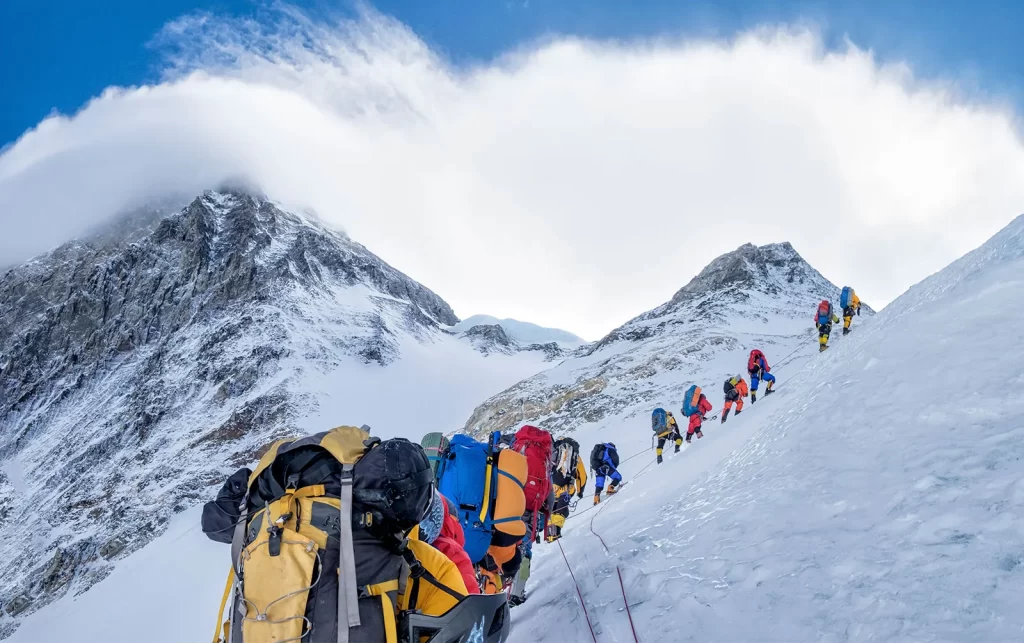
The 2023 Everest climbing season will be remembered not for its triumphs, but for its tragedies. Nepal issued a record 478 permits, resulting in perilous bottlenecks near the summit. Climbers waited in queues for hours in the notorious “Death Zone,” where oxygen levels drop to one-third of sea level. In that season alone, 12 climbers died and 5 went missing, according to Nepal’s Department of Tourism (Reuters, 2025).
Photos of the overcrowded ridges were circulated globally, evoking concern, criticism, and urgent calls for reform. “It’s not just a mountain anymore,” said Ang Tshering Sherpa, a veteran expedition operator. “It’s a traffic jam at 8,000 meters.”
A Blueprint for Reform
Nepal’s newly proposed legislation is more than a regulatory change; it is a philosophical shift. The Ministry of Culture, Tourism, and Civil Aviation has drafted a bill aimed at:
Requiring Prior Experience: Climbers must first summit a 7,000-meter peak in Nepal before applying for an Everest permit. This ensures technical preparedness and respect for the harsh conditions of the Himalayas.
Mandating Nepali Guides: All climbing teams must employ Nepali expedition leaders (sardars) and mountain guides. This not only supports local employment but also ensures cultural and geographic expertise on the mountain.
Increasing Permit Fees: Effective September 2025, permit costs will rise from $11,000 to $15,000 during the main spring season. Fees during autumn and winter seasons will also be increased (OurMidland, 2025).
Striking a Balance Between Safety and Access
The goals of the new law are threefold: reduce overcrowding, increase safety, and enhance environmental protection. Mountaineering experts widely support the proposed changes. Dawa Steven Sherpa, CEO of Asian Trekking, remarked, “This is long overdue. Too many under-prepared climbers are risking their lives; and the lives of others.” Everest’s appeal has drawn thrill-seekers, influencers, and even corporate teams, many of whom lack high-altitude climbing experience.
The results have been catastrophic. Between 2010 and 2023, over 100 climbers died on Everest, with many deaths attributed to exhaustion, inexperience, or inadequate preparation (Alan Arnette, Everest Statistics). The proposed changes also align with global best practices. For instance, China limits access to the Tibetan side of Everest far more strictly, often allowing fewer than 150 climbers per season. Nepal, with its more open policies, has traditionally attracted the bulk of global climbers.
Opposition and Debates
Despite widespread support, the law is not without controversy. Some international expedition companies argue that climbers with experience on non-Nepalese peaks; such as Denali (6,190 m) or Aconcagua (6,961 m); should also qualify for Everest permits. Garrett Madison, founder of U.S.-based Madison Mountaineering, stated, “There are very few 7,000-meter peaks easily accessible to train on. This rule, as currently written, unfairly disadvantages foreign climbers who have adequate experience elsewhere.” Concerns have been raised over the requirement to exclusively use Nepali guides. While it boosts local employment, critics argue that it limits international cooperation and could reduce the diversity of the global climbing community.
Preserving a Fragile Ecosystem
Everest is not just a mountain—it’s an ecosystem teetering on the edge. Melting glaciers, discarded oxygen tanks, human waste, and increasing microplastic pollution pose serious environmental threats.
In 2019, the Sagarmatha Pollution Control Committee (SPCC) retrieved over 10 tons of trash from Everest in a single season. The new fee hike will help fund clean-up efforts, climate research, and waste management projects across the Khumbu Valley.
National Geographic explorer Elizabeth Hawley once referred to Everest as “a barometer of our ambitions and our excesses.” That barometer is now signaling a need for urgent change.
The Human Element
For many Sherpa families, Everest is not an exotic challenge; it’s a way of life. The proposed legislation not only enhances safety for foreign climbers but also offers stronger protections for Nepali guides, who risk their lives year after year. Tashi Sherpa, a third-generation climber from Namche Bazaar, reflects: “We know this mountain. We’ve grown up in its shadow. These reforms might save lives; ours and yours.”
By formalizing employment and training standards, the bill will raise the professional status of Nepali climbers and provide them with greater recognition and compensation.
What Lies Ahead
The proposed bill is under active consideration by Nepal’s National Assembly, where the ruling coalition holds a comfortable majority. It is expected to be enacted in time for the 2026 Everest climbing season.
The world is watching. Tourists, conservationists, climbers, and scholars alike await what could become one of the most pivotal shifts in Himalayan mountaineering history.
Nepal’s message is clear: Everest is not just for those who can pay; it is for those who are prepared, respectful, and responsible.
Toward a Higher Standard
Mount Everest has long been the pinnacle of human achievement and adversity. But in the quest to conquer its heights, many have overlooked the ethics, ecology, and experience required to do so responsibly.
Nepal’s new law is more than policy; it’s a call to higher standards. For those who seek to climb the world’s tallest mountain, it will no longer be just about reaching the summit. It will be about honoring the journey, the people, and the peak itself.
References:
Reuters. (2025, April 28). Nepal plans to restrict Everest permits to experienced climbers.
News.com.au. (2025, April 29). Major change to erupt on Mt Everest.
OurMidland. (2025, January 23). Nepal to raise Mount Everest climbing permit fees by 36%.
Diario AS. (2025, January 20). Nepal elevará la tarifa para escalar el Everest a 15.000 dólares para los extranjeros.