
Discover the captivating story of the Beatles’ transformative journey to Rishikesh, India, their encounter with Maharishi Mahesh Yogi, and the enduring legacy of their visit on the spiritual landscape of the Himalayas. Explore the now-iconic Beatles Ashram and its significance as a confluence of music, spirituality, and cultural exchange.
The 1960s were a crucible of cultural change, and at its heart beat the revolutionary rhythm of the Beatles. Their music transcended boundaries, captivating a world hungry for something new. Yet, at the zenith of their global fame, a different kind of calling beckoned. A yearning for introspection and peace led John Lennon, Paul McCartney, George Harrison, and Ringo Starr to the tranquil embrace of the Himalayas, specifically to the ashram of Maharishi Mahesh Yogi in Rishikesh, India.
Their initial connection with Maharishi Ji in London blossomed into a deeper engagement with his teachings on Transcendental Meditation during sessions in Wales. This burgeoning interest culminated in an invitation to his ashram, a secluded sanctuary nestled in the foothills of the majestic Himalayas. In February 1968, the world watched with bated breath as the Fab Four, along with their partners and a coterie of seekers, embarked on this spiritual sojourn to the then relatively obscure town of Rishikesh.
This unexpected visit had a profound impact, not only on the Beatles themselves but also on the global perception of Indian spirituality. It moved from the esoteric fringes to the forefront of cultural consciousness in the West, lending it a newfound credibility and allure. This pivotal moment served as a significant catalyst in Rishikesh’s subsequent rise to prominence as the “Yoga Capital of the World,” a magnet for spiritual aspirants from every corner of the globe (https://en.wikipedia.org/wiki/Rishikesh).
For those with a connection to the Himalayan region, whether through travel, heritage, or aspiration, Rishikesh holds a unique charm. Situated a short distance from my own abode, it is a place I often visit to find solace and rejuvenation. The Beatles Ashram, despite its current state of picturesque decay, remains an essential stop, a tangible link to a remarkable chapter in both music and spiritual history.
The ashram, abandoned in 1997, was eventually reopened to the public, allowing visitors to explore its grounds and absorb the unique atmosphere. The journey from the lively Ram Jhula towards the ashram’s entrance is a gradual descent into serenity. The urban clamor recedes, replaced by the soothing sounds of nature as one enters the verdant expanse of the Rajaji National Park. The gentle flow of the sacred Ganges River borders the ashram, its waters whispering tales of ancient wisdom and the more recent melodies that once filled the air here.
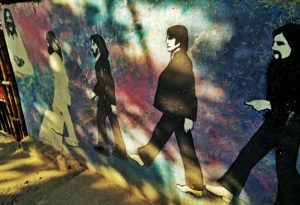
The ashram itself is a treasure trove for explorers. Over the years, it has evolved into an extraordinary canvas for graffiti artists, their vibrant creations adorning the walls of the abandoned buildings. These artistic expressions serve as poignant tributes to the Beatles, their timeless songs, and a myriad of spiritual concepts. Wandering through the ashram, one is enveloped by a powerful sense of history, the silence punctuated only by the rustling leaves and the echoes of a transformative era.
Among the remnants of the ashram’s past are the lecture halls where Maharishi Ji imparted his teachings. Two, in particular, stand out. The “Beatles Cathedral Gallery,” located a short walk from the entrance, is an explosion of artistic energy, every surface covered in graffiti inspired by the band and their spiritual journey. This space serves as a powerful testament to the enduring legacy of their visit and the creative synergy that defined their time here. While other structures hint at similar purposes, their current state of disrepair makes their original function harder to discern.
The Beatles’ sojourn in Rishikesh, though lasting only a few months, proved to be an incredibly fertile period for their songwriting. Removed from the pressures of their global fame and immersed in the tranquility of the Himalayas, they channeled their experiences and reflections into numerous songs that would later appear on the iconic “Abbey Road” and “White Album” (https://en.wikipedia.org/wiki/The_Beatles_in_India; Spitz, 2005). The serene environment and the introspective nature of their Transcendental Meditation practice undoubtedly fostered a period of intense creativity.
Despite the creative outpouring, their time in Rishikesh was not without its challenges. Differing personalities and evolving perspectives led to a gradual departure, and eventually, a strained relationship with Maharishi Ji. Nevertheless, the cultural impact of their visit remains undeniable. They inadvertently introduced millions to the allure of Indian spirituality, significantly contributing to Rishikesh’s eventual emergence as a global hub for yoga and meditation.
Today, as I walk through the silent ruins of the Beatles Ashram, I am struck by the unique confluence of Eastern spirituality and Western popular culture that once thrived here. The graffiti-laden walls stand as a vibrant, if unintentional, monument to a moment when the world’s most celebrated musicians sought and found inspiration in the heart of the Himalayas. The gentle murmur of the Ganges seems to carry echoes of their melodies and the timeless wisdom of the ancient land. Rishikesh, with or without the Beatles, holds a profound spiritual significance. However, their visit served as a powerful amplifier, drawing global attention and solidifying its place on the world’s spiritual map. The ashram, in its current state of artistic decay, stands as a poignant reminder of this extraordinary encounter, a place where the echoes of rock and roll resonate with the timeless vibrations of the Himalayas, prompting reflection on the interconnectedness of cultures and the enduring human quest for inner peace. Perhaps John Lennon’s hopeful words still echo in the Himalayan breeze: “You may say I’m a dreamer, but I’m not the only one. I hope someday you’ll join us, and the world will live as one.”
“Imagine a whisper carried on the Himalayan breeze, a melody that once echoed through a secluded valley, forever altering the spiritual landscape of a nation and captivating the world. This is the story of Rishikesh, the Yoga Capital, and a moment in time when rock and roll met ancient wisdom, leaving an indelible mark on both.”
The 1960s. A decade ablaze with cultural revolution, the airwaves vibrated with the infectious energy of the Beatles. John, Paul, George, and Ringo – four lads from Liverpool who had the world at their feet, their music a soundtrack to a generation’s dreams. Yet, amidst the dizzying heights of fame and fortune, a different kind of yearning began to stir within them. A quest for something deeper, a respite from the relentless whirlwind of Beatlemania. This yearning led them to an unlikely destination: the serene foothills of the Himalayas, to the ashram of Maharishi Mahesh Yogi in Rishikesh, India.
Their initial encounter with Maharishi Ji in London sparked an intrigue, a resonance with his teachings on Transcendental Meditation. Further sessions in Wales solidified this connection, a pull towards a philosophy that promised inner peace and a transcendence of the material world. It was this profound interest that prompted Maharishi Ji’s invitation, an invitation that would inadvertently place the quiet town of Rishikesh on the global map.
In February 1968, the Beatles, along with their partners and a retinue of fellow seekers, embarked on this transformative journey. Rishikesh, a town nestled along the sacred Ganges, known for its spiritual aura and the gentle rhythm of monastic life, suddenly found itself in the incandescent glare of international attention. The world watched, fascinated and perhaps a little bewildered, as the most famous band on the planet traded the clamor of concert halls for the tranquility of an Indian ashram.
This unexpected pilgrimage did more than just pique global curiosity. It subtly shifted perceptions about Indian spirituality in the West. No longer relegated to the fringes, it gained a newfound respectability, a tangible connection to the cultural zeitgeist. This initial spark, ignited by the Beatles’ visit, played a significant role in Rishikesh’s subsequent evolution into the “Yoga Capital of the World,” a haven for spiritual seekers from every corner of the globe.
For me, Rishikesh has always held a special significance. A mere 45 kilometers from my doorstep, it is a sanctuary I often retreat to, a place where the frenetic pace of life gently unwinds. And within Rishikesh, the Beatles Ashram, now a poignant relic of a bygone era, remains a compelling draw, a place of pilgrimage in its own right.
Abandoned in 1997, the ashram lay in silent decay for years, reclaimed by the lush embrace of the Rajaji National Park. Yet, its historical resonance proved too powerful to ignore. Eventually, it was opened to the public, allowing visitors to wander through its deserted halls and soak in the atmosphere of a time when East met West in a symphony of spiritual exploration and creative inspiration.
The journey to the ashram itself is a gradual immersion into tranquility. As one walks from the bustling Ram Jhula, a suspension bridge teeming with life, a palpable shift occurs. The cacophony of the town slowly fades, replaced by the rustling leaves and the distant murmur of the Ganges. Entering the Rajaji National Park is like stepping into another world, a verdant expanse where the air is cleaner, the pace slower, and the spirit lighter.
The ashram unfolds as an explorer’s delight, a sprawling campus where nature and history intertwine. Over time, it has become an accidental canvas for a vibrant community of graffiti artists. Walls that once echoed with philosophical discussions and musical rehearsals are now adorned with colorful tributes to the Beatles, lyrics from their iconic songs, and intricate spiritual motifs. Each building, though often bearing the marks of time and abandonment, whispers tales of its past, inviting contemplation about the era when this secluded sanctuary hummed with purpose and creativity.

Among the scattered structures are the remnants of lecture halls, silent witnesses to the wisdom shared within their walls. Two, in particular, have captured my attention. The first, located a short walk from the entrance on the left-hand side, is affectionately known as “The Beatles Cathedral Gallery.” This space is a riot of color and artistic expression, every surface covered in graffiti that celebrates the band’s music and their spiritual sojourn. It’s a powerful testament to the enduring impact of their visit and the creative energy that permeated this place.
While other lecture halls may exist, their forms are often obscured by the passage of time and the encroaching vegetation. The overall impression is one of a place imbued with a unique aura, a palpable sense of history that sparks the imagination and transports you back to a remarkable moment in time. Walking through the ruins, one can almost hear the strumming of guitars, the murmur of meditative chants, and the echoes of conversations that bridged cultures and inspired timeless music.
The Beatles’ time in Rishikesh, though relatively short, was profoundly influential. Removed from the pressures of fame, immersed in the serenity of the Himalayas, and engaged in daily meditation, they experienced a surge of creative energy. It was here that they penned numerous songs that would later grace the iconic albums “Abbey Road” and the “White Album.” The tranquil environment and the introspective nature of their spiritual practice undoubtedly contributed to the richness and depth of these musical masterpieces.
Their stay, however, was not without its complexities and eventual disillusionment. Personal conflicts and differing perspectives led to their departure in stages. Yet, despite the eventual souring of their relationship with Maharishi Ji, the impact of their time in Rishikesh remained undeniable. They had shone a light on Indian spirituality for a global audience, inadvertently paving the way for the town’s future as a world-renowned center for yoga and meditation.
Today, as I wander through the remnants of the Beatles Ashram, I feel a profound connection to this unique confluence of cultures. The graffiti-covered walls stand as a vibrant testament to a moment when the world’s most famous musicians sought solace and inspiration in the heart of the Himalayas. The quiet flow of the Ganges behind the ashram seems to carry echoes of their melodies and the whispers of ancient wisdom.
Rishikesh, even without the Beatles, would likely have remained a significant spiritual center. But their visit acted as a catalyst, amplifying its allure and drawing seekers from across the globe. The ashram, in its current state of artistic decay, serves as a powerful reminder of this pivotal moment, a place where the echoes of rock and roll mingle with the timeless vibrations of the Himalayas. It is a place where one can truly feel the interconnectedness of cultures, the enduring power of music, and the timeless quest for inner peace. It makes one ponder, perhaps John Lennon was right when he sang, “You may say I’m a dreamer, but I’m not the only one. I hope someday you’ll join us, and the world will live as one.” In this quiet corner of the Himalayas, that dream, for a brief but significant time, felt tangibly closer.
References:
- Spitz, Bob. The Beatles: The Biography. Little, Brown and Company, 2005.
- Miles, Barry. The Beatles Diary Volume 1: The Beatles Years. Omnibus Press, 2001.
- Lewisohn, Mark. The Complete Beatles Recording Sessions: The Official Story of the Abbey Road Years. Harmony Books, 1988.
- “Rishikesh.” Wikipedia, https://en.wikipedia.org/wiki/Rishikesh. Accessed 13 May 2025.
- “The Beatles in India.” Wikipedia, https://en.wikipedia.org/wiki/The_Beatles_in_India. Accessed 13 May 2025.